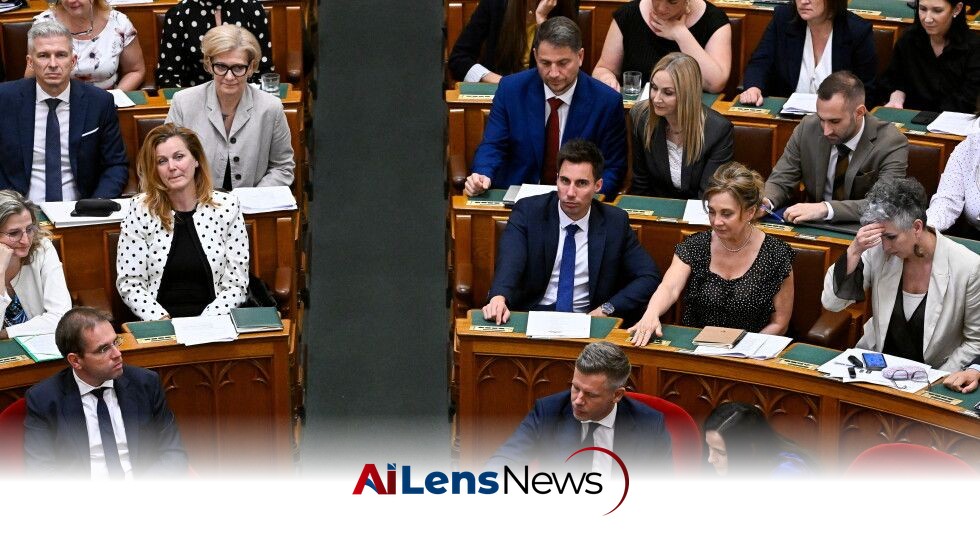


Hungary's Parliament has enacted a constitutional amendment to remove the president, a known ally of former Prime Minister Viktor Orbán.
Washington DC, United States Jul 14, 2026 ALN: In a significant political move, Hungary's Parliament has passed a constitutional amendment aimed at removing the president, who is widely regarded as a loyalist of former Prime Minister Viktor Orbán. This decision marks a pivotal shift in the country's political landscape, reflecting ongoing tensions within the government.
The amendment, known as the 17th amendment to the Fundamental Law, was voted on during a plenary session in Budapest. Prime Minister Peter Magyar and Foreign Minister Anita Orban were among the key figures present during the voting process. The amendment is seen as a strategic maneuver to reshape the political framework established during Orbán's tenure. Under Orbán, who served as prime minister for over a decade, Hungary saw significant changes to its constitution and legal framework, which critics argue have eroded checks and balances and undermined democratic institutions.
The political landscape in Hungary has been characterized by a strong centralization of power under Orbán and his party, Fidesz. Since coming to power in 2010, Orbán's government has implemented a series of controversial reforms that critics claim have diminished the independence of the judiciary, curtailed media freedoms, and stifled dissent. The president, who has traditionally held a ceremonial role, has been viewed as a figurehead aligned with Orbán's policies, further solidifying the perception of a government that prioritizes loyalty over democratic accountability.
The recent amendment is perceived as a response to both domestic and international pressures. Domestically, there has been a growing call for political reform and a return to democratic norms, particularly as Hungary faces criticism from the European Union and other international bodies regarding its governance and rule of law. The EU has expressed concerns about Hungary's democratic backsliding and has linked funding to adherence to democratic principles, further complicating the political dynamics at play.
This constitutional change is expected to have far-reaching implications for Hungary's governance. Critics argue that it could further consolidate power within the current administration, while supporters claim it is a necessary step towards a more democratic process. The president's removal is viewed as a move to distance the current government from the controversial policies of Orbán. By eliminating a president perceived as a loyalist, the government may be attempting to signal a shift towards more independent governance and possibly a more conciliatory approach to opposition parties and civil society.
However, the potential for increased centralization of power remains a concern. The amendment could pave the way for the government to appoint a successor who aligns closely with its agenda, thereby maintaining the status quo rather than fostering genuine democratic reform. The balance of power in the Hungarian political system is delicate, and any moves that appear to undermine democratic principles could provoke backlash from both the public and opposition parties.
The public response to the amendment has been mixed. Supporters of the government have expressed approval, viewing it as a positive step towards reform. They argue that the removal of a president closely associated with Orbán's administration is necessary to restore faith in political institutions and demonstrate a commitment to change. This perspective is bolstered by a segment of the population that has grown disillusioned with the previous government's approach and is seeking a new direction for Hungary.
Conversely, opposition parties have condemned the move, arguing that it undermines democratic principles and sets a dangerous precedent for future governance. They contend that the amendment is not a genuine attempt at reform but rather a strategic play to consolidate power further. The opposition has voiced concerns regarding the implications for political pluralism and the potential for further erosion of democratic norms. Protests and public demonstrations may arise as various factions within society mobilize to express their views on the amendment and the future of governance in Hungary.
Following the passage of the amendment, the government is expected to outline its plans for the future of the presidency and how it intends to fill the vacancy left by the removal of the current president. This situation will likely continue to evolve as political factions within Hungary respond to the changes. Speculation about potential candidates for the presidency is already underway, with various names being floated in political circles. The choice of a new president will be critical, as it could either reinforce the government's commitment to reform or signal a continuation of the Orbán-era policies.
Additionally, the government may face pressure from the European Union and other international bodies to ensure that the new appointment aligns with democratic standards. As Hungary navigates this transition, the implications of this decision will be closely monitored both domestically and internationally. The reactions from the EU, civil society, and the general populace will play a crucial role in shaping the future political landscape in Hungary.
The passing of this constitutional amendment signifies a critical juncture in Hungary's political history. As the nation navigates this transition, the implications of this decision will be closely monitored both domestically and internationally. The potential for reform and the restoration of democratic norms will depend on the actions taken by the current government in the wake of this amendment. The future of governance in Hungary remains uncertain, and the coming months will be pivotal in determining whether this change will lead to a more democratic and accountable political system or whether it will simply perpetuate the cycle of centralization and control that has characterized recent years.
To learn more about the latest developments in Political Controversies, stay updated with our exclusive reports and analyses on AiLensNews.

