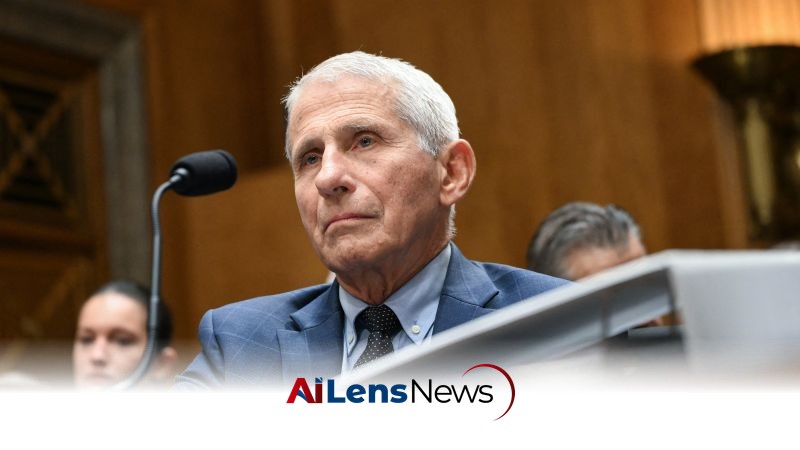


Dr. Anthony Fauci's recent Senate hearing showcased his tactical use of the Fifth Amendment, shifting scrutiny back to lawmakers while avoiding perjury charges.
Washington DC, United States Jul 31, 2026 ALN: Dr. Anthony Fauci, a prominent figure in the United States' response to the Covid-19 pandemic, faced a high-stakes Senate hearing on Wednesday, where he aimed to navigate the political and legal challenges posed by his critics. The atmosphere was charged as Fauci arrived, fully aware of the scrutiny he would encounter from Republican senators who have long sought to hold him accountable for his actions during the pandemic.
Fauci, who served as the director of the National Institute of Allergy and Infectious Diseases (NIAID) for decades, has been a polarizing figure since the onset of the Covid-19 crisis. His scientific expertise and public health guidance were met with both praise and intense criticism. As the pandemic evolved, so too did the political landscape surrounding it, with Fauci often finding himself at the center of partisan debates. This hearing was yet another chapter in a lengthy saga that has seen Fauci become a target for Republican lawmakers, particularly for those who have questioned the government's handling of the pandemic.
During the hearing, Fauci invoked his Fifth Amendment right to avoid self-incrimination over 100 times. This constitutional protection is often employed by individuals who fear that their testimony may expose them to criminal liability. By opting for silence, Fauci effectively denied his critics the opportunity to extract new statements that could be used against him, a strategy that some of his allies claim turned the focus back on the lawmakers themselves. They argued that the hearing was less about accountability and more about political theater.
In the days leading up to the hearing, Fauci's team had prepared extensively, revising his opening statement multiple times to ensure that he would not inadvertently provide any information that could undermine his Fifth Amendment claim. This level of preparation reflects the seriousness with which Fauci and his advisors approached the hearing, recognizing the potential risks involved. Instead of addressing the specifics of his Covid-era actions, Fauci used his opening remarks to criticize the hearing itself, labeling Senator Rand Paul’s pursuit of him as an “unhinged obsession.”
The hearing intensified the already fraught relationship between Fauci and Senator Paul, a vocal critic who has been relentless in his pursuit of what he perceives as Fauci's misconduct. Paul has often accused Fauci of lying to Congress regarding the origins of the virus and the funding of research that may have contributed to its spread. The ongoing conflict has drawn significant media attention, with both sides leveraging the narrative to rally their respective bases. Paul, in particular, has promised to pursue contempt charges against Fauci for his refusal to answer questions, a move that could escalate the political tensions surrounding this issue.
Fauci's decision to invoke the Fifth Amendment was not made lightly. His advisors recognized the risks posed by a politically charged environment, especially considering the history of the Trump administration's aggressive tactics against perceived political adversaries. The former president's administration often targeted individuals with legal inquiries, which created a chilling effect for many in the public health community. Fauci's allies expressed concern that any testimony he might provide could be twisted or misrepresented in a way that would jeopardize his legal standing.
In addition to the political stakes, the hearing also highlighted the broader implications for public health officials who may find themselves in similar situations. The scrutiny that Fauci has faced serves as a cautionary tale for scientists and health experts who engage with the political process. The fear of legal repercussions or political retribution could deter individuals from providing honest assessments of public health crises in the future.
Fauci's retirement from government service in 2023 marked a significant transition for him, as he shifted from a government role to one where he has had to navigate the complexities of legal challenges and ongoing investigations. His post-government life has involved consulting with legal experts and strategizing on how to respond to the various investigations launched by Republican lawmakers. This ongoing scrutiny has not only affected Fauci but also impacted those close to him. His wife, Christine Grady, and other senior health officials associated with him faced job losses or reassignments as part of broader cuts at the National Institutes of Health.
Furthermore, the arrest of David Morens, a former associate of Fauci, on charges of concealing federal records has raised alarms among Fauci's supporters. The aggressive tactics employed by federal agents in Morens' case have fueled fears that the legal system could be weaponized against Fauci and his colleagues, even if they have not engaged in any wrongdoing. This environment of fear and uncertainty can have a chilling effect on public health discourse, potentially discouraging open dialogue and transparency.
Despite the political theater surrounding the hearing, it remains uncertain whether Senator Paul's contempt efforts will result in any significant legal consequences for Fauci. While a vote by the committee could lead to a referral to the full Senate, achieving the necessary bipartisan support for criminal charges is a daunting task. The political landscape in Congress is deeply divided, and any attempt to hold Fauci accountable would likely require Democratic support, which seems unlikely given the current climate.
Paul has suggested that he might circumvent the committee vote and directly refer the contempt charge to the Department of Justice, a move that raises questions about its legality and feasibility. Ultimately, it would be up to federal prosecutors to decide whether to pursue any charges against Fauci, a decision that could be influenced by the political ramifications of such an action.
As the debate continues, legal scholars have weighed in on the implications of Fauci's invocation of the Fifth Amendment. Some argue that his right to remain silent is protected regardless of any potential pardons he might receive, as he could still face state or local charges. This legal complexity has led to differing opinions even among Republicans, with some acknowledging that Fauci's protections under the Fifth Amendment warrant careful consideration.
In conclusion, Dr. Anthony Fauci's appearance at the Senate hearing has underscored the contentious political landscape surrounding Covid-19 and public health policy in the United States. His strategic silence, while aimed at protecting himself legally, has also reignited debates about accountability, transparency, and the role of government officials in times of crisis. As the political battle continues, the implications for public health officials and the broader discourse on science and policy remain profound and far-reaching.
To learn more about the latest developments in Political Controversies, stay updated with our exclusive reports and analyses on AiLensNews.

