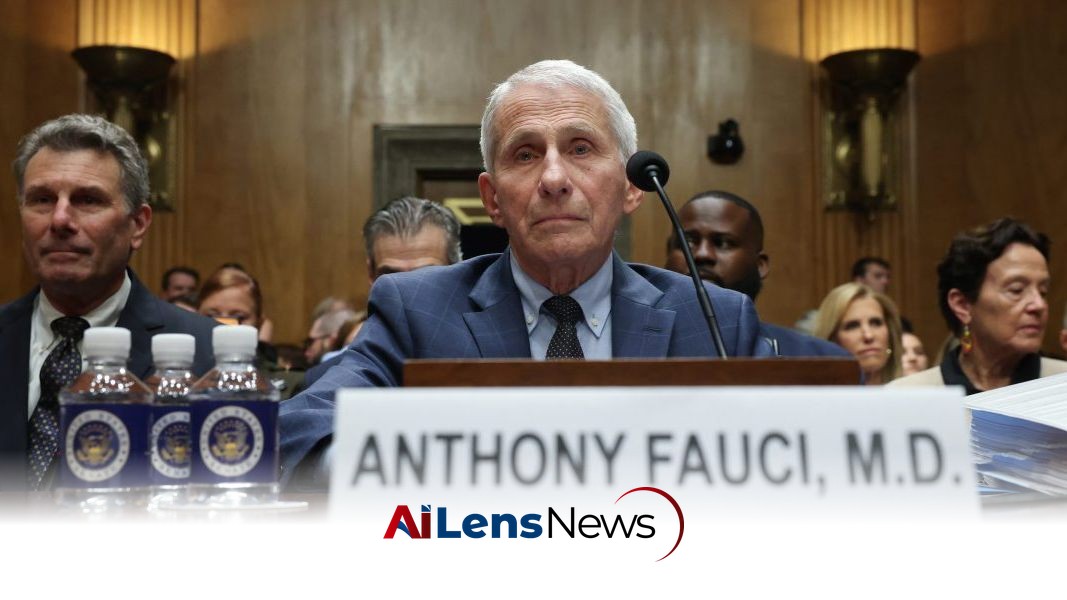


Dr. Anthony Fauci invoked the Fifth Amendment multiple times during a Senate hearing, accusing Sen. Rand Paul of an 'unhinged obsession' against him, despite holding a pardon from President Biden.
Washington DC, United States Jul 29, 2026 ALN: Dr. Anthony Fauci, the former director of the National Institute of Allergy and Infectious Diseases (NIAID), recently found himself at the center of a contentious Senate hearing, where he invoked the Fifth Amendment over 100 times. This decision was made in the context of intense scrutiny from Sen. Rand Paul (R-Ky.), the committee chairman, who has been a vocal critic of Fauci throughout the pandemic. The hearing, which was intended to address various pandemic-related issues including funding for research and oversight of the Wuhan Institute of Virology, quickly turned into a platform for Fauci to defend himself against what he described as Paul's "unhinged obsession" to see him prosecuted.
Fauci's decision to invoke the Fifth Amendment, which protects individuals from self-incrimination, was not made lightly. He began the hearing with a pointed statement, accusing Paul of using the Senate proceedings as a means to further his own political agenda, rather than seeking genuine answers about the pandemic. Fauci specifically highlighted Paul's previous comments and actions, including the release of over 1,000 pages from his personal diary related to the pandemic, which he described as slanderous and indicative of Paul's motivations.
In a significant backdrop to the hearing, Fauci had been granted a pardon by former President Joe Biden during the final hours of his administration. This pardon covers any offenses related to his role as NIAID director and his involvement in pandemic response efforts, extending through a decade-long window from January 1, 2014, to January 19, 2025. However, the legal implications of this pardon have become a focal point in the hearing, as it does not cover statements Fauci makes during the Senate proceedings. Critics, including members of the Republican party, argue that Fauci is using the pardon as a shield to avoid accountability for his actions and statements.
House Oversight Committee Chairman James Comer has voiced concerns regarding Fauci's testimony, asserting that Biden's pardon does not exempt Fauci from being held accountable if he is found to be lying under oath. The questions surrounding Fauci's testimony are particularly pertinent given the ongoing debates about the origins of the COVID-19 virus, funding for gain-of-function research, and the role of various U.S. agencies in pandemic preparedness and response.
During the hearing, Sen. Josh Hawley (R-Mo.) challenged Fauci's invocation of the Fifth Amendment, arguing that his pardon from Biden negates his right to refuse to answer questions. Hawley referenced the 1896 Supreme Court case Brown v. Walker, which established that a pardoned witness cannot invoke the Fifth Amendment privilege against self-incrimination. Similarly, Sen. Paul warned that Fauci's pardon would not protect him from potential legal action related to obstructing Congress, indicating that the committee may consider contempt proceedings against Fauci for his refusal to answer questions on critical topics.
The tension escalated further when Sen. Paul ordered Fauci's attorney, David Schertler, to be removed from the hearing room after he attempted to interject without being recognized. This moment underscored the charged atmosphere of the hearing, with both Fauci and Paul firmly entrenched in their positions. Paul emphasized that Fauci would still have access to legal counsel, despite the removal of Schertler.
Throughout the hearing, Fauci consistently declined to answer a series of critical questions that have been at the forefront of public and political discourse regarding the pandemic. These questions included:
Fauci's refusal to engage with these questions has further fueled the political fire surrounding the hearing, with Republicans asserting that his lack of transparency is indicative of wrongdoing. The implications of his testimony and the surrounding political discourse are significant, particularly as the nation continues to grapple with the long-term impacts of the COVID-19 pandemic.
The Senate hearing comes at a time of renewed scrutiny regarding the origins of the COVID-19 virus. Various U.S. agencies, including the CIA, FBI, and Department of Energy, have recently assessed that a lab-origin explanation for the virus is "more likely than not." Despite these findings, a 2024 House GOP subcommittee concluded that there was no direct evidence to suggest that Fauci acted improperly in his capacity as NIAID director. This juxtaposition of findings highlights the ongoing division within Congress regarding the handling of the pandemic and accountability for public health officials.
Sen. Paul, who has been vocal in his calls for Fauci to face legal consequences, now faces a pivotal decision regarding whether to pursue contempt or obstruction proceedings against Fauci. Such a move would test the boundaries of presidential pardons and whether they can effectively insulate a witness who refuses to comply with a lawful subpoena. The outcome of this situation could have lasting implications for how Congress interacts with executive branch officials in future inquiries.
As the political landscape continues to evolve in the wake of the pandemic, the fallout from this hearing and the ongoing investigations into Fauci's actions will likely remain a contentious issue. The intersection of public health, politics, and legal accountability is poised to shape the narrative surrounding the pandemic response for years to come.
In conclusion, the Senate hearing featuring Dr. Anthony Fauci serves as a microcosm of the broader debates surrounding accountability, transparency, and the political ramifications of the COVID-19 pandemic. With both sides entrenched in their positions, the implications of this hearing will resonate beyond the immediate context, influencing future interactions between Congress and public health officials.
To learn more about the latest developments in Political Controversies, stay updated with our exclusive reports and analyses on AiLensNews.

