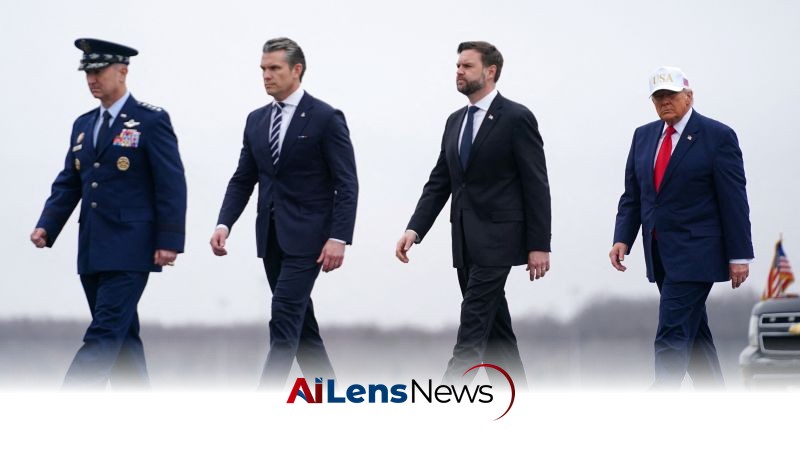


Vice President JD Vance and Gen. Dan Caine express worries about escalating military actions in Iran as the US pauses its bombing campaign after two weeks of strikes.
Washington DC, United States Jul 26, 2026 ALN: The ongoing conflict in Iran has escalated tensions not only in the region but also within the United States government, as key officials express concerns about the implications of continued military action. Vice President JD Vance and Chairman of the Joint Chiefs of Staff Gen. Dan Caine have both raised alarms regarding the potential for escalation during a recent White House meeting. This meeting occurred as President Donald Trump was reportedly weighing further military options following nearly two weeks of continuous bombing campaigns against Iranian military targets.
In a significant development, the U.S. military appeared to pause its bombing operations on Iran after an extended period of strikes. According to Department of Defense sources, operations were put on hold, raising questions about the future of U.S. military engagement in the region. The pause in strikes came amid growing concerns about the U.S. munitions stockpile, which has reportedly been significantly depleted due to the sustained military operations. The implications of this depletion are serious, as it could limit the U.S. military's ability to respond to future threats or engage in prolonged conflicts.
During the Friday meeting, Gen. Caine specifically highlighted concerns regarding the munitions stockpile to President Trump. He indicated that while the military could successfully execute the options available, there were significant risks associated with escalating the conflict further. This warning reflects a broader anxiety among military leaders about the sustainability of military operations against Iran, especially as the U.S. seeks to balance military action with diplomatic efforts.
As the situation stands, it remains unclear whether the concerns regarding the stockpile or the potential for escalation were the primary factors behind the decision to pause military operations. However, the implications of this pause are profound, particularly in the context of U.S.-Iran relations. White House Communications Director Steven Cheung stated that President Trump has consistently expressed a preference for diplomatic solutions, yet he retains all options on the table if Iran continues its aggressive actions in the region, particularly in the strategically vital Strait of Hormuz.
The Strait of Hormuz is a critical chokepoint for global oil supplies, making any military conflict in the area particularly consequential not only for the Middle East but for the global economy as well. The U.S. has long viewed Iranian activities in the strait as a direct threat to its allies and global trade, which adds layers of complexity to the ongoing negotiations and military strategies being considered by the Trump administration.
In the context of the ongoing conflict, the U.S. has implemented a series of sanctions aimed at crippling Iran's economy, which officials claim have been successful. This economic pressure, combined with military actions, is intended to compel Iran to engage in negotiations. However, the effectiveness of this strategy remains a point of contention among analysts and policymakers, particularly as the U.S. weighs the risks of further military escalation against the potential benefits of diplomatic engagement.
After the meeting on Friday, President Trump communicated to reporters that U.S. officials were actively negotiating with Iran, although he did not rule out the possibility of resuming military operations or intensifying the current campaign. His comments suggested a dual approach: pursuing diplomacy while simultaneously keeping military options available. This balancing act reflects the complexities of U.S. foreign policy in the region, where military might and diplomatic efforts often intersect.
Despite the administration's public posture, some Gulf countries have urged the U.S. to exercise restraint. These nations recognize the unique military capabilities that the U.S. possesses and the potential for escalation should the conflict continue. Their concerns highlight the delicate nature of U.S. military engagements in the region, where actions can have far-reaching consequences not only for U.S. interests but also for regional stability.
Internally, there appears to be skepticism among Trump’s closest advisors and military leaders regarding the effectiveness of escalating military operations against Iran. Many believe that such actions may not yield the desired outcomes and could exacerbate tensions rather than resolve them. This skepticism has been compounded by previous warnings from military leaders, including Gen. Caine, who cautioned that a prolonged military campaign could deplete U.S. weapons stockpiles and strain resources.
Chief Pentagon Spokesman Sean Parnell reaffirmed the strength of the U.S. military, stating that it has the capabilities necessary to execute operations at the President's discretion. He emphasized the military's ability to conduct successful operations while maintaining a robust arsenal to protect U.S. interests. However, this assertion must be weighed against the realities of a potentially drawn-out conflict, which could stretch resources thin and limit future military options.
The situation in Iran continues to evolve, and the implications of U.S. military strategy will likely reverberate for years to come. As the U.S. navigates this complex landscape, the balance between military action and diplomatic engagement will be crucial in determining the future of U.S.-Iran relations and regional stability. With both sides engaged in negotiations, the potential for a diplomatic resolution remains, but the specter of military escalation looms large, complicating the path forward.
As the Trump administration continues to deliberate its next steps, the pause in strikes may provide an opportunity for diplomatic efforts to take root. However, the underlying tensions between the U.S. and Iran are unlikely to dissipate quickly, suggesting that the road ahead will be fraught with challenges. The actions taken in the coming days and weeks will be critical in shaping the trajectory of U.S.-Iran relations and the broader geopolitical landscape in the Middle East.
To learn more about the latest developments in Political Controversies, stay updated with our exclusive reports and analyses on AiLensNews.

