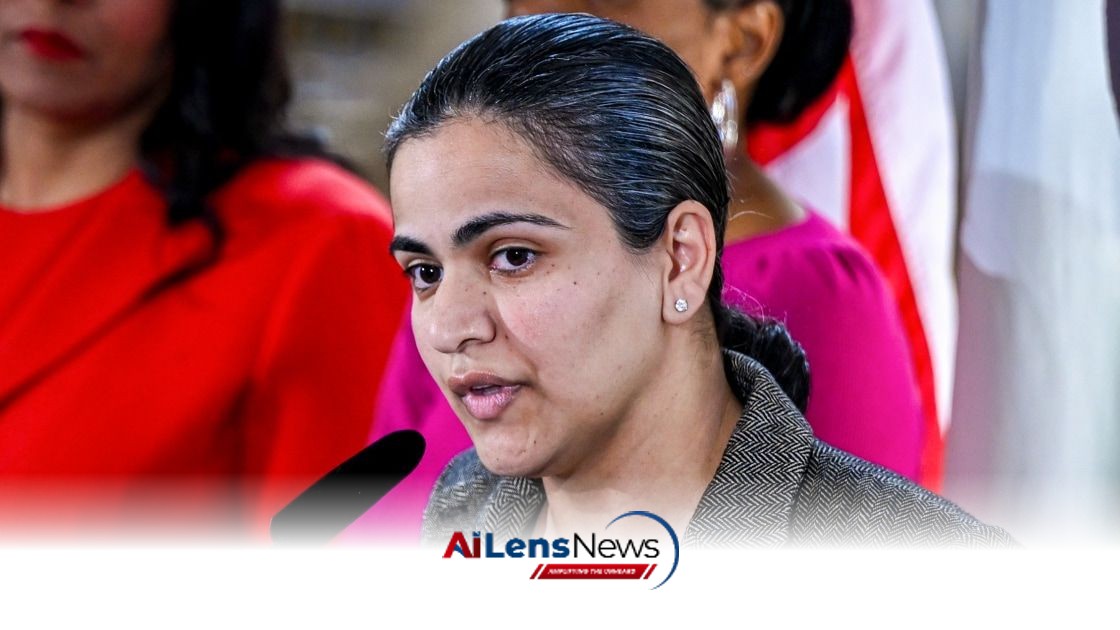



Democratic state Senator Aisha Wahab wins the special election for California's 14th District, succeeding Eric Swalwell amid a contentious race.
Washington DC, United States Aug 21, 2026 ALN: Democratic state Senator Aisha Wahab has successfully emerged victorious in the special election for California’s 14th District, as projected by NBC News. This win allows her to serve out the remaining months of former Representative Eric Swalwell’s term, who resigned from Congress in April amid serious allegations of sexual assault, which he has categorically denied.
The special election followed a primary held on June 16, where none of the candidates managed to secure a majority of the votes. In that initial primary, Wahab received 43% of the votes, significantly ahead of her closest competitor, fellow Democrat Melissa Hernandez, who garnered 17%. The final election results were much closer, with Wahab leading Hernandez by a narrow margin of 53% to 47%, as 95% of the expected votes had been counted. This close outcome indicates a competitive race and highlights the shifting political landscape within the district.
The context of this election is critical, particularly given the backdrop of Swalwell’s resignation. His departure from Congress, amidst serious allegations, has left a significant void in California's 14th District, which encompasses parts of the East Bay, including cities like Dublin, Livermore, and Pleasanton. The district has historically leaned Democratic, but the dynamics of the race were influenced by various factors, including the candidates' positions on key issues and the involvement of external political groups.
In the final weeks leading up to the election, a super PAC aligned with the pro-Israel American Israel Public Affairs Committee (AIPAC) made a substantial investment in the race, reportedly spending around $2.5 million in opposition to Wahab. This financial backing underscores the ongoing influence of pro-Israel groups in American politics, particularly in Democratic primaries and elections. Wahab has been vocal in her criticism of Israel’s actions in its ongoing conflict with Hamas in Gaza, labeling them as genocide. Her campaign website explicitly condemned the “AIPAC-linked dark-money PACs” that sought to undermine her candidacy, framing her victory as not just a personal achievement but also a stand against the influence of such organizations in local politics.
In contrast, Hernandez, who serves on the Bay Area Rapid Transit board of directors, did not publicly affirm her stance on Israel during an April forum when asked whether the country was committing genocide. This divergence in positions on a contentious foreign policy issue may have played a role in shaping voter opinions and preferences in the district, which has a diverse electorate with varying views on international relations.
The implications of Wahab's victory extend beyond her individual political career. It reflects a broader trend within the Democratic Party, where candidates are increasingly scrutinized for their positions on foreign policy, particularly regarding Israel and Palestine. The Democratic Party has seen a growing faction that advocates for a more critical stance on Israel, particularly among younger voters and progressive activists. Wahab's win could signify a shift towards this more progressive viewpoint within the party, especially as the 2024 elections approach.
The influence of AIPAC and similar organizations has been a contentious topic in American politics, with some candidates benefiting from their support while others have faced significant backlash. For instance, while AIPAC-backed candidates have achieved notable victories in states like Illinois and Maryland, there have also been defeats, such as Democratic Representative Haley Stevens, who lost her Senate primary despite receiving over $30 million in backing from AIPAC-linked super PACs. This dichotomy illustrates the unpredictable nature of campaign financing and its impact on electoral outcomes.
Wahab's victory is not only a personal milestone but also a reflection of the changing dynamics within the Democratic Party and the electorate's evolving attitudes towards foreign policy and campaign financing. As political campaigns continue to be shaped by significant financial contributions from super PACs and interest groups, the implications for future elections will be profound. Wahab's success may inspire other candidates who share similar progressive views to run for office, potentially reshaping the political landscape in California and beyond.
In conclusion, Aisha Wahab's victory in California's 14th District special election serves as a microcosm of the larger ideological battles within the Democratic Party. It highlights the tensions between traditional party support from established interest groups and the rising influence of progressive candidates advocating for a reevaluation of longstanding foreign policy positions. As Wahab steps into her new role, her actions and decisions will likely be closely watched, not only for their immediate impact on her constituents but also for the broader implications they may have on the future of the Democratic Party and its stance on critical issues such as foreign policy and campaign financing.
To learn more about the latest developments in Elections, stay updated with our exclusive reports and analyses on AILensNews.

