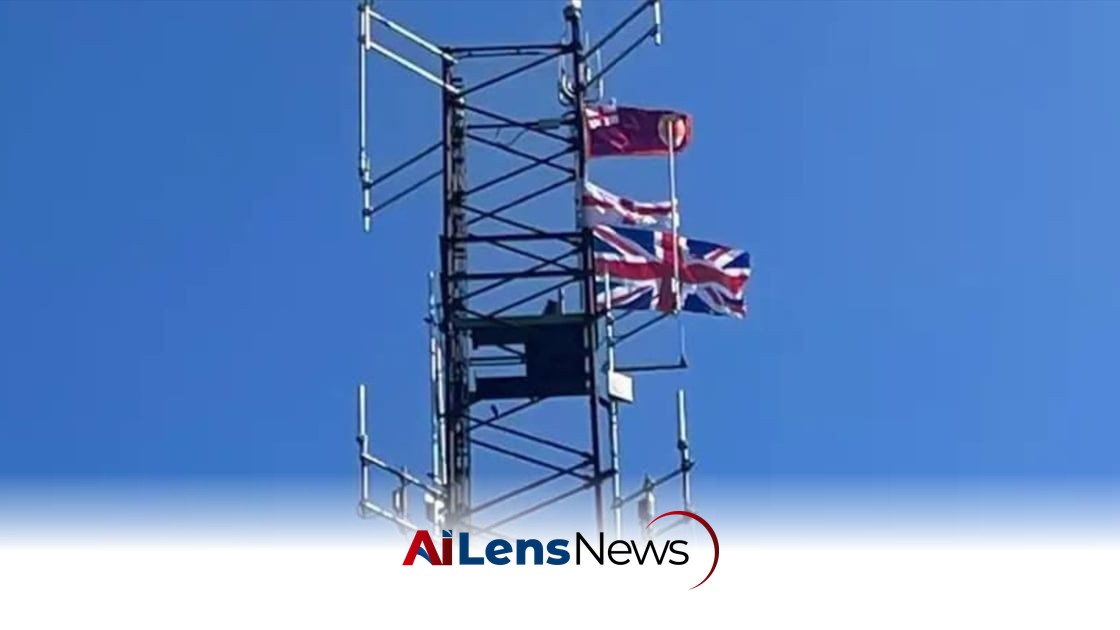


A UVF flag displayed at Carrigatuke viewpoint in Co Armagh has been condemned as a sectarian act, prompting police investigations under terrorism laws.
London, United Kingdom Jul 16, 2026 ALN: A UVF flag hung from a hilltop phone mast overlooking the areas where the Glenanne Gang were active during the Troubles has been slammed as a “deliberate act of sectarian intimidation.” The flag, which is purple and prominently displays the emblem of the Ulster Volunteer Force (UVF), was placed atop a telecommunications mast at Carrigatuke viewpoint in County Armagh, a location that holds historical significance within the context of Northern Ireland's troubled past. This particular viewpoint is situated above a Union flag and an Ulster banner, further emphasizing the sectarian undertones of the display.
The UVF, originally founded in 1912 by Edward Carson, has a long and violent history, particularly during the Troubles, a period of conflict in Northern Ireland that lasted from the late 1960s until the Good Friday Agreement in 1998. The modern UVF, which is a proscribed organization, has been responsible for numerous murders and acts of violence, making the display of its flag a sensitive issue for many in the community.
Police have confirmed that they are investigating the flag's appearance as a potential criminal offence under terrorism legislation. This investigation is part of a broader effort by law enforcement to address the display of flags associated with paramilitary organizations, particularly in areas where such displays can be seen as acts of intimidation or territorial marking.
As of Wednesday, it was still fluttering at the peak overlooking areas including Keady and Newtownhamilton, locations that have been historically linked to UVF activities and violence, including those carried out by the notorious Glenanne Gang. This gang was implicated in numerous killings and is often cited as a significant player in the sectarian violence that characterized the Troubles. The flag's presence at this particular site is seen by many as a provocative act, intended to assert dominance and intimidate local communities, particularly those who have suffered due to UVF actions in the past.
The phone tower on which the flag is displayed is owned by Cellnex UK, a telecommunications infrastructure company. The land itself is managed by the Forest Service, an arms-length body of the Department for Agriculture, Environment and Rural Affairs (DAERA). The involvement of these organizations raises questions about the responsibilities of private companies and public bodies in addressing the presence of sectarian symbols in shared public spaces.
The Police Service of Northern Ireland (PSNI) has recently taken steps to remove flags linked to illegal organizations in Belfast, following an amendment to terrorism legislation that has provided them with more robust powers to act against such displays. This change in policy reflects a growing recognition of the need to address the legacy of the Troubles and the ongoing impact of sectarianism in Northern Ireland.
Local Sinn Féin councillor Bróna Haughey has called for the immediate removal of the UVF flag from Carrigatuke viewpoint, labeling it a “shared public space of historical importance and natural beauty.” Haughey emphasized that the area should be free from sectarian displays and intimidation, stating, “It belongs to everyone.” She argued that the display of a UVF flag at this location is particularly offensive given the area's history and the suffering caused by the UVF and the Glenanne Gang.
Haughey's comments underscore a broader sentiment within the community that seeks to move beyond the sectarian divisions of the past. She has raised the issue with both the PSNI and the Forestry Service, emphasizing the need for everyone to be able to enjoy Carrigatuke without being confronted by symbols of sectarianism and paramilitarism. This reflects a growing desire among many residents for a more inclusive and peaceful community, one that acknowledges the past while striving for a more harmonious future.
A PSNI spokesperson confirmed: “Police are aware of a flag linked to a proscribed organisation in the Carrigatuke Viewpoint area of Armagh. This is being investigated as a criminal offence, under Section 13 of the Terrorism Act 2000. Enquiries are ongoing and anyone with any information that could assist is asked to contact police on 101.” The PSNI's involvement highlights the seriousness with which authorities are treating the matter, particularly in light of the flag's historical and political implications.
In recent weeks, the PSNI has taken action to remove UDA flags from lampposts in the Beersbridge Road area of Belfast, indicating a renewed commitment to tackling the display of symbols associated with paramilitary organizations. The police stated that they are investigating the erection of one of these flags as a criminal offence, demonstrating a proactive approach to addressing sectarian displays.
Historically, the PSNI has been reluctant to remove flags associated with proscribed organizations, often citing a lack of statutory authority to do so and the need to assess risks to public safety. However, recent events have shown a shift in this stance, with officers making dozens of arrests and submitting 32 files to the Public Prosecution Service related to alleged displays of support for the Palestine Action campaign group, which was proscribed in the UK last year. This suggests a more aggressive approach to enforcing laws related to terrorism and sectarianism.
The recent amendment to the UK’s Terrorism Act has granted the PSNI the power to unconditionally confiscate flags and signs featuring emblems of proscribed organizations. This legislative change is believed to have spurred the removal of UDA flags in Belfast and reflects a growing recognition of the need to address the legacy of the Troubles and the ongoing impact of sectarianism in Northern Ireland. The implications of this shift in policy are significant, as it may lead to a broader crackdown on sectarian displays and a more concerted effort to foster peace and reconciliation in a region still grappling with the scars of its past.
To learn more about the latest developments in Political Controversies, stay updated with our exclusive reports and analyses on AiLensNews.

