

President Trump's plan to shrink Bears Ears and Grand Staircase-Escalante national monuments reignites debates over public land management and conservation.
London, United Kingdom Jul 14, 2026 ALN: President Donald Trump announced on Monday his intention to scale back the Bears Ears and Grand Staircase-Escalante national monuments in Utah, revisiting actions from his first term that were later reversed. This announcement has reignited a contentious debate surrounding the management of public lands in the United States, particularly in the context of environmental protection, indigenous rights, and resource extraction.
This move directly challenges proclamations by his predecessors, who deemed these sites worthy of preservation under the 1906 Antiquities Act, a law granting presidents power to protect areas of cultural, historic, or scientific interest. The Antiquities Act was designed to safeguard significant landscapes and historical sites from degradation and exploitation, allowing presidents to create national monuments without the need for congressional approval. However, the act has also become a focal point for political disputes regarding land use and conservation policies.
The back-and-forth over these protected areas underscores how national monuments have become a significant flashpoint in the management of public lands. The debate often pits conservationists against local governments and industries that seek to utilize these lands for economic gain. This ongoing conflict reflects broader national conversations about environmental stewardship, economic development, and the rights of indigenous peoples.
While Trump made similar reductions during his first term, which were subsequently undone by his successor, he is not the first president to reduce the size of such monuments. The history of presidential actions regarding national monuments is complex, with various administrations taking different approaches to land management based on their political ideologies and priorities.
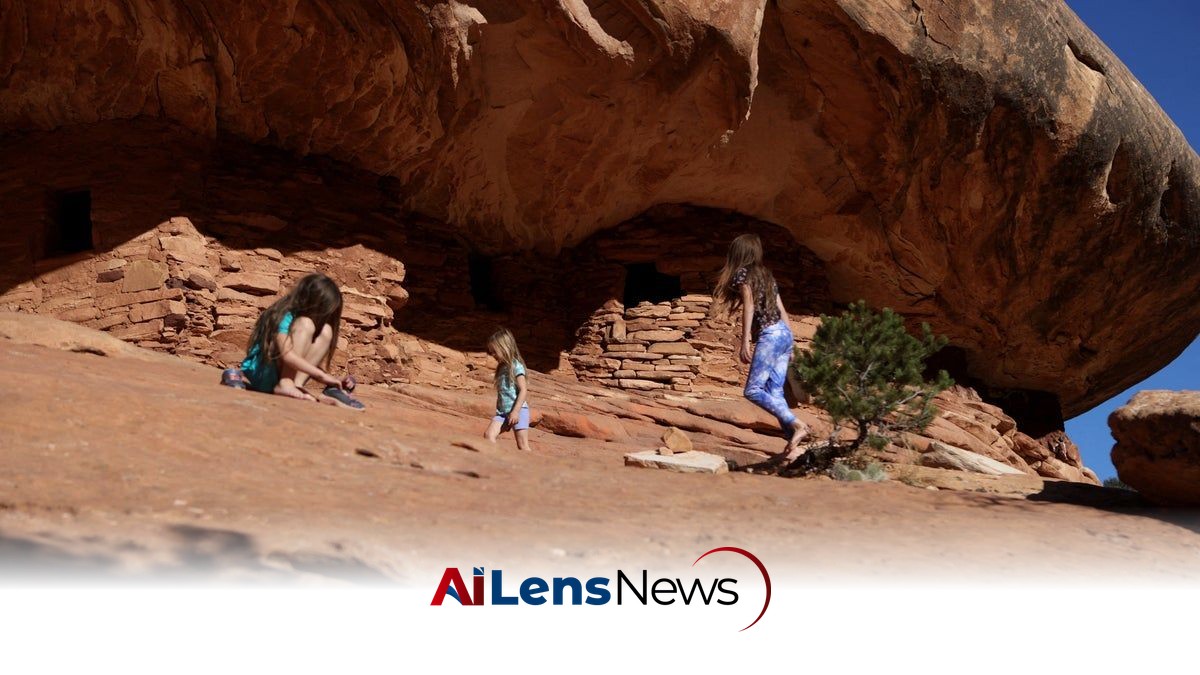
During his first term, Trump made only a handful of Antiquities Act proclamations, including two that reduced the size of Bears Ears and Grand Staircase-Escalante monuments. These sprawling Utah monuments include stunning natural features and sites sacred to some Native American tribes. Grand Staircase-Escalante also holds large coal reserves, while the Bears Ears area has uranium. The presence of these valuable resources has fueled arguments from proponents of reduction who claim that the protective boundaries hinder access to essential minerals necessary for economic growth and energy independence.
In contrast, Trump's administration also dedicated the 340-acre (138-hectare) Camp Nelson National Monument in Kentucky, which served as a Union Army hospital and recruiting center for African American troops during the Civil War. This action was seen as an effort to highlight and protect significant historical sites, albeit in a context that some critics argue is inconsistent with his approach to other national monuments.
President Joe Biden’s first use of the Antiquities Act was to restore the size of Bears Ears and Grand Staircase-Escalante. He cited their spiritual, cultural, and prehistoric legacy, emphasizing the importance of respecting indigenous heritage and the ecological significance of these lands. Biden's restoration efforts were part of a broader strategy to address climate change and promote conservation, reflecting a shift in priorities from the previous administration.
Proponents of the reductions say the protective boundaries stretch too far and hinder mining for essential minerals. Trump framed the move as giving back land to the people during a signing event at the White House on Monday, suggesting that local communities should have more control over their natural resources. This rhetoric resonates with many in Utah, where state officials have long argued that the state should be in charge of managing its own lands.
“The question has never been whether to protect them, but how to protect them best,” said Gov. Spencer Cox, a Republican. His office assured that the lands left out of the modified boundaries “remain protected under existing federal and state law.” This statement reflects a common argument among state officials who advocate for local management of public lands, believing that they can balance economic development with conservation efforts more effectively than federal oversight.
However, some conservationists and citizens of local tribal nations warned that the order opens the door to mining interests while disrespecting tribal co-stewardship. Bears Ears is jointly managed by an agreement between tribal nations and federal agencies, highlighting the importance of indigenous voices in land management decisions. Critics argue that reducing the size of the monument undermines the collaborative efforts established to protect the cultural and ecological integrity of the area.
“Our connection to this place cannot be erased by the stroke of a pen,” said Davina Smith-Idjesa, a citizen of the Navajo Nation and co-chair of the Bears Ears Inter-Tribal Coalition. This sentiment echoes the concerns of many indigenous leaders who view the land not merely as a resource but as an integral part of their identity, culture, and history. The ongoing struggle for recognition and respect for indigenous rights in land management is a critical aspect of this debate.
Environmental groups have argued that the Antiquities Act is a one-way road that allows presidents to create but not undo monuments. However, there’s a history of presidents taking actions similar to Trump’s. Since 1912, presidents have issued more than a dozen proclamations that diminished monuments, according to a National Park Service database. This history raises questions about the legality and implications of such actions, as well as the potential for future administrations to continue this trend.
In Washington state, Woodrow Wilson reduced the acreage of Mount Olympus National Park — now Olympic National Park — by roughly half. Harry Truman did the same for Santa Rosa Island National Monument. Dwight Eisenhower was most active in undoing proclamations of his predecessors, as he diminished six monuments, including Arches in Utah, Great Sand Dunes in Colorado, and Glacier Bay in Alaska, which have all since become national parks. These historical precedents illustrate that the practice of altering national monuments is not unprecedented, but it remains controversial and often contentious.
Unlike national parks, which are established by Congress, most of the more than 100 national monuments were created by presidents. They’re governed by one or more agencies such as the National Park Service, Bureau of Land Management, or National Oceanic and Atmospheric Administration. This distinction is significant, as it affects the management and protection of these lands, often leading to conflicts over land use priorities.
A designation provides sweeping protections not just for significant geological features or artifacts but also for the surrounding landscape, banning drilling, mining, and new construction. Backers downsizing the Utah monuments argue that the protective boundaries stretched too far and hindered mining for critical minerals, emphasizing the need for a balanced approach that considers both conservation and economic development.
National parks have some of the most stringent rules against development under a 1916 law known as the Organic Act. The law states that the fundamental purpose of the parks is to conserve their scenery, nature, history, and wildlife. This legal framework underscores the importance of preserving natural and cultural resources for future generations, a principle that is often at odds with resource extraction interests.
President Theodore Roosevelt signed the Antiquities Act after a generation of lobbying by educators and scientists who wanted to protect sites from commercial artifact looting and haphazard collecting by individuals. It was the first law in the U.S. to establish legal protections for cultural and natural resources of historic or scientific interest on federal lands. The act was a response to growing concerns about the degradation of significant landscapes and the need for federal intervention to safeguard these treasures.
On September 24, 1906, Roosevelt used it to designate a national monument at Devils Tower — a giant rock butte in eastern Wyoming that later gained fame as the focus of the movie “Close Encounters of the Third Kind.” This landmark decision set a precedent for future presidents to utilize the Antiquities Act to protect important sites across the nation. All but three presidents have used the act to protect unique landscapes and cultural resources, reflecting a broad consensus on the value of preserving America's natural heritage.
To learn more about the latest developments in Political Controversies, stay updated with our exclusive reports and analyses on AiLensNews.

