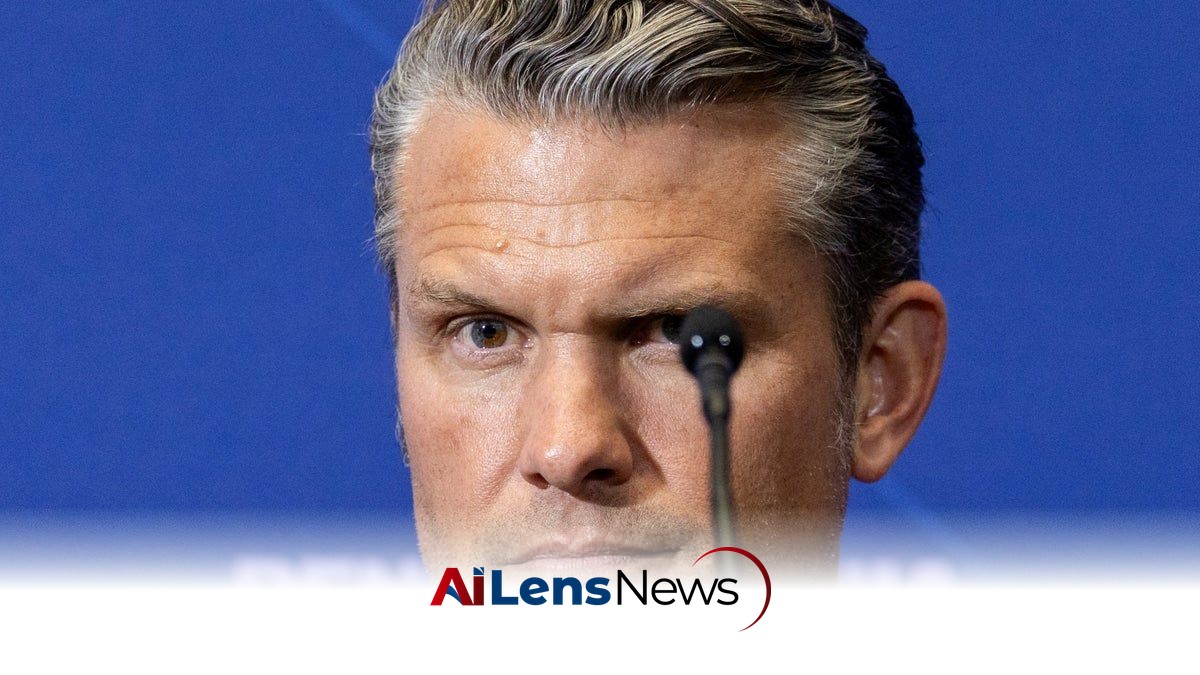


During a recent speech at the Pennsylvania Defense and Innovation Summit, President Trump commended Defense Secretary Pete Hegseth for his push to pardon soldiers involved in controversial military actions.
London, United Kingdom Jul 16, 2026 ALN: President Donald Trump has praised his Defense Secretary Pete Hegseth while reflecting on his record of pressing him to pardon U.S. soldiers who “killed a lot of people.” This statement was made during the Pennsylvania Defense and Innovation Summit at the U.S. Army War College in Carlisle, Pennsylvania, where Trump highlighted Hegseth's advocacy for soldiers facing serious legal challenges due to their actions in combat. The president's comments underscore a broader narrative concerning military justice and the treatment of service members accused of crimes during warfare.
Trump referred to Hegseth as “amazing,” thanking him for doing a “great job” at the Pentagon. The president also reminisced about Hegseth’s previous career as a television presenter on Fox News, where he often discussed military matters. Trump’s remarks suggest a personal rapport between the two men, as he recounted a past conversation where Hegseth urged him to consider pardoning several soldiers. This interaction highlights the ongoing debate about the moral and legal complexities faced by military personnel in combat situations.
During the summit, Trump recounted Hegseth’s lobbying efforts by saying, “Sir, will you give a pardon to 19 soldiers?” to which Trump responded with skepticism, asking, “Why?” Hegseth’s reasoning—that the soldiers were trained to kill and acted according to their military training—reflects a controversial perspective that prioritizes the realities of combat over legal repercussions. Trump’s subsequent pardons of military personnel have sparked significant discussion regarding accountability and the standards of conduct expected from U.S. soldiers in combat.
“And I pardoned a lot of people and they’ve all been well behaved, right? OK good, otherwise it would be a big story! ‘Trump shouldn’t have let them go.’ But I’m blaming you Pete, OK?” Trump quipped, eliciting laughter from the audience. This light-hearted banter belies a serious issue that affects not only the individuals involved but also the reputation of the military justice system as a whole.
Hegseth's advocacy for pardons has been particularly notable in the context of high-profile cases involving U.S. military personnel. Notably, during Trump’s first term, Hegseth lobbied for the pardons of three soldiers: Navy SEAL platoon leader Edward Gallagher, Major Mathew Golsteyn, and Army 1st Lieutenant Clint Lorance. These cases have drawn considerable media attention and public scrutiny, raising questions about the implications of such pardons on military discipline and the rule of law.
Edward Gallagher was charged in September 2018 with offenses under the Uniform Code of Military Justice after being accused of fatally stabbing an injured ISIS prisoner, a minor, and subsequently taking a photograph with the deceased. While Gallagher was acquitted of murder after another individual took responsibility for the killing, he was convicted of “wrongfully posing for an unofficial picture with a human casualty.” Trump's decision to reverse Gallagher's demotion and allow him to retain his Trident Pin was seen as a break from military norms and sparked significant debate about the appropriate handling of military misconduct.
Similarly, Major Mathew Golsteyn and Army 1st Lieutenant Clint Lorance were charged with murder in separate incidents involving Afghan civilians during the prolonged military engagement in Afghanistan. Both were pardoned by Trump on November 15, 2019, which further fueled discussions about the moral implications of military actions and the accountability of service members in combat scenarios. These pardons raised concerns among military leaders and legal experts regarding the potential erosion of military discipline and the precedent set for future cases.
Since assuming leadership of the Department of Defense, Hegseth has made it a priority to challenge what he perceives as “woke” ideology within the military. He has advocated for a return to a more traditional, combat-focused mentality, arguing that this shift is necessary to ensure the effectiveness and readiness of U.S. forces. This stance has resonated with segments of the military and political community who believe that the military should remain a bastion of discipline and operational effectiveness rather than becoming entangled in social and political debates.
Hegseth has also voiced concerns about the physical fitness and grooming standards of troops, suggesting that a focus on personal appearance and discipline is critical to maintaining a capable fighting force. His comments reflect a broader cultural struggle within the military, as various factions debate the balance between inclusivity and operational readiness. Hegseth's efforts to instill a more rigorous approach to military life have garnered both support and criticism from different groups within the armed forces.
In addition to his domestic focus, Hegseth gained significant visibility during the Iran conflict, where he held combative daily press briefings on the progress of Operation Epic Fury. His confrontational style, particularly when addressing journalists, has been characterized by a strong defense of military actions and a dismissal of questions he deemed unpatriotic or hostile. This approach has appealed to segments of the public who favor a more aggressive stance in international relations, but it has also drawn criticism from those who argue that transparency and accountability are essential components of a functioning democracy.
Trump’s remarks about Hegseth during the summit not only celebrate the secretary’s contributions but also reflect the administration's broader strategy regarding military personnel and the legal ramifications of their actions. The pardoning of soldiers accused of serious crimes continues to be a contentious issue, as it raises fundamental questions about justice, accountability, and the nature of military service. As the U.S. military navigates these complex issues, the implications of such pardons will likely resonate throughout the ranks and influence the public’s perception of military conduct in the years to come.
To learn more about the latest developments in Political Controversies, stay updated with our exclusive reports and analyses on AiLensNews.

