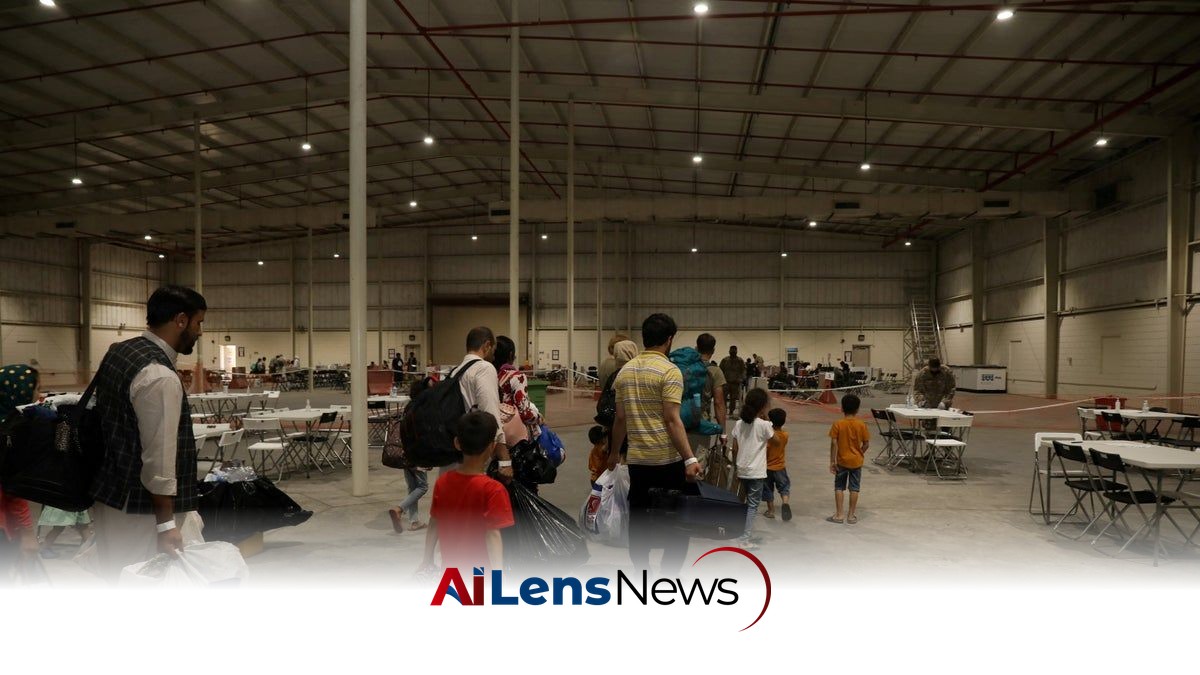


Concerns arise as the Trump administration plans to interview Afghan refugees in the U.S., potentially using gathered information for deportations.
London, United Kingdom Jul 25, 2026 ALN: The recent initiative by the Trump administration to interview Afghan immigrants residing in the United States has sparked significant concern among refugees and advocacy groups. This effort, reportedly spearheaded by the Office of Refugee Resettlement (ORR), aims to engage with approximately 800 Afghans in what has been described as a "wellbeing initiative." The stated objective of this initiative is to assess the common challenges faced by Afghan refugees who may find themselves in vulnerable situations. However, many fear that the sensitive information gathered during these interviews could ultimately be used to facilitate deportations.
The ORR's initiative, as detailed in an internal email obtained by The Washington Post, involves inquiries regarding the identities of the respondents, their assimilation into American culture, and the immigration status of each member of their household. Notably, the questionnaire includes a disclaimer indicating that responses are not anonymous and that the information provided could be retained for a period of 15 years. Such stipulations have raised alarms among those who believe that the collection of this data could lead to adverse consequences for Afghan immigrants, who are already navigating a precarious existence in the U.S.
Activists have indicated that the interviews may have already commenced, with reports suggesting that they could have begun as early as a Thursday in mid-July. Shawn VanDiver, the founder of the advocacy group #AfghanEvac, expressed deep concerns regarding the motivations behind this initiative, stating that he has received information suggesting that the program may have "nefarious" intentions. His sentiments reflect a widespread apprehension among Afghan refugees and their advocates, who are wary of any actions that could jeopardize their safety and stability.
Beth Oppenheim, the CEO of the refugee advocacy organization HIAS, echoed these concerns, emphasizing that Afghan refugees have faced numerous obstacles in their quest for safety and stability in the U.S. Oppenheim pointed out that many of these individuals have seen pathways to reunification with their families close off, leaving them in a state of uncertainty and fear. The potential for further distress stemming from these interviews only exacerbates their already fragile situation. The overarching sentiment among advocates is a desire for Afghan refugees to feel safe and secure in their new home, a goal that is increasingly difficult to achieve amid the current political climate.
In response to the growing backlash against the ORR's initiative, the agency has attempted to clarify its intentions. The Administration for Children and Families, which oversees the ORR, stated that the agency is committed to ensuring that the populations it serves receive the necessary services funded by American taxpayers. They indicated that the outreach efforts are designed to connect eligible individuals with ORR-funded services and that the agency is required by law to share information regarding individuals involved in suspected criminal activity. This assertion has done little to assuage the fears of many advocates, who remain skeptical of the government's true intentions.
The context surrounding this initiative is critical to understanding the apprehension it has generated. The Trump administration has a controversial track record regarding its treatment of Afghan refugees and immigrants more broadly. Over the past year and a half, the administration has implemented various policies that have effectively frozen refugee resettlement from most countries, stripped Afghan refugees in the U.S. of emergency protected status, halted new visa applications for Afghans, and imposed a ban on travel from Afghanistan to the U.S. These measures have left many Afghans in a state of limbo, unsure of their future and fearful of deportation.
Moreover, the situation has been further complicated by the administration's handling of Afghan refugees who were evacuated to a refugee center in Qatar following the fall of Kabul in 2021. More than 1,000 individuals remain in limbo at this center, which was established as part of an effort to resettle Afghans who had collaborated with U.S. forces. Recent reports have suggested that the administration is considering relocating these individuals to the Democratic Republic of Congo, a move that has been met with skepticism and concern from advocates. Critics argue that such a relocation offers no real safety or security for these vulnerable individuals, as the DRC lacks established support systems for refugees and may not provide the legal protections they require.
The treatment of Afghan refugees has also drawn scrutiny due to reports of mistreatment within detention facilities. In March, the death of Mohammad Nazeer Paktiawal, an Afghan who had fought alongside U.S. special forces, raised serious questions about the conditions in which refugees are held. Paktiawal died within a day of entering Immigration and Customs Enforcement (ICE) detention, with his death certificate citing an adverse drug reaction to an unidentified substance. His family has expressed outrage and confusion over the circumstances surrounding his death, underscoring the urgent need for accountability and transparency in the treatment of Afghan refugees.
In late 2022, reports emerged indicating that the Trump administration was planning to re-interview and potentially revoke the status of hundreds of thousands of refugees who had been admitted to the U.S. during the Biden administration. A memo signed by Joseph Edlow, the director of U.S. Citizenship and Immigration Services, mandated a review and re-interview of approximately 233,000 refugees admitted between January 20, 2021, and February 20, 2025. This directive effectively halted the processing of green card applications from refugees admitted during this time frame, further complicating the situation for those seeking to establish stability in their new lives.
As the situation continues to evolve, the implications of the ORR's initiative and the broader policies of the Trump administration remain uncertain. Advocacy groups are mobilizing to raise awareness about the potential risks faced by Afghan refugees and to push back against policies that they believe undermine the safety and wellbeing of these vulnerable individuals. The ongoing dialogue surrounding the treatment of Afghan refugees highlights the intersection of immigration policy, human rights, and the need for compassion in the face of adversity.
In conclusion, the reported efforts by the Trump administration to interview Afghan immigrants have ignited fears of deportation and raised questions about the government's commitment to the welfare of those who have sought refuge in the U.S. The complex landscape of immigration policy, combined with the historical context of Afghan refugees' experiences, underscores the need for a careful and empathetic approach to addressing the challenges faced by these individuals. As advocacy groups continue to voice their concerns, the future of Afghan immigrants in the U.S. hangs in the balance, with many hoping for a resolution that prioritizes their safety and dignity.
To learn more about the latest developments in Political Controversies, stay updated with our exclusive reports and analyses on AiLensNews.

