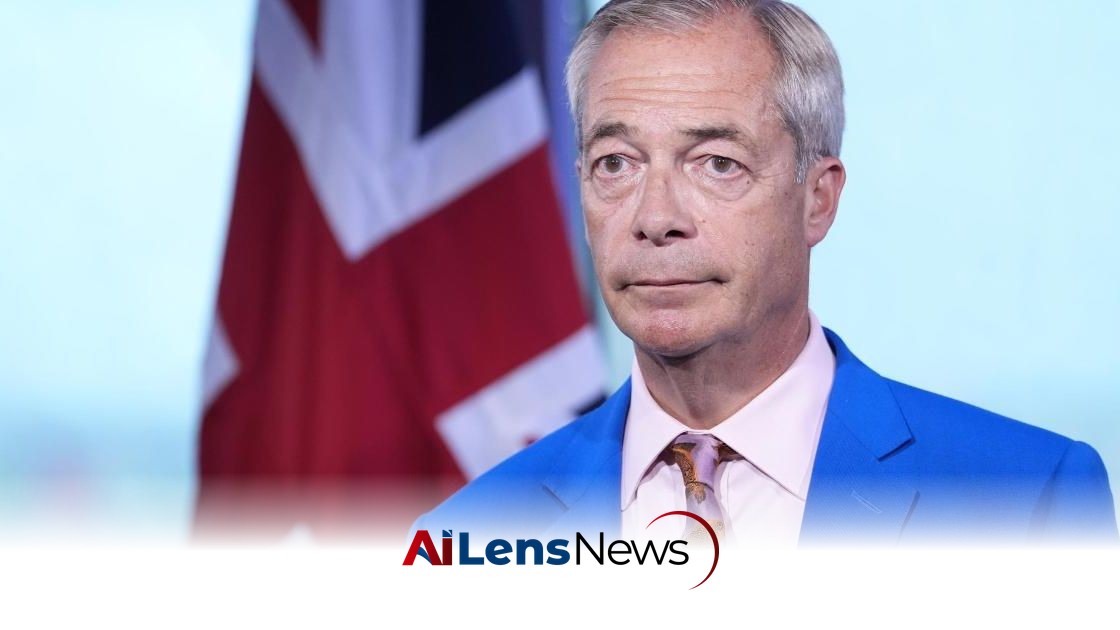


Reform UK has faced backlash for proposing an amendment that would criminalize election campaign materials in Scots and Gaelic, threatening jail time for violators.
London, United Kingdom Jul 14, 2026 ALN: Reform UK have sparked outrage after putting forward plans which would criminalise election campaign materials in Gaelic and Scots.
Nigel Farage's party has moved an amendment to a Westminster bill that would, if passed, criminalise all political materials that are not in or Welsh. This proposal has ignited significant debate around language rights, cultural identity, and the implications of such a legislative move on Scotland's political landscape.
If Reform's amendment to the Representation of the People Bill is passed, those in breach of the law could be jailed for up to six months and could also face a fine. The severity of this potential punishment raises questions about freedom of expression and the role of language in political discourse. Critics argue that such a law could stifle democratic participation and marginalize communities that use these languages.
: 'Authoritarian' immigration bill passes despite Labour rebellion
The amendment was put forward by Reform UK deputy leader Richard Tice and was backed by party MPs Lee Anderson, Sarah Pochin, Danny Kruger, Robert Jenrick, Andrew Rosindell, and Suella Braverman. This coalition of support within the party reflects a broader trend within some political factions in the UK that seek to centralize power and diminish the recognition of regional identities and languages.
The Scottish National Party (SNP) has condemned the proposal, asserting that Reform UK is plotting "to crush Scotland's native Scots and Gaelic languages." This sentiment is echoed by many who view the amendment as a direct attack on Scottish culture and identity. SNP MSP for the Highlands and Islands Maree Todd articulated her concerns by stating that the plans were "all too reminiscent of the brutal anti-Gaelic laws of the Highland Clearances," a historical reference that underscores the long-standing struggles of Gaelic speakers in Scotland.
Maree Todd MSP (Image: Fraser Bremner/Scottish Daily Mail/PA Wire)
She went on: “This despicable anti-Scottish amendment is deeply telling – Reform want to see any trace of our native languages removed from Scottish politics. Not content with plans to cut our MSPs and 'review' the powers of Holyrood, Farage and his cronies want to threaten jail time upon anyone in Scotland who publishes political materials in Scots or Gaelic." This statement highlights the perceived threat to Scotland's devolved powers and the autonomy it has over its linguistic and cultural affairs.
: Andy Burnham’s 'sorry' on Labour support for Israel isn’t a real apology at all
Todd called on Reform to "do the right thing" and "apologise to the people of Scotland for attempting to criminalise election materials written in Scottish languages." She also demanded the party "immediately withdraw this outrageous amendment," reflecting a desire among many in Scotland to protect and promote their linguistic heritage in the face of what they see as oppressive legislation.
Meanwhile, Scottish Greens co-leader Gillian Mackay criticized the proposal, stating that "using censorship to control the languages people can use in political campaigns says everything about Reform UK's real priorities." This comment points to a broader concern regarding the implications of such laws on democratic freedoms and the inclusivity of political discourse. Mackay's remarks also draw attention to the political context in which Farage has been active, noting that he has previously attempted to divert attention from pressing issues by instigating controversies, such as forcing a by-election against a satirical candidate.
She told The National: "I was proud to join Hannah Spencer on the campaign trail in Gorton and Denton earlier this year, because she treated everyone as worth speaking and listening to - but Reform UK attacked her for that inclusivity, and now they are trying to write those prejudices into law." This statement emphasizes the importance of inclusivity in political dialogue and the dangers posed by legislation that seeks to limit language use.
"The amendment would criminalise publishing election material in Gaelic, Scots and even Latin. It is so absurdly broad that it would criminalise and jail producers of campaign leaflets written in Klingon from Star Trek." Mackay's hyperbolic example illustrates the perceived overreach of the proposed amendment and raises questions about the practicality and rationale behind such a sweeping legislative measure.
“Threatening people with prison over Klingon is clearly not a serious or sensible use of Parliament’s time, and is the kind of lawmaking Westminster produces when it is left to London to decide." This critique of Westminster's approach to lawmaking highlights a growing frustration among many in Scotland regarding the perceived disconnect between London-based policymakers and the realities of life in Scotland.
Mackay added: “Scotland should have the right to choose its own future and build an inclusive democracy that welcomes people in, respects the languages spoken and signed in our communities, and never treats accessibility as a crime.” This assertion calls for a more localized approach to governance that respects the diverse linguistic landscape of Scotland.
The Greens co-leader also pointed out that the "dangerously broad" amendment would also criminalise campaign videos in British Sign Language, which she said showed Reform are "putting up barriers and excluding people from political debate." This aspect of the proposal raises significant concerns about accessibility and representation for individuals who rely on sign language as a primary means of communication, further complicating the implications of the amendment.
Language expert and journalist Sophia Smith Galer branded Reform's proposal as "plainly discriminatory," saying that it targets both indigenous UK languages and multilingual communities. She told Byline Times: "It's discriminatory not only to the other indigenous languages of the UK affected by this ... but also to individuals who could be publishing political literature in any of the migrant languages that also have a home here." This perspective highlights the intersectionality of language rights and immigration, suggesting that the amendment could have far-reaching consequences for a diverse range of communities.
It comes after Farage launched an attack on bilingual children in Glasgow last year, many of whom speak Gaelic, where he accused them of "culture smashing" the city. This comment has been widely criticized as part of a broader pattern of rhetoric that seeks to undermine the value of cultural and linguistic diversity in the UK.
Gaelic was given official status alongside Scots last June as part of the Scottish Languages Bill, which was voted through unanimously. This legislative development marked a significant step in recognizing and protecting Scotland's linguistic heritage, making the current proposals from Reform UK particularly contentious in light of recent progress made in this area.
Reform UK have been approached for comment, but their response to the growing backlash remains to be seen. The proposed amendment has sparked a lively debate about the role of language in politics, the rights of minority language speakers, and the broader implications for democratic engagement in Scotland and beyond.
To learn more about the latest developments in Political Controversies, stay updated with our exclusive reports and analyses on AiLensNews.

