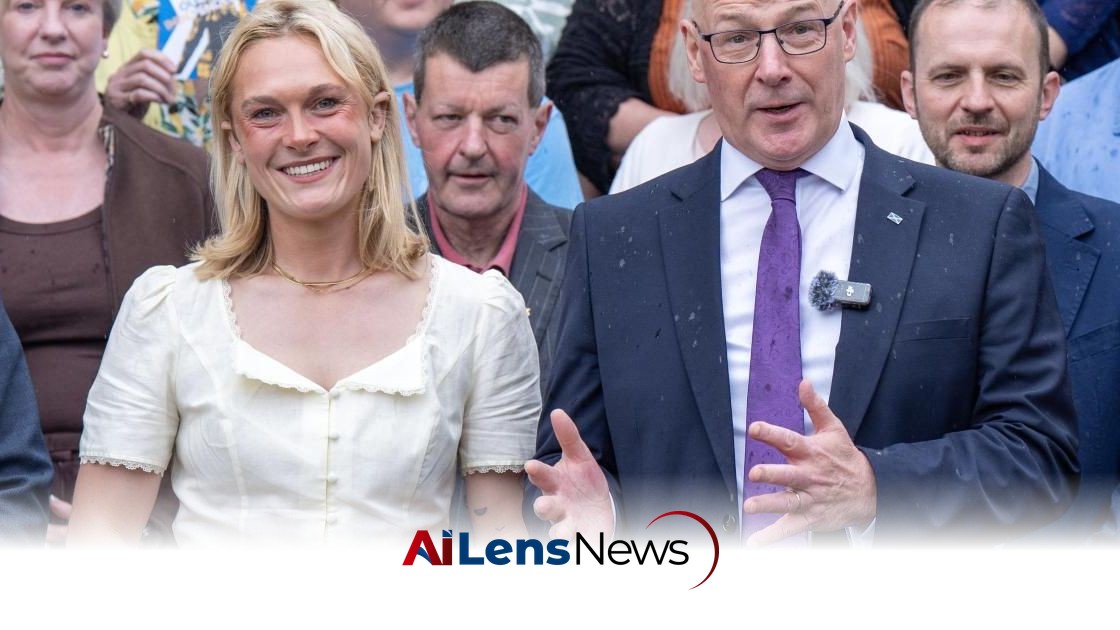


John Swinney's much-discussed 'secret plan' for a second Scottish independence referendum appears to be non-existent. With the SNP lacking a majority, the path to independence may rely on future negotiations in a hung parliament.
London, United Kingdom Jul 29, 2026 ALN: The elephant in the room is John Swinney’s much-reported “secret plan” to get a second independence vote. What is it? Will he deploy it? Now, with a new, arguably mandate-less, Prime Minister in office would seem the perfect time?
Asked all of these questions, the First Minister was evasive.
“I want to make sure we have a referendum on independence,” he said. “I want to make sure it happens, and that's what I'm going to concentrate on, making sure it happens.”
The first thing to note is that Swinney clearly doesn’t have a secret plan.
The second thing to note is that in this situation, with the SNP short of an outright majority in the Scottish Parliament, he never claimed to.
The words Swinney originally spoke back in October last year – which have since been distorted and misreported – were: "Nobody knows the tactics I’m going to deploy if we get 65 seats, so keep watching.”
The SNP did not win 65 seats (a majority in the 129-seat Holyrood parliament). They won 58. So any secret plan Swinney may have had is a bust.
And anyway, the reality is that there are no secret shortcuts, hidden hacks, smart workarounds, or backdoor tricks to independence.
Like those children on the bear hunt, Swinney cannot go over Westminster, cannot go under it, and cannot go around it. The only way is through.
Speaking to The National Podcast this week, newly elected SNP MP Lara Bird seemed to acknowledge this – and pointed to a way to a second independence referendum that must be the most realistic option available.
“What do we do when we keep having Westminster governments keep saying no?” she asked.
“I think you've got to be really realistic about what's going to happen in Westminster. I think there's a really strong chance that we have a hung parliament [after the 2029 General Election].”
Bird went on: “So you essentially have a situation where Labour, if they did remain in government, would have to work really closely with a lot of the smaller parties, including the SNP, where deals would be struck and negotiations would be had about how Labour got what they wanted whilst also giving others what they wanted.
“I think that provides a very unique opportunity for the SNP down in Westminster, where we are likely going to return – I hope we certainly return – 40-plus MPs at the next General Election, where in a hung parliament that gives us a really strong opportunity to negotiate with a Labour government.”
Maybe that is the most realistic route to a second independence referendum?
No UK Prime Minister wants to be the one who presides over the end of the Union, and there is a widespread (unspoken) expectation that should Scotland have a second vote, that is what will happen.
For the same reason, a SNP majority at Holyrood is likely a dead end. It’s only one chance every five years to up-end a system built to prevent single-party majorities – and even if it happens, we’re back to ‘Westminster’s saying no, we need a secret plan’. Some bet.
It's not too outlandish to think that independence could be won when the SNP holds enough political leverage at Westminster that a referendum becomes the price of doing business. It does, however, mean hard-working activists waiting for yet another General Election.
That may disappoint those hoping for a dramatic reveal of a “secret plan”. But politics has always been about power. In a hung parliament, the SNP may hold it.
To further understand the current political landscape, it is essential to consider the implications of the SNP's position within the broader context of UK politics. The SNP has long positioned itself as the primary advocate for Scottish independence, particularly since the 2014 referendum where the campaign for independence was ultimately unsuccessful. The dynamics have shifted since then, with Brexit and various political developments influencing public opinion and the SNP's strategy.
Brexit, in particular, has been a significant turning point. The 2016 referendum saw Scotland vote overwhelmingly to remain in the European Union, contrasting sharply with the overall UK result. This divergence has fueled the SNP's argument that Scotland's interests are not adequately represented within the UK framework. The party has since capitalized on this sentiment, advocating for another referendum to allow Scots to choose their future, especially in light of the changing political landscape.
Political analysts suggest that the SNP’s strategy may not solely rely on winning a majority in Holyrood. Instead, focusing on gaining influence within Westminster could be a more pragmatic approach, as highlighted by Bird's comments. The idea of a hung parliament could indeed provide the SNP with leverage, especially if they can align with other parties to form coalitions or agreements that favor their agenda.
However, the path to independence remains fraught with challenges. The UK government has consistently rejected calls for a second referendum, citing the need for a clear mandate from the Scottish electorate. This has led to frustration among independence supporters, who feel their voices are not being heard. The SNP's leadership must navigate these sentiments carefully while also managing the expectations of their base.
In the event of a hung parliament, the SNP's ability to negotiate effectively would be crucial. They would need to articulate a compelling case for why a second referendum should be a priority for the government formed from such a parliamentary landscape. This would require not only political skill but also a clear strategy that resonates with the wider electorate, both in Scotland and across the UK.
Moreover, the SNP would also need to address the concerns of those who remain skeptical about independence. Many voters express fears about the economic implications of breaking away from the UK, particularly in uncertain times. The SNP must provide reassurances and a robust plan that outlines the potential benefits of independence while addressing these concerns head-on.
In conclusion, while John Swinney’s alleged “secret plan” may not exist in the way some have speculated, the discussion surrounding a second independence referendum is indicative of broader political currents. The SNP's strategy appears to be evolving in response to the complexities of the current political climate. As Scotland continues to grapple with its identity and future within the UK, the party's ability to navigate these challenges and leverage opportunities could ultimately determine the fate of the independence movement.
To learn more about the latest developments in Elections, stay updated with our exclusive reports and analyses on AiLensNews.

