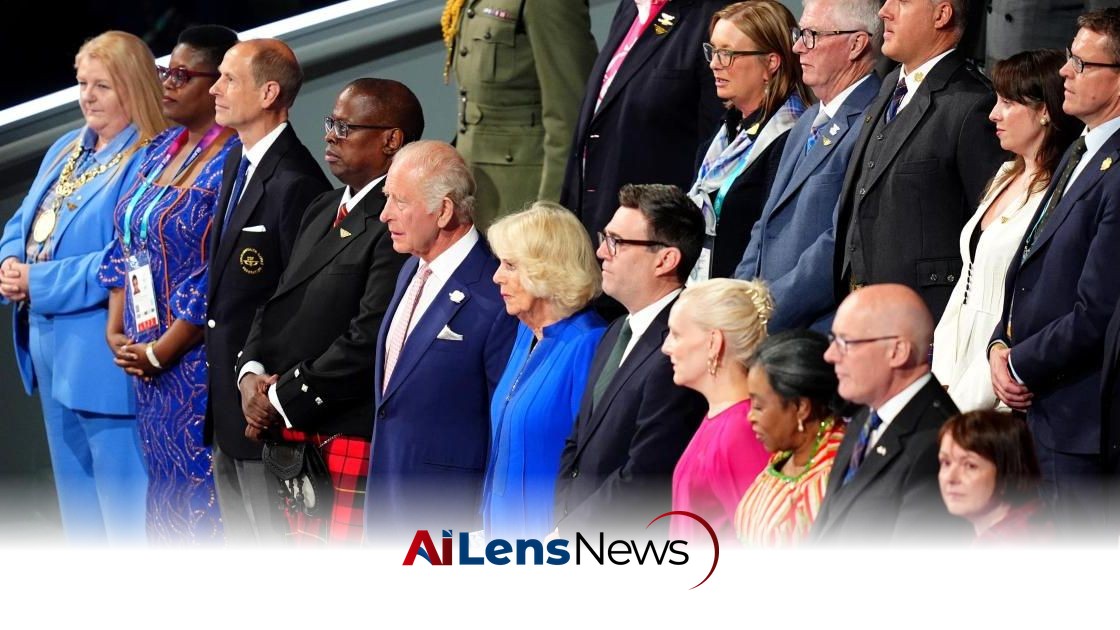


John Swinney's performance of 'God Save the King' at the Commonwealth Games has sparked criticism from pro-independence advocates, labeling it as 'anti-Scots'.
London, United Kingdom Jul 24, 2026 ALN: John Swinney singing God Save the King at the Commonwealth Games opening ceremony has come under criticism from pro-independence voices.
Footage of the First Minister at the event at The Hydro in Glasgow on Thursday evening has been shared widely online, including by the official Buckingham Palace account. The Commonwealth Games, a multi-sport event involving athletes from the Commonwealth of Nations, is often a moment of national pride and celebration. However, it can also be a flashpoint for political tensions, particularly in a country like Scotland, where discussions around independence from the United Kingdom remain a contentious issue.
Several pro-independence accounts on Twitter/X, many of whom are supporters of Liberation Scotland, have criticized Swinney for joining in with the singing. The backlash highlights the ongoing divide within Scotland regarding its identity and relationship with the UK. Swinney's participation in the anthem, which is associated with the British monarchy, has been interpreted by some as a betrayal of Scotland's aspirations for independence.
Some versions of the UK national anthem contain a verse that says there are “rebellious Scots to crush,” but it is rarely included in official events. This particular line has historically been a point of contention among Scots, as it evokes feelings of subjugation and colonialism. The anthem's association with British imperialism and its implications for Scottish identity make it a sensitive subject among those advocating for Scottish independence.
Swinney was sitting in the royal box during the ceremony alongside the King and Queen and new UK Prime Minister Andy Burnham. His position in such a prominent location at the event has led to further scrutiny, as some see it as an endorsement of the British establishment. After the royals appeared on stage, a choir led the crowd in a rendition of the anthem, alongside many Commonwealth leaders. Swinney, who was positioned at the end of the front row, could be seen joining in, which some interpreted as an act of loyalty to the monarchy.
However, some social media users described Swinney singing as “deeply embarrassing” and “cringey.” The negative reactions reflect a broader sentiment among certain segments of the Scottish population who feel that their leaders should be more attuned to the aspirations of those who favor independence. The row went viral on X, with many pro-independence accounts weighing in. James Campbell said: “FM John Swinney is trending on X for not reading the room.” This statement encapsulates the sentiment that Swinney's actions were out of touch with the feelings of many Scots regarding their national identity.
“Sorry John, as a sovereign Scot, this and your inability to progress independence, and your refusal to get behind Liberation Scotland means I no longer have confidence in you as FM,” one user expressed, showcasing the frustration felt by some constituents. The criticism from pro-independence voices underscores the pressure on political leaders in Scotland to align with the sentiments of their constituents, particularly in a climate where the independence movement remains active.
Liberation Scotland Committee wrote on X: “How does Scotland ever decolonise by maintaining at the head of what it thinks is its nationalist party a 'leader' who sings his heart out like a linty when the national anthem of the colonising state strikes up?” This statement reflects a broader critique of Scottish political leadership and its perceived failure to fully embrace and advocate for independence. The use of the term 'linty,' which refers to a small bird often seen as insignificant, suggests a view of Swinney as lacking the gravitas needed to lead Scotland towards independence.
“Even when he's humiliatingly placed on the end of a row in an event held in his own country, a clear statement of the muscular Unionist variety by the British state. What an embarrassment. The man is a wally, and we use that word advisedly.” The criticism extends beyond Swinney's singing to encompass broader themes of representation and dignity in the face of perceived colonial attitudes.
Former diplomat Craig Murray queried whether the “rebellious Scots” line was sung, and said: “Swinney singing God Save the King – a directly anti-Scots song written for that purpose.” This perspective highlights the historical context of the anthem and its implications for Scottish identity. The notion that the anthem is anti-Scottish resonates with those who view the UK as a colonial power that has historically suppressed Scottish independence.
“The way he accepts such disrespect on Scotland’s behalf is unpardonable,” another user said. This sentiment reflects a growing frustration among those who feel that Scotland's leaders should actively challenge the status quo rather than acquiesce to it. “He has demeaned his position as First Minister…an absolute toady…a sycophantic twat….a disgrace,” another said, showcasing the intense emotions surrounding the issue of national identity and representation.
Sara Salyers, from Liberation Scotland, said: “Singing, ‘Send him victorious, happy & glorious, long to reign over us’ Swinney is seated to one side, an irrelevance, a minion shown his place in his own country while England’s king and Prime Minister sit in the first rank.” This statement highlights the perceived power dynamics at play, with Salyers suggesting that Swinney's actions reflect a subservient position within the broader UK political structure.
“Unionists are crowing over this. He has shamed us all.” This perspective illustrates the frustration among pro-independence advocates who feel that their leaders should be more assertive in representing Scotland's interests on the world stage.
Right-wing account Steven Rennie celebrated the footage, writing: "John Swinney belting out the BRITISH national anthem. Rule Britannia John, Rule Britannia. Fuck yer independence ya gullible clowns." This response underscores the divisive nature of the issue, with some viewing Swinney's actions as a victory for unionism rather than a setback for independence.
One account accused Liberation Scotland Committee of talking “utter tripe,” adding: “We are not a colony and most Scots still want to be part of Britain. People like you are what's wrong with Scotland with your nasty, divisive mentality.” This response highlights the polarization of opinions within Scotland regarding independence and the role of the monarchy. The assertion that “most Scots still want to be part of Britain” reflects the ongoing debate about national identity and the future of Scotland within the UK.
“Going mad because Swinney sung the national anthem. Get a life and if you're not happy here leave.” This comment encapsulates the frustration felt by some unionists who believe that calls for independence are divisive and detrimental to national unity.
It comes after Burnham told Swinney that discussions on independence are “off limits” at the event in Glasgow. This remark underscores the complexities of the political landscape in the UK, where leaders must navigate both national pride and the aspirations for independence. The remarks came following the first in-person conversation between the two leaders since Burnham became Prime Minister earlier this week. The insistence on avoiding discussions about independence at a major national event further illustrates the tensions that exist between unionist and nationalist sentiments within Scotland and the UK as a whole.
To learn more about the latest developments in Political Controversies, stay updated with our exclusive reports and analyses on AiLensNews.

