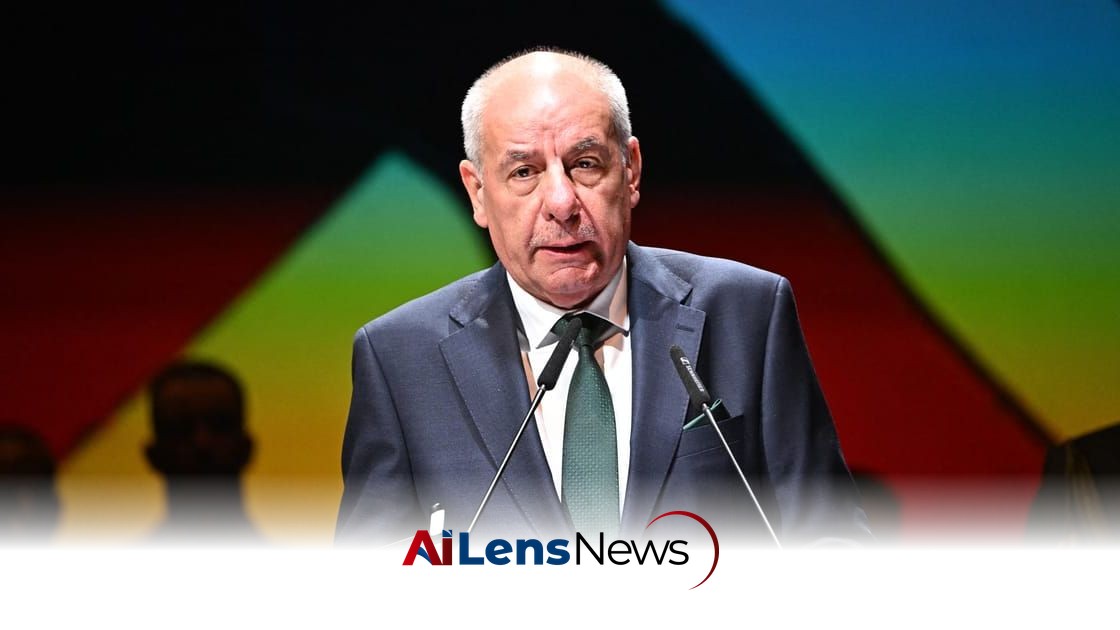


The Hungarian Parliament has passed a constitutional amendment to remove President Tamás Sulyok, part of Prime Minister Péter Magyar's efforts to dismantle Fidesz's influence.
London, United Kingdom Jul 13, 2026 ALN: The Hungarian Parliament has recently passed a significant constitutional amendment that will result in the ouster of President Tamás Sulyok, alongside the president of the Constitutional Court, Péter Polt. This legislative action marks a pivotal moment in Hungary's political landscape, reflecting the broader shifts in power dynamics following the recent elections.
Prime Minister Péter Magyar, leader of the Tisza party, introduced this amendment as part of a broader initiative aimed at dismantling the political structures established by the Fidesz party, which had governed Hungary for over a decade. Magyar has been vocal in his criticism of Sulyok and Polt, suggesting that their loyalties lie with the former ruling party rather than with the constitutional principles of the nation. In his address to Parliament, he argued that Sulyok consistently prioritized the interests of Fidesz over constitutional integrity, a sentiment that resonates with many of his supporters who seek to break free from the long-standing influence of Viktor Orbán's governance.
The amendment received overwhelming support in Parliament, passing with a vote count of 139 in favor and only six against, with members of Fidesz and its ally, the KDNP party, opting to boycott the vote. This boycott underscores the deepening divisions within Hungarian politics, as the Fidesz party, which had previously held a dominant position, now finds itself sidelined. Following the passage of the amendment, Sulyok is required to sign it into law within five days. Should he refuse, Magyar has indicated that he would pursue impeachment proceedings in Parliament, further escalating the political tensions.
This amendment represents the 17th alteration to the Hungarian constitution since its adoption, and it fulfills one of Magyar's key campaign promises: to dismantle what he describes as a "mafia" state created under Orbán's lengthy leadership. This term is indicative of the strong sentiments among Magyar's supporters who believe that the previous administration engaged in corrupt practices and nepotism, leading to a concentration of power that undermined democratic institutions.
In addition to the removal of Sulyok and Polt, the amendment introduces a series of reforms aimed at enhancing political accountability. One notable provision is the establishment of a 12-year term limit for lawmakers, which is designed to prevent the entrenchment of power among elected officials. Furthermore, the creation of a National Asset Recovery and Protection Office is intended to address corruption and ensure that those who have engaged in corrupt practices are held accountable.
Once the amendment is sent to Sulyok for his signature, he faces a critical decision. He has the option to sign the amendment, which would formalize his removal from office, or he could choose to challenge the amendment by sending it to the Constitutional Court. However, the Hungarian Helsinki Committee has raised concerns regarding the independence of the court, noting that it has been filled with loyalists during Orbán's tenure. This raises questions about the likelihood of a fair judicial review, as the court may only focus on procedural issues rather than addressing the constitutionality of the amendment itself.
The situation is further complicated by the fact that Hungary's top court has previously declined to intervene in related matters. In June, Sulyok had sought the court's evaluation of the legality of any legislation that could specifically target him for removal. However, the judges recused themselves, citing personal and direct involvement, which effectively prevented the court from hearing the case. This raises concerns about the checks and balances that are supposed to exist within Hungary's legal framework, and it highlights the challenges faced by those who seek to uphold constitutional norms in a politically charged environment.
Another significant aspect of the amendment is the reinstatement of a mandatory retirement age of 70 for all Constitutional Court judges. This provision will lead to the removal of four current justices, including Péter Polt, further reshaping the judicial landscape in Hungary. The implications of this change are profound, as it could lead to a court that is more aligned with the current government's agenda, potentially undermining the independence of the judiciary.
In a previous interview, Sulyok had expressed uncertainty about whether he would sign an amendment that would lead to his ousting, stating, "I can never say for certain in advance whether I will sign a law or not." This ambiguity suggests that he is acutely aware of the political ramifications of his decision, and it reflects the precarious nature of his position as president. The pressure from the current government to act in a particular manner has been palpable, with Magyar accusing Fidesz of attempting to exert control over the presidency.
Magyar's assertion that Fidesz has shifted to direct control in the Sándor Palace, the official office of the president, is a clear indication of the ongoing power struggle within Hungarian politics. Sulyok has countered these claims, accusing Magyar of attempting to manipulate public opinion and exert undue pressure on the presidency. This back-and-forth highlights the contentious atmosphere in which these political battles are taking place, with both sides vying for public support and legitimacy.
Sulyok, who was appointed president in 2024 by Orbán, has seen his popularity plummet, making him one of the most unpopular presidents in Hungary's post-Cold War history. His association with Orbán and the Fidesz party has significantly tainted his reputation, and many citizens view his presidency as a continuation of the previous administration's policies. As such, the push to remove him from office is seen by many as a necessary step toward restoring democratic governance in Hungary.
As the political landscape continues to evolve, the implications of this constitutional amendment are far-reaching. It signals a shift in power dynamics and raises questions about the future of Hungary's democratic institutions. The removal of Sulyok and Polt could pave the way for a new era of governance, but it also poses risks of further politicization of the judiciary and the potential erosion of checks and balances. The coming days will be crucial as Hungary navigates this period of uncertainty, and the decisions made by Sulyok and the Parliament will have lasting effects on the country's political trajectory.
To learn more about the latest developments in Political Controversies, stay updated with our exclusive reports and analyses on AiLensNews.

