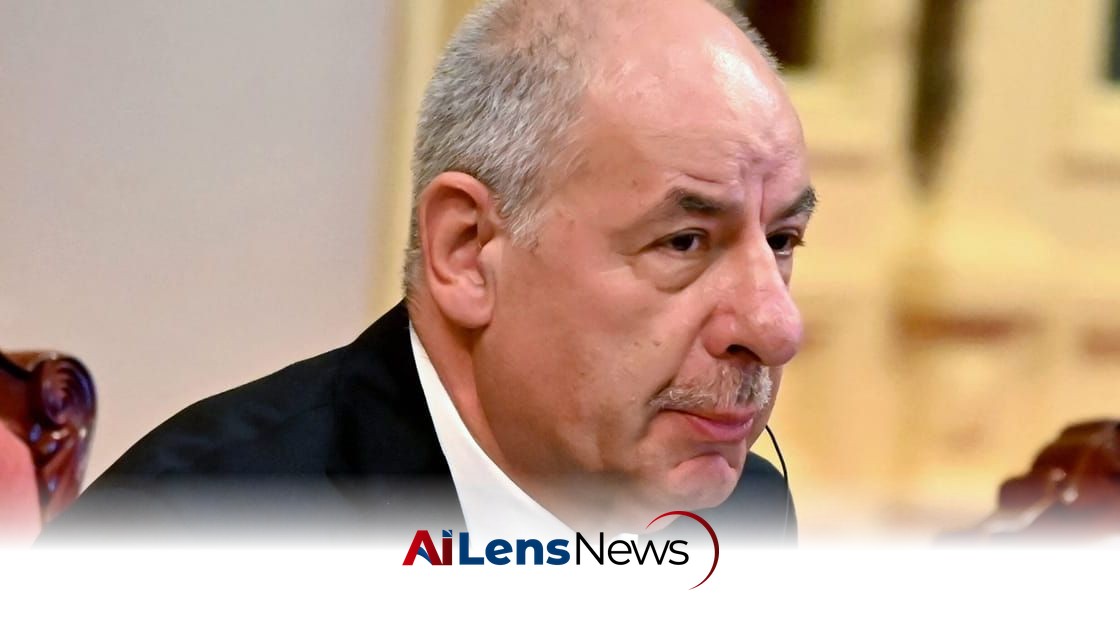


Hungarian President Tamás Sulyok has signed a constitutional amendment to resign, following months of pressure from Prime Minister Péter Magyar to dismantle the influence of Viktor Orbán's regime.
London, United Kingdom Jul 18, 2026 ALN: The resignation of Hungarian President Tamás Sulyok marks a significant moment in Hungary's political landscape, reflecting ongoing tensions between the current administration and the legacy of former Prime Minister Viktor Orbán. Sulyok's departure follows the passage of a constitutional amendment that effectively removes him from office, a move that has been described by critics and supporters alike as emblematic of the deepening political crisis in Hungary.
In recent months, Sulyok faced mounting pressure from Prime Minister Péter Magyar, who has made it clear that dismantling the influence of Orbán's government is a central tenet of his administration. Magyar, who has been vocal about his desire to reform what he characterizes as a corrupt political system, referred to the previous regime as a “mafia,” indicating the severity with which he views the challenges facing Hungary. The amendment that led to Sulyok's resignation was seen as a critical step in Magyar's broader strategy to restore democratic norms and the rule of law.
As the situation unfolded, Sulyok found himself in a precarious position. Although he had resisted calls for his resignation, the passage of the constitutional amendment left him with limited options. He could have chosen to refer the amendment to Hungary’s Constitutional Court, which he argued was unconstitutional due to its targeted nature. However, the court's ability to rule on such matters has been severely restricted since a 2013 amendment, which stripped it of the power to review the constitutionality of laws. This legal framework significantly narrowed Sulyok's options, ultimately leading him to sign the amendment.
In a poignant statement shared on social media, Sulyok expressed his concerns about the erosion of democratic values in Hungary. He stated, "I am fulfilling my obligation under the Fundamental Law — after thoroughly weighing my legal options and my conscience. At the same time, however, it is enduring proof that the fundamental values of a free society — the rule of law, democracy, and the principle of the separation of powers — have been trampled upon for the sake of political power." This statement highlights the tension between his legal obligations and his moral convictions, underscoring the difficult position he found himself in.
The implications of Sulyok's resignation extend beyond his personal circumstances. The constitutional amendment not only removes him from office but also reinstates a mandatory retirement age of 70 for all Constitutional Court judges. This provision is particularly controversial as it will result in the forced retirement of four sitting justices, including Péter Polt, the court's president, who has been a polarizing figure in Hungarian politics. Critics argue that this move is part of a broader strategy to consolidate power and diminish judicial independence, further entrenching the ruling party's control over key state institutions.
Viktor Orbán, who has remained a central figure in Hungarian politics despite stepping down from the premiership, commented on Sulyok's resignation via social media. He warned that if such actions could be taken against the president, then no one in the country would be safe from political retribution. Orbán's statement reflects his ongoing influence and the precarious nature of political life in Hungary, where the lines between political loyalty and personal security have become increasingly blurred.
In the wake of Sulyok's resignation, Prime Minister Magyar expressed confidence in his administration's direction. He stated, "With Tamás Sulyok’s signature, the last obstacle to our joint decisions coming into effect has been removed. We are restoring something that the Orbán regime has tried for many years to take away from the Hungarian people: the certainty that power can be limited." This statement illustrates Magyar's commitment to reform and his determination to distance his government from the previous administration's practices.
The political landscape in Hungary has been tumultuous since Orbán first came to power in 2010. His administration has been accused of undermining democratic institutions, curtailing press freedoms, and eroding the independence of the judiciary. The current government's efforts to reverse these trends are seen as essential for restoring public trust and ensuring that Hungary adheres to the principles of democracy and the rule of law.
Márta Pardavi, co-chair of the Hungarian Helsinki Committee, emphasized the need for leadership characterized by integrity and a commitment to democratic values. She remarked that Hungary needs leaders who can effectively guide the country back toward democracy and the rule of law, and she suggested that Sulyok did not meet these criteria. This perspective aligns with broader concerns among civil society organizations and human rights advocates, who have been monitoring the erosion of democratic norms in Hungary.
As Sulyok prepares to leave office, the speaker of the Hungarian parliament, Ágnes Forsthoffer, is set to succeed him. This transition occurs amid ongoing political maneuvering, with Tisza lawmakers having submitted a resolution to replace Forsthoffer as speaker ahead of an extraordinary parliamentary session. The political dynamics in Hungary are shifting rapidly, and the outcomes of these changes will likely have long-lasting implications for the country's governance and democratic institutions.
In conclusion, the resignation of Tamás Sulyok is not merely a political event; it is a reflection of the broader struggles within Hungary regarding democracy, rule of law, and the balance of power. As the nation grapples with these issues, the future of its political landscape remains uncertain, with the potential for both reform and further consolidation of power in the hands of the ruling party. The coming weeks and months will be critical in determining the direction Hungary takes as it seeks to navigate the complex legacy of its recent past.
To learn more about the latest developments in Political Controversies, stay updated with our exclusive reports and analyses on AiLensNews.

