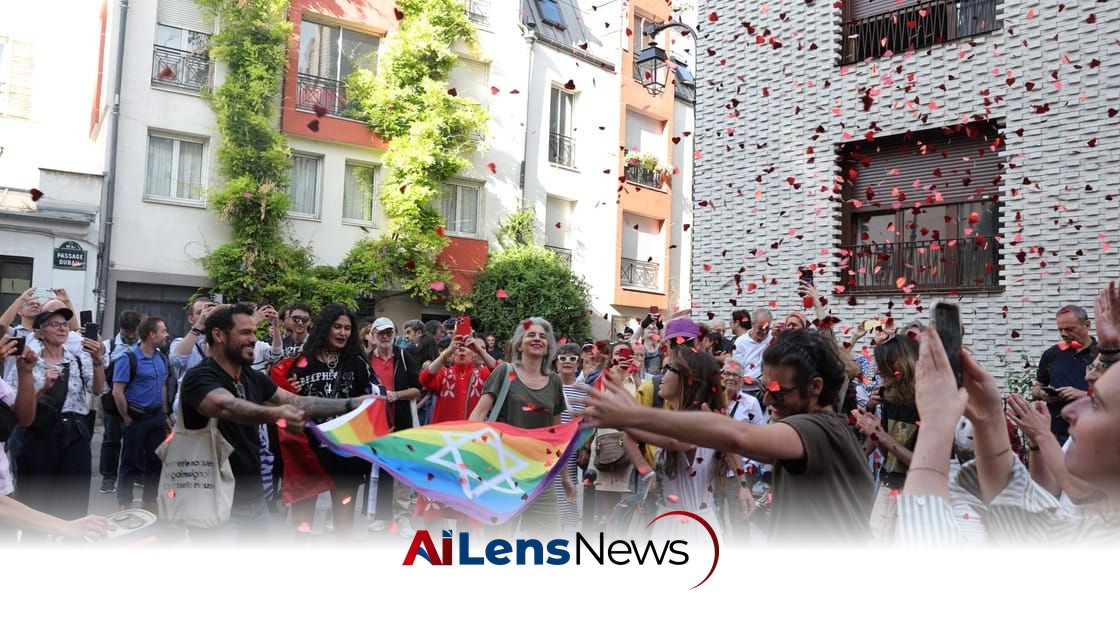


DJ Barbara Butch faces hostility during a concert, leading to allegations of antisemitism against Jean-Luc Mélenchon’s party.
London, United Kingdom Jul 23, 2026 ALN: Jean-Luc Mélenchon’s far-left France Unbowed party has come under renewed scrutiny over accusations of antisemitism following a troubling incident involving LGBT+ activist and feminist DJ Barbara Butch, who was forced to cut short a concert in Grenoble over the weekend. This incident has reignited a long-standing debate in France regarding antisemitism, particularly within leftist political circles, and has raised questions about the intersection of politics, identity, and activism in contemporary France.
Butch, who identifies as Jewish, plans to file a complaint against Mélenchon’s party for incitement to hatred and violence, her lawyer Audrey Msellati confirmed during an interview with Franceinfo radio on Thursday. The decision to pursue legal action underscores the seriousness with which Butch is taking the incident and reflects broader concerns about the safety and treatment of Jewish individuals in France, particularly those who are also part of marginalized communities such as the LGBT+ community.
The French DJ gained international attention after a controversial performance at the Paris Olympics opening ceremony in 2024, which was inspired by Leonardo da Vinci’s iconic painting “The Last Supper.” This performance featured drag queens and a performer in a striking blue costume, which was both celebrated and criticized, illustrating the polarizing nature of Butch's artistic expression. Since then, she has become a prominent figure in discussions surrounding artistic freedom and the challenges faced by artists who engage with political themes.
During her concert in Grenoble on Saturday, Butch was met with heckling and reports indicated that objects were thrown at the stage, leading her to interrupt the show. In the aftermath, she expressed her distress, stating, "I was extremely scared, so much so. And the shock was such that I couldn’t move for days.” This statement highlights the emotional and psychological impact of the incident on Butch, as well as the broader implications for artists and activists who may face hostility for their views or identities.
Following the incident, there were renewed calls for a boycott of Butch’s performances, particularly from local branches of France Unbowed and pro-Palestinian activists. Critics, including former prime minister and presidential hopeful Gabriel Attal, have accused the far-left party of targeting Butch specifically because she is Jewish. This accusation is particularly significant given the historical context of antisemitism in France, where Jewish communities have faced discrimination and violence over the centuries.
Prior to Butch’s concert, local activists circulated a leaflet calling for a boycott, accusing her of supporting Israel and claiming she had “censored Palestinian voices” by signing a petition in favor of controversial French draft legislation against antisemitism in 2024. This legislation aimed to address rising antisemitic incidents in France but was ultimately dropped amid widespread debate. The accusation that Butch’s actions amounted to censorship reflects the highly charged political atmosphere surrounding discussions of Israel and Palestine, particularly within leftist circles in France.
France Unbowed has found itself on the defensive in light of this incident. Mathilde Panot, the leader of its parliamentary group, publicly condemned the leaflet targeting Butch as “bad,” indicating a recognition of the potential harm such rhetoric can cause. However, this response has not alleviated concerns about the party's stance on antisemitism, particularly given Mélenchon’s history of controversial statements and positions that have drawn criticism from various quarters, including Jewish organizations.
The implications of this incident extend beyond the immediate context of Butch’s concert. It raises important questions about the role of political parties in shaping public discourse and the responsibilities of activists and artists in navigating complex social issues. The intersection of identity politics, artistic expression, and political affiliation can create a volatile environment, particularly when individuals are targeted for their beliefs or backgrounds.
In recent years, France has witnessed a surge in antisemitic incidents, prompting widespread concern among Jewish communities and advocacy groups. The rise of far-left and far-right political movements has further complicated the landscape, as these groups often engage in polarizing rhetoric that can exacerbate tensions. The accusations against France Unbowed and its leadership reflect a broader struggle within leftist movements to address issues of antisemitism while advocating for other marginalized groups, including Palestinians.
This incident also highlights the challenges faced by individuals like Butch, who occupy multiple identities and may find themselves at the intersection of various political and social movements. As an artist, Butch’s work often engages with themes of identity, representation, and social justice, making her a target for criticism from those who may disagree with her positions or interpretations. The backlash she faced in Grenoble serves as a reminder of the potential risks involved in taking a public stance on contentious issues, particularly in a politically charged environment.
As France approaches its next presidential election, the dynamics within political parties like France Unbowed will likely continue to evolve. Mélenchon’s party has been gaining ground against centrist candidates in recent polls, but the fallout from incidents like the one involving Butch may impact public perception and voter sentiment. The ongoing discourse surrounding antisemitism, artistic freedom, and political accountability will remain a critical area of focus as the country navigates its complex social landscape.
In conclusion, the accusations of antisemitism directed at France Unbowed in the wake of the incident involving DJ Barbara Butch underscore the intricate and often fraught relationship between politics, identity, and artistic expression in France. As discussions around these themes continue, the experiences of individuals like Butch will serve as a lens through which the broader societal challenges can be examined and addressed. The implications of this incident extend far beyond the immediate context, prompting a reevaluation of how political movements engage with issues of identity, representation, and social justice in a rapidly changing world.
To learn more about the latest developments in Political Controversies, stay updated with our exclusive reports and analyses on AiLensNews.

