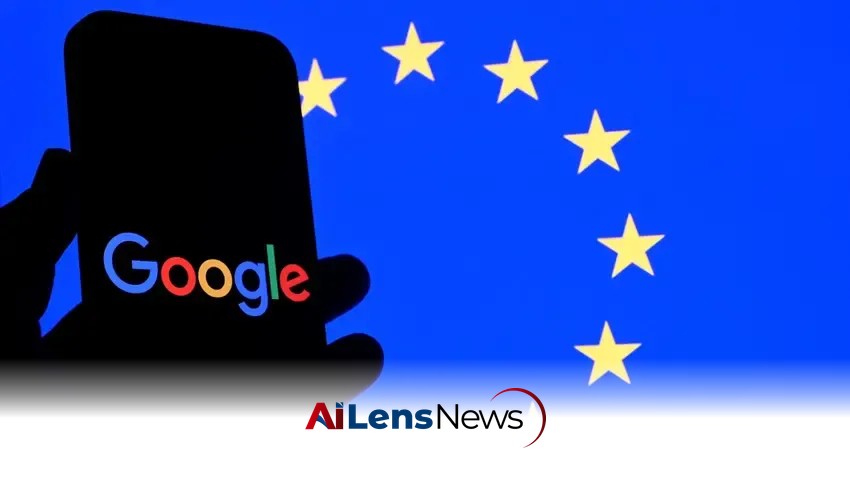


The European Union has fined Google €890 million for antitrust violations, escalating tensions with the United States amid ongoing regulatory scrutiny.
London, United Kingdom Jul 23, 2026 ALN: The European Union (EU) has imposed a hefty fine of €890 million (approximately $1 billion) on Google, a move that could further strain transatlantic relations with the United States. This decision, announced on Thursday, stems from two significant violations of EU competition laws, which have become a focal point in the ongoing debate about the power of major technology companies and their impact on market dynamics.
The first part of the fine, amounting to €460 million, was levied against Google for unlawfully favoring its own services, such as Google Flights and Google Hotels, over those of its competitors in search results. This practice, often referred to as self-preferencing, has been a contentious issue in the EU's regulatory landscape, as it raises questions about fairness and competition in digital markets. The second portion, totaling €430 million, addresses Google's restrictions on app developers, preventing them from promoting offers outside of the Google Play store without incurring charges. This restriction is seen as a barrier to market entry for smaller developers and a hindrance to consumer choice.
Henna Virkkunen, the EU's tech chief, emphasized the need for increased competition and innovation in the digital marketplace, stating, "After this decision, we want to ensure that there is more competition and that other companies can also innovate." This sentiment reflects the EU's broader strategy to regulate Big Tech firms, which has intensified in recent years as these companies have grown in size and influence. A senior EU official noted that Google's practices still favored its own services, and the second fine covers a period from March 2024 to December 2025, indicating that the EU is committed to ongoing scrutiny of Google's business practices.
In response, Google has accused the EU of undermining safety protections on its Play store. Kent Walker, Google's head of global affairs, expressed concerns that the regulations would degrade the quality of products available to European consumers. "Regulation should improve products, not make them worse," he stated. This argument highlights the tension between regulatory oversight and innovation, as companies often contend that stringent regulations can stifle creativity and lead to fewer choices for consumers.
This latest fine marks the largest total penalty imposed on a single company under the Digital Markets Act (DMA), which aims to curb what the EU perceives as excessive power held by Big Tech firms. The DMA, which came into effect in 2024, allows the EU to impose fines of up to 10% of a company's global turnover for violations. This legislative framework is part of a broader effort by the EU to create a more equitable digital marketplace, where smaller players can compete on a level playing field against dominant firms like Google.
Google's fines have been anticipated for months, following an investigation that began in 2024. However, there have been allegations that the EU delayed the announcement to avoid damaging relations with Washington. The fines could increase further if Google fails to comply within 60 days, with the EU threatening periodic penalty payments. This timeframe underscores the urgency of compliance and the EU's willingness to enforce its regulations rigorously.
Virkkunen reiterated that the best products should succeed based on their quality, not merely because they are owned by the company operating the search engine. This principle is central to the EU's regulatory philosophy, which seeks to foster competition and innovation in the technology sector. The EU has a history of imposing fines on Google, totaling €8.2 billion between 2017 and 2019, which indicates a pattern of behavior that regulators are keen to address.
As tensions rise, the EU appears unfazed by potential retaliation from the US. Ribera stated that the EU's duty is to ensure that regulations adopted by its institutions are enforced and respected. She noted that similar cases are being addressed by American authorities, suggesting that the EU is not acting in isolation but rather as part of a global movement toward stricter regulation of technology companies.
In light of the recent fines, 25 US lawmakers from the Republican party have urged President Trump to consider trade investigations against the EU's "discriminatory" digital rules, which could lead to increased tariffs. This reaction reflects a growing concern among US lawmakers about the implications of EU regulations for American companies operating in Europe. The potential for tariffs could escalate trade tensions and complicate diplomatic relations between the US and the EU.
However, the EU remains committed to enforcing its regulations, with Ribera asserting that the enforcement will not waver. This steadfast approach indicates that the EU is willing to confront the political and economic ramifications of its regulatory actions, prioritizing competition and consumer protection over potential backlash from the US. As the global landscape for digital commerce evolves, the EU's regulatory framework may serve as a model for other jurisdictions grappling with similar challenges posed by large technology firms.
The implications of this fine extend beyond Google and the EU, as they signal a broader trend toward increased scrutiny of Big Tech. Other companies may find themselves facing similar challenges as regulatory bodies around the world seek to address concerns about market dominance, data privacy, and consumer protection. As the debate continues, it will be crucial to monitor how these regulatory actions shape the future of the digital economy and the relationship between the EU and the US.
In conclusion, the €890 million fine imposed on Google is not just a financial penalty; it is a significant statement about the EU's commitment to fostering competition and innovation in the digital marketplace. As the landscape of technology regulation continues to evolve, the ramifications of this decision will likely resonate across borders, influencing the strategies of tech companies and the policies of governments worldwide.
To learn more about the latest developments in Elections, stay updated with our exclusive reports and analyses on AiLensNews.

