

Andy Burnham aims to reverse 40 years of Thatcherism, potentially undermining the SNP and Scottish independence. His success hinges on addressing economic failures.
London, United Kingdom Jul 21, 2026 ALN: I detest the type of person who is my age – mid-50s – and forever sneering at young folk. They forget we were once young – albeit in the last century, a phrase which makes me feel like the Biblical Methuselah – and they also mistake age (their own) for wisdom and grace.
It’s often the young, to their credit, with the audacity – admittedly, borne from naivety – to point and say the emperor has no clothes. I do, though, increasingly find myself cocking an eyebrow at the lack of hinterland among GenZ in particular. I don’t put this down to any lack of collective intellect. Rather, GenZ has been hobbled by the society we, their elders, created. Somewhere along the line we gave up valuing books and debate – and even intelligent conversation – and decided that the smartphone was our god.
GenZ isn’t stupid. It’s a very clever generation, given the limited world it inhabits. The great irony of the modern age is that in an era where all information is available, very little real information – knowledge, facts, analysis – is consumed. Evidently, if you put me in a sweetshop and ask me to eat avocados, you’ll be disappointed – and my teeth will rot. Why should our children be any different when it comes to consuming information?
This may explain a troubling moment in a conversation I had last week with the left-wing writer and Labour thinker Pauline Bryan. She was discussing the challenges facing Andy Burnham as he becomes Prime Minister. Burnham has promised to address the failings of 40 years of neoliberalism – in other words, Thatcherism.
Bryan told me she’s often shocked when she hears younger people say ‘why do you keep talking about Thatcher? She’s been dead decades. That’s historic. It doesn’t affect us’.
I share Bryan’s shock at the absence of understanding. Only two Prime Ministers in the last century truly shaped the Britain in which we live today: Clement Attlee and Margaret Thatcher. One gave us the welfare state, the other gave us unfettered free market economics: those 40 years of neoliberalism.
You cannot understand the failure of the British economy without understanding the legacy of Thatcherism. It’s not Britain that’s broken, as the right endlessly claims, it’s the economic system. Britain is just a land mass with a population, like any nation. It’s the economy which shapes how a nation functions, and whether the people thrive or not.
by Neil Mackay
For young folk to fail to appreciate the significance of Thatcherism today is akin to fish not realising they swim in water. Thatcher may be dead. The system she created is not – just as the welfare state lives on despite Attlee’s adieu to mortality.
An end to Thatcherism is the great promise that Burnham offers, specifically to the young. Forget all the rhetoric and verbiage, the central intellectual core of what Burnham claims to stand for is an undoing of the failures which began in 1979.
Thatcher fashioned an economy that ceased to work for the people. Instead, the people worked for the economy. Private industry mattered more than nation. The rich were protected, working people got the fuzzy end of the lollipop.
In essence, that was the last 40 years: the fashioning of a "for the few rather than the many" set of rules where the rich got richer and the poor got food banks. Thatcher’s Britain is the very definition of the old phrase "I’m alright, Jack".
Now Burnham arrives with the promise of fixing all that. If he succeeds, then he’ll go down in history, he’ll reverse the steady economic decline of Britain, he’ll halt the rise of the far-right, and he’ll kick the legs out from under the SNP – and Plaid Cymru – and kill Scottish independence stone dead.
However, notice the "if" in that sentence. It’s a very big "if". It’s an "if" as big and portentous as the Spartan "If – the so-called Laconic phrase. When Philip of Macedon told Spartans he would destroy them if they didn’t surrender, they replied with one contemptuous word: "If…". There is one engine fuelling all of Britain’s discontents currently: economic failure. The vast majority of us feel wronged by the economic system. So we look for alternatives. In Scotland, the alternative is the imaginary socially-democratic world of independence. In many other parts of the UK, the alternative takes a rather different shape: a return to a nostalgic and very white Britain.
Both are implacable expressions of hostility to the economic status quo, which remains Thatcher’s neoliberalism.
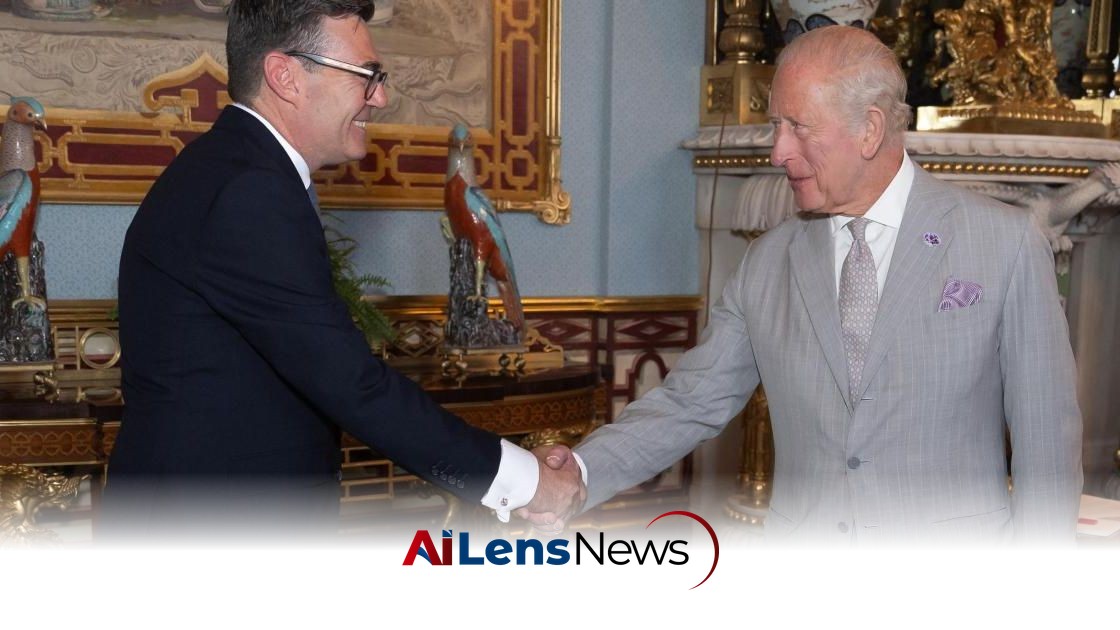
Andy Burnham has promised to address the failings of 40 years of Thatcherism (Image: PA)
For Burnham to smash the engine of discontent, he must make millions of us feel secure again, and he must do so fast. If he pulls that off, then much of the crude anger fuelling Reform, and much of the romantic dreaming fuelling Scottish independence, would fade.
Many Yes voters care only about making society a fairer place. If Burnham could do that, then the impetus to back independence is drained. The cause loses much of its heat.
Without a clamour for independence, the SNP is nothing. Over its long period in power, the SNP has dwindled to a bland pabulum. It is a centrist party content with the failed economic status quo, bereft of ideas or policies to change the economic model. Even its economic model for independence embraces the status quo, which begs the question: what is independence for, if not to change the system and better the lives of the people?
It would be folly to put much hope in Burnham living up to this promise he brings, though. As the old saying goes: "Fool me once, shame on you; fool me twice, shame on me." Well, we’re on seven PMs in 10 years. Nobody is going to be a fool seven times over. We’ve heard promises of change for a decade from left, right and centre. Nothing changed. So do not put your faith in Burnham.
The reverse, clearly, is also true. If Burnham fails to live up to his promise of undoing 40 years of economic failure, then he’d re-energise Scottish nationalism, and reinforce the belief that Westminster is beyond repair and independence is the answer. And by doing so, he’d gift Holyrood to the SNP for yet another term.
To learn more about the latest developments in Elections, stay updated with our exclusive reports and analyses on AiLensNews.

