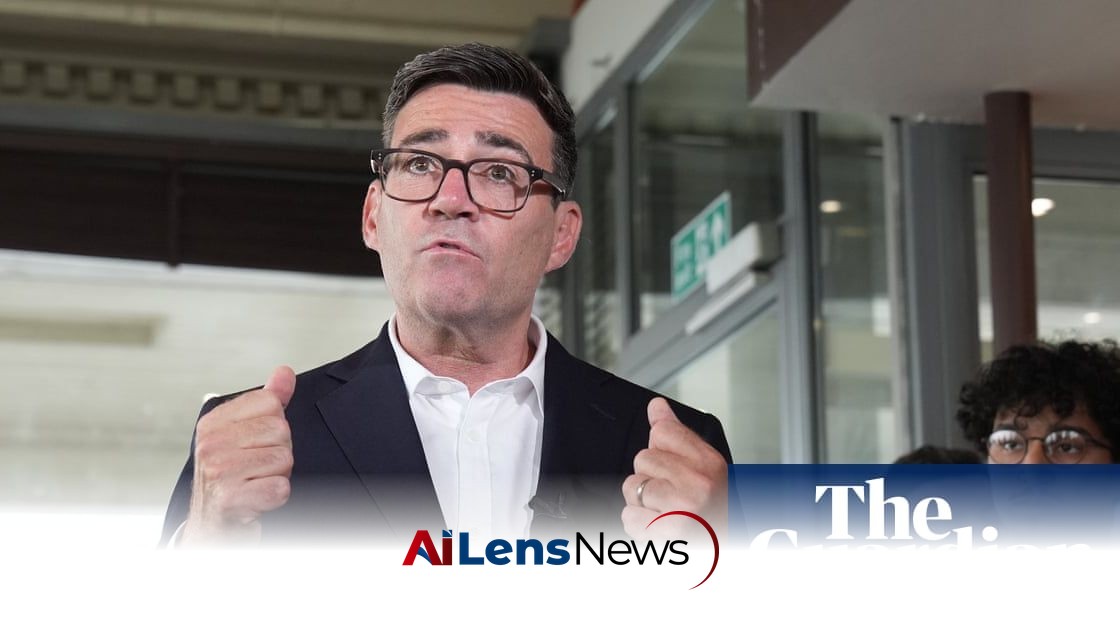


As Andy Burnham prepares to become the UK's sixth prime minister in a decade, he emphasizes the need for honesty about the nation's challenges and outlines his initial policy priorities.
London, United Kingdom Jul 20, 2026 ALN: Andy Burnham will emphasize the necessity for Britain to confront its challenges head-on when he officially becomes the country's sixth prime minister in a decade on Monday. He is set to introduce measures aimed at alleviating the cost of living crisis and will advocate for increased fossil fuel drilling in the North Sea.
Following a visit to Buckingham Palace to accept the role from the king, the Labour leader is expected to begin making cabinet appointments in the afternoon. Many potential ministers remain uncertain about their positions, although it is widely believed that Shabana Mahmood will be appointed as chancellor and Ed Miliband as foreign secretary.
Jonathan Reynolds, the chief whip, is anticipated to take on the role of business secretary, overseeing a department that will merge current science and technology responsibilities. Former cabinet minister Lou Haigh is likely to be appointed as the leading Cabinet Office minister.
Angela Rayner, the former deputy prime minister, is reportedly being considered for the health secretary position, although sources indicate she may need convincing, given her primary interests in devolution, regional inequality, local government, and the cost of living.
In his inaugural address from Downing Street, Burnham aims to strike a balance between optimism and realism regarding the pressing issues facing the nation. He is expected to call for a moment of "reflection and resolution," having previously expressed his willingness to invest political capital in addressing significant challenges such as social care, which will require additional funding.
To assist with financial burdens, Burnham is likely to propose measures to reduce energy bills and may also target bus fares. Additionally, he is preparing to facilitate more oil and gas drilling in the North Sea, despite anticipated backlash from environmental activists and some members of Parliament.
Burnham is acutely aware of being the sixth individual to occupy the role in ten years and will argue for the need for political stability, implicitly rejecting calls for an election while Labour potentially has three years left in power.
He will assert that the UK must be candid about its challenges while demonstrating that it can regain recognition globally for effective governance. The Labour leader plans to outline his domestic priorities, promising tangible improvements in citizens' lives and providing them with "more breathing room" concerning the cost of living.
Burnham has committed to presenting a ten-year plan for the country, emphasizing early investment to ensure that the British state is focused on setting people up for success rather than merely addressing failures.
In a recent interview, he stated, "You have to rethink how we run things to get a different approach to public spending and running the economy, which is much more focused on early investment, early intervention, setting people up for success and much less paying for failure."
He elaborated, "A concept I will talk about tomorrow is a ten-year plan for the country. I think that’s what it needs. I’m not saying that means I’m setting out to say I’m going to be here for ten years; it’s more that we’re not in the right place structurally."
Burnham has not yet made any significant policy commitments beyond adhering to Labour’s manifesto pledge of not raising VAT, national insurance, or income tax, and scrapping the digital ID card program. His allies have indicated he may be open to accelerating the pace of drilling in the North Sea, potentially expanding existing fields without approving major new ones, in line with the manifesto.
Donald Trump appeared to interpret Burnham's stance as a significant policy shift, congratulating him for agreeing to "open up new fields" in the North Sea. He remarked on Truth Social, "The People of Aberdeen, in Scotland, are dancing in the streets because the new Prime Minister, Andy Burnham, has stated that he will be opening up, all the way, the invaluable North Sea Oil!"
Labour’s deputy leader, Lucy Powell, stated that Burnham would adopt a more pragmatic approach, describing it as a "change of emphasis" rather than a complete policy overhaul. Burnham's openness regarding North Sea oil and gas has contributed to Miliband's decline as a frontrunner for chancellor, given his previous opposition to increased drilling.
Miliband is now being considered for the foreign secretary position, where he may adopt a more pro-Gaza stance and advocate for restoring foreign aid to 0.7% of national income from its current level of 0.2%. This proposal has been met with criticism from Reform UK leader Nigel Farage, who stated, "Andy Burnham plans to spend an extra £10bn of your money on foreign aid. I will always put British people first."
Burnham's team has refrained from commenting on his plans for Thames Water, following reports that he intends to push the utility company into a special form of administration, which could require the state to cover some operational costs until a buyer is found.
Powell discussed Burnham's plans for increased public ownership, arguing that the economy has been "overly privatised" and that essential services are not functioning in the best interests of ordinary citizens. She noted that bills are "going up and up because they are run in the interests of private interest, not for the consumers or for taxpayers."
The Conservatives have accused Burnham of intending to raise taxes to fund areas requiring additional resources, from social care to defense. When questioned about a wealth tax, Burnham expressed his desire to avoid creating divisions but acknowledged that in the future, "there might be a need to ask for a little more."
Kemi Badenoch criticized Burnham for not outlining his plans before taking office and for not engaging in in-depth media interviews, describing his comments thus far as "airy-fairy stuff." The Conservative leader characterized Burnham as "a people pleaser" rather than someone capable of making tough decisions.
As he prepares to hand over power, Keir Starmer released a video expressing pride in having left the country "in a much better state than we found it two years ago."
To learn more about the latest developments in Political Controversies, stay updated with our exclusive reports and analyses on AiLensNews.

