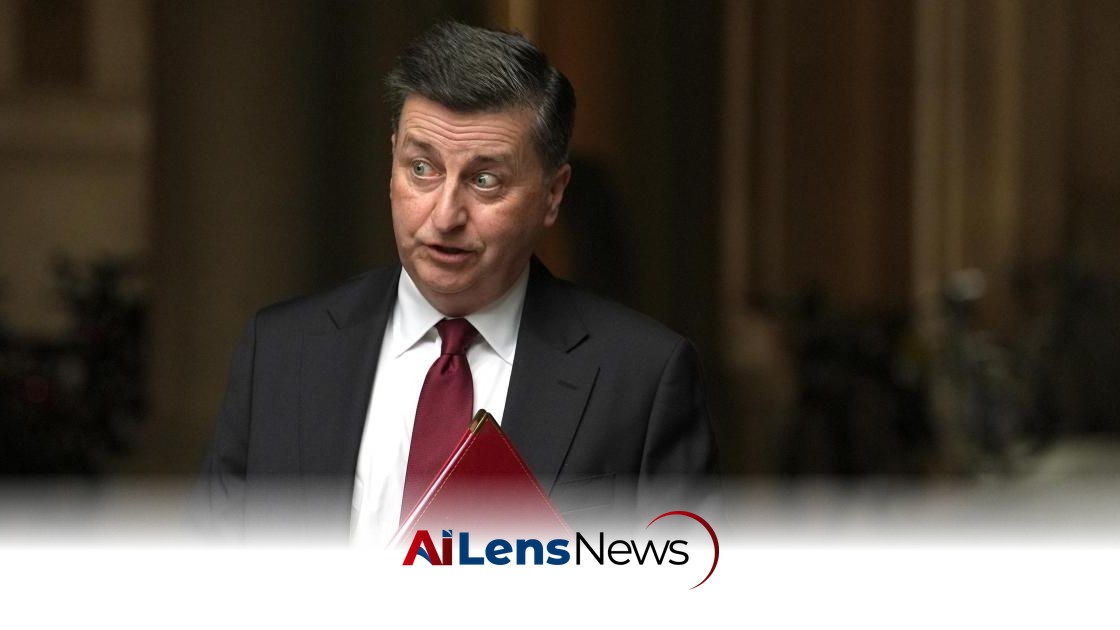


In a dramatic reshuffle, Andy Burnham retains Douglas Alexander as Scottish Secretary while appointing John Healey as Chancellor and making significant changes to Labour's top team.
London, United Kingdom Jul 21, 2026 ALN: Andy Burnham's recent cabinet reshuffle has sent ripples through the political landscape of the United Kingdom, particularly in the context of the Labour Party's strategy and its response to the pressing issues facing the nation. Burnham, who has taken the reins as Prime Minister, has opted to retain Douglas Alexander in his role as Scottish Secretary, a decision that comes amidst significant speculation regarding potential changes within the party's hierarchy.
Douglas Alexander's retention is noteworthy, especially considering the backdrop of Scottish Labour's disappointing performance in the Holyrood elections, where the party experienced its worst results since the devolution of powers in 1999. This outcome has raised questions about leadership effectiveness within the Scottish Labour Party and the broader implications for Labour's standing in Scotland. Alexander's position as co-chair of the campaign placed him under scrutiny, and many anticipated that his role might be reassessed in light of these results. However, Burnham's decision to keep him in place could be interpreted as a vote of confidence in Alexander's capabilities as he navigates the complexities of Scottish politics.
The reshuffle occurred on a day marked by dramatic changes within Westminster, as Burnham swiftly dismantled the existing cabinet established by former Prime Minister Sir Keir Starmer. This rapid change in leadership reflects a broader strategy by Burnham to redefine the direction of the Labour Party and to establish his own authority as Prime Minister. The timing of this reshuffle is significant, as it comes at a moment when the party is grappling with internal divisions and external pressures, particularly from the Conservative Party, which has been critical of Labour's policies and approach.
One of Burnham's first significant appointments was that of John Healey as Chancellor of the Exchequer, a position that had previously been held by Rachel Reeves. Healey's appointment is particularly striking given his history of resigning from the previous government over funding disputes related to defense spending. His stance on fiscal responsibility and national security will be closely watched, especially in light of the government's commitment to increasing defense spending to meet NATO targets. Healey's comments regarding the importance of fiscal control underscore the delicate balance that any Chancellor must maintain between economic stability and the demands of national security.
The reshuffle also saw Ed Miliband move to the role of Foreign Secretary, a position that will place him at the forefront of the government's international relations efforts. Miliband's experience in government and his previous roles may provide a stabilizing influence as the UK navigates complex global dynamics, particularly in the wake of ongoing geopolitical tensions. Meanwhile, Yvette Cooper's transition to Health Secretary highlights the government's focus on addressing domestic issues, particularly in the aftermath of the COVID-19 pandemic, which has left lasting impacts on the National Health Service and public health policies.
Shabana Mahmood's continued role as Home Secretary signifies a commitment to maintaining continuity in key areas of governance, particularly in relation to law and order. The reshuffle also included notable appointments such as Wes Streeting as Defence Secretary, who will be tasked with overseeing military and defense policy during a time of heightened global insecurity.
Burnham's cabinet reshuffle was not without its controversies. The dismissal of several high-profile figures from Starmer's government, including Deputy Prime Minister David Lammy and Business Secretary Peter Kyle, indicates a decisive break from the previous administration's policies and personnel. This upheaval may also reflect Burnham's desire to consolidate power and align his cabinet with his vision for the party's future. The sentiments expressed by Steve Reed, a former cabinet member, suggest that loyalty to Burnham will now be paramount as he seeks to unify the party's factions.
Among the returning figures is Angela Rayner, who has been appointed as Housing Secretary after a tumultuous period that saw her leave government due to issues surrounding tax compliance. Her return may signal Burnham's willingness to give second chances to experienced politicians, potentially leveraging their past experiences to rebuild the party's image and credibility.
In terms of policy direction, Burnham's speech upon assuming office emphasized a desire for a "circuit breaker" moment for the country, which he believes is necessary to address the long-term economic and social challenges stemming from the policies of previous Conservative governments. His critique of the Thatcher era's impact on Britain's political and economic landscape suggests a commitment to reversing some of the privatization trends and centralization of power that have characterized recent decades.
Burnham's promise of a ten-year plan for the country, alongside immediate measures to address the cost of living crisis, indicates an ambitious agenda aimed at tackling pressing issues faced by citizens. The commitment to ending long-term rough sleeping reflects a compassionate approach to governance, prioritizing social welfare and support for vulnerable populations. This focus on social issues may resonate with Labour's traditional base, emphasizing the party's commitment to social justice and equality.
Furthermore, the reshuffle has implications for Labour's strategy in Scotland, where the party has struggled to regain its footing against the Scottish National Party (SNP). Retaining Alexander as Scottish Secretary may be a strategic move to strengthen Labour's position in Scotland, especially as the party seeks to reconnect with its constituents and address the unique challenges faced in the region.
Overall, Burnham's cabinet reshuffle represents a significant turning point for the Labour Party as it seeks to redefine its identity and approach under new leadership. The appointments reflect a blend of continuity and change, aiming to balance the party's historical values with the need for modern governance in a rapidly evolving political landscape. As Burnham embarks on this new chapter, the success of his administration will likely hinge on its ability to navigate the complexities of both domestic and international challenges while maintaining party unity and public support.
To learn more about the latest developments in Political Controversies, stay updated with our exclusive reports and analyses on AiLensNews.

