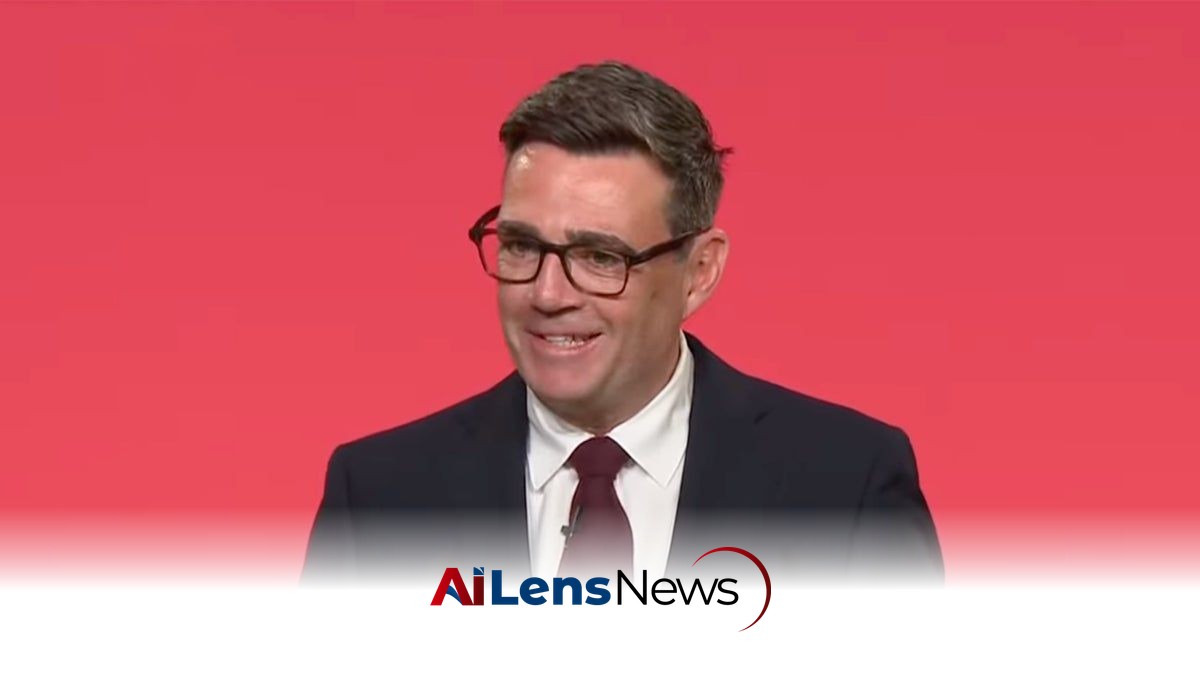


In his inaugural speech as Labour leader, Andy Burnham outlines his vision for a united party and a government that serves all regions of the UK.
London, United Kingdom Jul 17, 2026 ALN: Andy Burnham has recently been confirmed as the new leader of the Labour Party, a significant development in British politics that has stirred discussions about the future direction of the party. In his inaugural address as leader, Burnham made a commitment to establish a political direction that is distinctly Labour, emphasizing that he does not intend to simply mimic the policies of the Green Party or engage in excessive reformism. Instead, he aims to carve out a unique identity for Labour that resonates with traditional party values while addressing contemporary issues.
Burnham's ascension to leadership comes at a pivotal moment for the Labour Party, which has experienced considerable fluctuations in its popularity and public perception over the past several years. The party's journey has been marked by a series of electoral defeats and internal strife, culminating in a leadership change that many see as necessary for revitalization. As he takes the reins, Burnham's approach appears to be one of unity and clarity, with a focus on collaboration with other political entities while maintaining a strong Labour identity.
In his speech, Burnham expressed his readiness to lead the country and responded to public sentiment by stating, "We are united, we put the power that comes from unity at the service of people and places who have been waiting too long for politics to let them hope again." This rhetoric underscores his intention to reconnect with constituents who may feel disillusioned with mainstream politics. The call for unity is particularly significant given the fractious nature of recent political landscapes, where divisions have often hindered effective governance and public trust.
Burnham secured his position as Labour leader with the backing of 349 Labour MPs and affiliated trade unions, a testament to his support within the party. However, his official confirmation as prime minister hinges on a formal recommendation from Sir Keir Starmer to the King, a procedural step that reflects the constitutional processes of the British political system.
During his first address as Labour leader, Burnham took a moment to acknowledge the influences that shaped his political journey. He expressed gratitude towards notable figures such as Lord David Blunkett, Baroness Margaret Beckett, and Lord Neil Kinnock, highlighting their roles as mentors and guides throughout his career. This acknowledgment not only showcases Burnham's appreciation for the party's legacy but also emphasizes his commitment to learning from past leaders while forging his own path.
Burnham's references to these influential figures also serve to evoke a sense of continuity within the Labour Party, connecting his leadership to a broader historical narrative that includes past successes and challenges. By doing so, he aims to reassure party members and supporters that he values the party's heritage while also recognizing the need for evolution and adaptation to current political realities.
In a clear declaration of his leadership philosophy, Burnham emphasized the importance of maintaining a distinct Labour identity. He stated, "Yes, we will work with other parties where we can, but in doing so have the clarity of knowing exactly where we stand." This statement reflects a strategic approach to coalition-building, suggesting that while collaboration is possible, it should not come at the expense of the party's core principles and values.
Burnham's assertion that Labour will not attempt to "out-green the Greens or out-reform Reform" indicates a desire to avoid the pitfalls of political mimicry that can dilute a party's brand. Instead, he advocates for a bold and confident presentation of Labour's policies, positioning the party as a distinct alternative to its rivals. His remarks about wardrobe choices metaphorically underscore this point, suggesting that Labour should embrace its unique identity rather than conforming to the expectations of others.
Burnham outlined five commitments that he believes will enhance the Labour Party under his leadership:
Burnham emphasized the need to cultivate a cohesive environment within the party, vowing to work tirelessly towards creating a culture of unity and collaboration.
He acknowledged that the public is yearning for a fresh approach to governance, one that transcends mere point-scoring and instead focuses on substantive solutions to pressing issues.
Burnham reiterated his commitment to clarity in political positioning, ensuring that Labour's actions reflect its values and priorities.
He pledged to represent the interests of all regions, including the North, South, East, and West, as well as Scotland, Wales, and Northern Ireland, indicating an inclusive approach to leadership.
Burnham's promise to decentralize power and return it to local communities resonates with a growing sentiment among voters who feel marginalized by centralized decision-making processes.
Burnham characterized his leadership transition as "the most significant change moment in our politics in the last forty years," reflecting a belief that his leadership could herald a new era for the Labour Party and British politics as a whole. This assertion highlights the weight of expectations placed upon him, as many within the party and the electorate look to him for transformative leadership.
His commitment to being a leader for all regions of the UK, particularly emphasizing the North of England, signals an intention to address longstanding regional disparities and advocate for a more equitable distribution of resources and opportunities. Burnham's recognition of the North's contributions to his political identity underscores his dedication to serving those communities that have historically felt overlooked by Westminster.
In a moment of reflection, Burnham paid tribute to Sir Keir Starmer, acknowledging his role in guiding the Labour Party from one of its most significant defeats to a recent resurgence in electoral success. Despite the competitive nature of their relationship, Burnham expressed gratitude for Starmer's contributions, emphasizing the importance of building on the foundation laid during his predecessor's tenure.
By recognizing Starmer's achievements, Burnham not only demonstrates respect for the party's leadership history but also signals his intention to unify the party moving forward. His assertion that he is "ready to lead" encapsulates a sense of preparedness and determination to take on the responsibilities of governance, as he seeks to navigate the complexities of the current political landscape.
Overall, Burnham's leadership marks a critical juncture for the Labour Party, with implications that extend beyond party lines. As he embarks on this new chapter, the effectiveness of his vision and commitments will be closely scrutinized by both supporters and critics alike, shaping the future trajectory of Labour and its role in British politics.
To learn more about the latest developments in Political History & Legacy, stay updated with our exclusive reports and analyses on AiLensNews.

