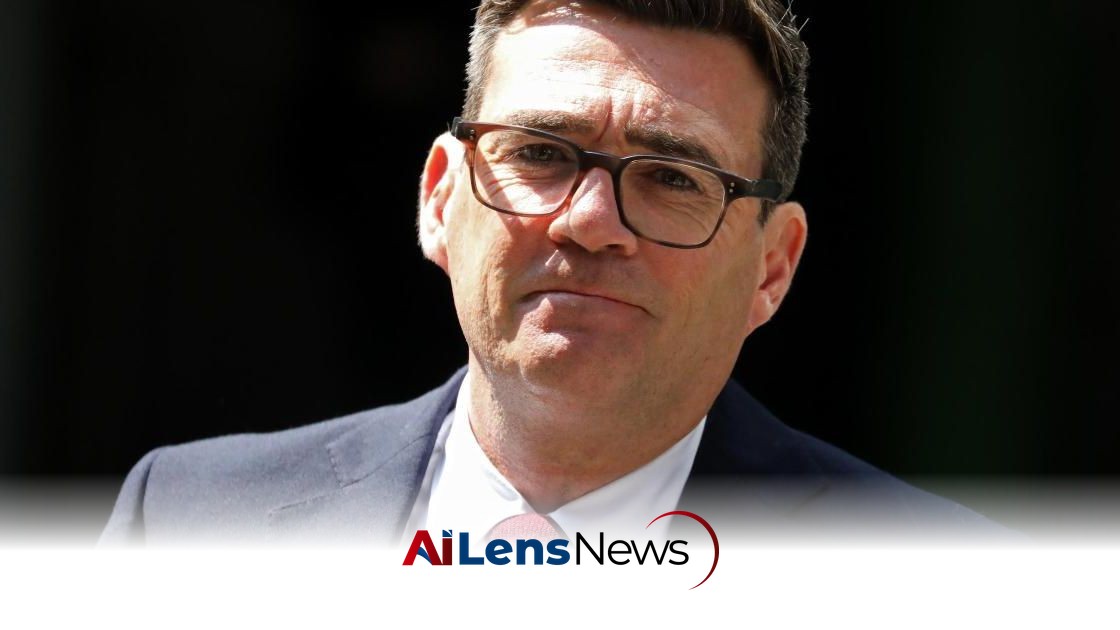


Andy Burnham has been officially confirmed as the new leader of the UK Labour Party, set to become Prime Minister on Monday.
London, United Kingdom Jul 17, 2026 ALN: Andy Burnham has been confirmed as the new leader of the UK Labour Party, marking a significant moment in British politics. The former Greater Manchester mayor, who returned to Westminster last month as the Member of Parliament for Makerfield, was officially named the party's new leader during a special conference held in London. His ascension to this pivotal role comes at a time of considerable political change and challenges for the Labour Party and the UK as a whole.
Burnham's leadership follows the resignation of Keir Starmer, who has played a crucial role in reshaping the party's direction over the past few years. Burnham was the only candidate to garner the necessary support to succeed Starmer, receiving backing from 379 of the party’s 403 MPs, which far exceeds the 81 votes needed for his candidacy. Additionally, he secured the endorsement of eight out of the eleven unions affiliated with the Labour Party, showcasing a broad base of support within the party's ranks.
With Burnham set to assume the role of Prime Minister on Monday, his leadership is expected to usher in a new era for the Labour Party, one that aims to reconnect with the electorate and address pressing issues facing the nation. His commitment to local leadership and devolution is particularly noteworthy, as he has expressed a desire to push power away from Westminster and into the hands of local leaders. This vision includes the creation of a “No 10 North” outpost of Downing Street based in Manchester, which would symbolize a shift towards regional governance and empower local communities.
In terms of fiscal policy, Burnham has indicated that he will adhere to the fiscal rules set by Rachel Reeves, the party's shadow chancellor, while also committing to manifesto pledges that include not raising income tax, VAT, or National Insurance. However, he has left the door open regarding the possibility of implementing a wealth tax, stating in a recent interview that he does not wish to be perceived as harboring grudges against wealthy individuals. This nuanced stance reflects Burnham's attempt to balance fiscal responsibility with the need for social equity in a country where wealth disparity remains a contentious issue.
During his inaugural speech as party leader, Burnham emphasized the need to restore hope among the electorate, stating, "We are united and we put the power that comes from that unity at the service of people and places who have been waiting too long for politics to let them hope again." His commitment to honesty and accountability in politics is also evident, as he acknowledged the failures of the current generation of politicians, including himself, in challenging an economic model that has not served ordinary people effectively.
Burnham expressed gratitude towards outgoing Prime Minister Keir Starmer, acknowledging his efforts in repositioning Labour as a viable alternative to the ruling government. Starmer's tenure was marked by significant challenges, including navigating the party through the aftermath of the Brexit referendum and addressing internal divisions. On his way out, Starmer released a resignation honours list that included 16 new peers, among them notable figures such as former Holyrood presiding officer Ken Macintosh and London mayor Sadiq Khan. This move has drawn criticism from some within the party who advocate for reforming or even abolishing the House of Lords, highlighting the ongoing debate about the role of the upper chamber in British governance.
One of Burnham's key objectives is to eradicate factionalism within the Labour Party. He has stated, "I will work relentlessly to build a culture of one Labour team, because change starts with us." This statement underscores his commitment to unity within the party as it prepares to face the challenges posed by the political landscape, particularly the rise of right-wing populism. Burnham's approach emphasizes that infighting and divisions within the party only serve to undermine its ability to effectively advocate for the people who rely on Labour's support the most.
In a broader context, Burnham's vision for the Labour Party is rooted in a critique of the socio-economic changes that have taken place over the past four decades. He articulated a belief that Britain has taken a series of wrong turns since the 1980s, leading to a concentration of wealth and power that has marginalized many communities. He advocates for a new economic model that prioritizes the needs of all citizens, not just the privileged few. "If we want an economy and a country that works for all people and places, then it requires a new path to the one we have been on for the past 40 years," he asserted. This perspective aligns with the growing calls for a more equitable distribution of resources and opportunities in the UK.
As Burnham prepares to take office, he has also expressed his intent to be a leader for all nations and regions within the UK. This is particularly significant in light of the ongoing debates surrounding devolution and regional autonomy. First Minister John Swinney of Scotland welcomed Burnham's leadership but emphasized the importance of recognizing Scotland's right to self-determination. Swinney's remarks highlight the complexities of intergovernmental relations in the UK, especially as the political landscape continues to evolve. He stated, "If Andy Burnham is serious about a genuinely new approach that can properly address these challenges, he will find in me and the SNP a willing partner." This willingness to collaborate could signal a shift in how Labour engages with devolved governments, potentially leading to more constructive relationships moving forward.
In conclusion, Andy Burnham's confirmation as the new leader of the UK Labour Party represents a pivotal moment in the party's history and the broader political landscape of the UK. His leadership will be closely scrutinized as he navigates the challenges of uniting the party, addressing pressing socio-economic issues, and redefining Labour's relationship with the regions of the UK. As he embarks on this new chapter, the implications of his policies and leadership style will be felt not only within the Labour Party but across the entire nation.
To learn more about the latest developments in Elections, stay updated with our exclusive reports and analyses on AiLensNews.

