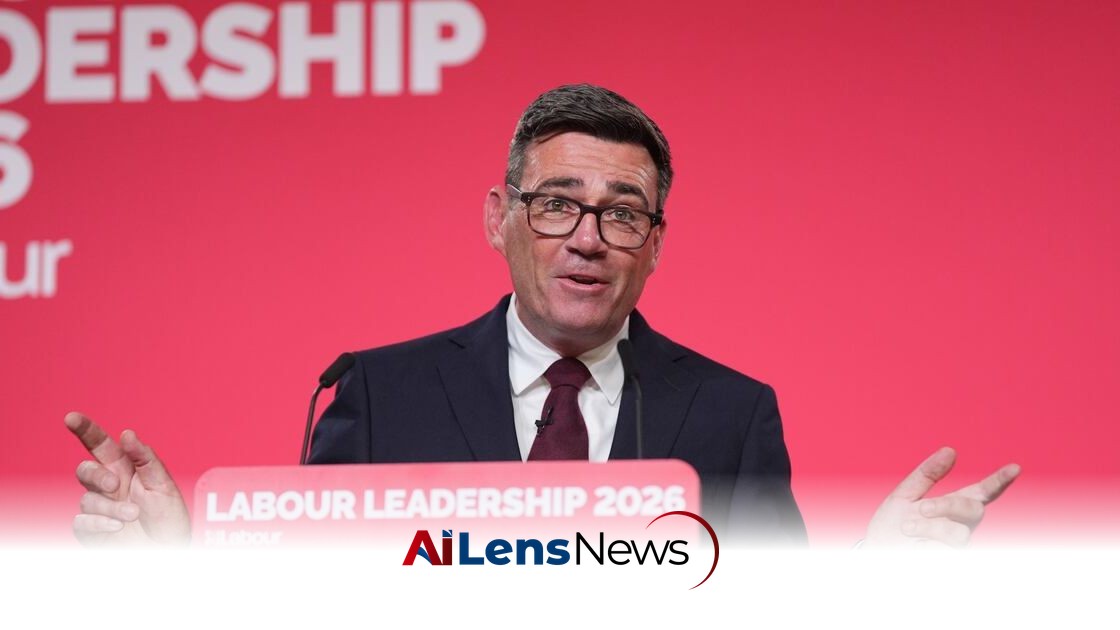


Andy Burnham has officially been confirmed as the leader of Britain's Labour Party, preparing to assume the role of Prime Minister next week.
London, United Kingdom Jul 17, 2026 ALN: Andy Burnham's recent ascension to the leadership of Britain’s Labour Party marks a significant turning point in the political landscape of the United Kingdom. Following the resignation of Keir Starmer, Burnham's installation as party leader is seen as a precursor to his expected appointment as Prime Minister, which is set to take place on Monday. This transition occurs against a backdrop of political turbulence, economic challenges, and a growing desire among the electorate for renewed leadership and vision.
Burnham, who previously served as the Mayor of Greater Manchester, has a long-standing history within the Labour Party, having been a Member of Parliament (MP) for Makerfield. His return to Westminster after a period of local governance has reinvigorated his political career, allowing him to leverage his experience and the support he garnered during his tenure as mayor. His leadership style and policies are anticipated to reflect a blend of local governance insights and national political strategy.
In his acceptance speech, Burnham articulated a vision of hope and a return to the foundational principles of the Labour Party. He emphasized the need to reconnect with communities that feel overlooked and forgotten, stating that the Labour movement has heard the call from these areas and is committed to responding. His remarks resonate with a broader sentiment among voters who have expressed dissatisfaction with traditional political narratives and are seeking a party that prioritizes their needs and aspirations.
Burnham's leadership has garnered overwhelming support from within the party, with British home secretary Shabana Mahmood confirming that he received backing from 379 of the 403 Labour MPs and all 11 affiliated unions. This level of support not only signifies confidence in Burnham's leadership but also reflects a collective desire within the party to unify and present a strong front as they prepare for the challenges ahead.
The political context surrounding Burnham's leadership is crucial. The UK has witnessed a series of leadership changes within the Labour Party over the past decade, with the party oscillating between periods of success and significant electoral defeats. Starmer's leadership was marked by efforts to re-establish the party's credibility after the tumultuous years of Jeremy Corbyn's tenure. Under Starmer, Labour managed to regain some ground, but the party's overall direction remained a subject of debate among its members and the electorate.
As Burnham prepares to step into No 10 Downing Street, he faces the immediate task of outlining his policy agenda and selecting his cabinet. His initial speech highlighted the importance of building upon the achievements of his predecessor, acknowledging Starmer's role in revitalizing the party. Burnham praised various policies introduced under Starmer’s leadership, such as the expansion of workers’ rights, improvements in healthcare access, and the passing of significant legislation like the Hillsborough Law, which aimed to address historical injustices.
However, Burnham did not shy away from critiquing the political right, asserting that they have relinquished control over essential services and economic power, leading to a concentration of wealth and power among a select few. He articulated a vision that seeks to rebalance this dynamic, emphasizing the necessity for local control over critical services such as housing, transport, and energy. This perspective aligns with a growing discourse around decentralization and community empowerment, which has gained traction among voters who feel alienated by the current political and economic systems.
Burnham's analysis of the UK's political history highlights a narrative of decline and disconnection, particularly in regions that have faced deindustrialization and economic neglect. He argues that the loss of control over essential services has left communities vulnerable to rising costs and economic instability. His commitment to addressing these issues reflects a broader recognition within the Labour Party of the need to adapt to the changing political landscape and respond to the genuine concerns of constituents.
As Burnham takes on the mantle of leadership, the implications of his policies and decisions will be closely scrutinized. The electorate is eager to see how he will navigate pressing issues such as inflation, public spending, and social inequality. His approach to these challenges will not only define his leadership but also shape the future trajectory of the Labour Party and its relationship with the British public. The upcoming weeks will be critical as he formulates his cabinet and outlines his administration's priorities, setting the tone for his term as Prime Minister.
In conclusion, Andy Burnham's leadership of the Labour Party represents a pivotal moment in British politics. His commitment to restoring hope and addressing the needs of forgotten communities reflects a broader desire for change within the party and the country. As he prepares to take office, the political landscape remains dynamic, with expectations high for a renewed Labour vision that resonates with the electorate and addresses the pressing challenges facing the UK today.
The Labour Party, historically the party of the working class, has experienced fluctuating levels of support over the years, particularly in the wake of the Brexit referendum and the subsequent general elections. Many voters in traditional Labour strongholds felt disillusioned and abandoned, leading to significant losses in areas that once formed the backbone of the party's support. Burnham's rise is seen as a potential remedy to this discontent, as he seeks to re-establish connections with these communities through policies that prioritize local needs and address economic disparities.
Moreover, Burnham's tenure as Mayor of Greater Manchester has endowed him with practical experience in governance, particularly in the realms of public health, transportation, and housing. His handling of the COVID-19 pandemic response in Greater Manchester has been noted for its emphasis on local solutions and collaboration with health authorities. This experience could prove invaluable as he navigates national health policies and the ongoing challenges posed by the pandemic's aftermath.
As Burnham prepares to lead, he will also need to contend with the broader political landscape, including the Conservative Party's current positioning and the challenges posed by other political entities such as the Liberal Democrats and the Scottish National Party (SNP). The political dynamics in Scotland, in particular, remain a critical area of focus, as Labour seeks to regain ground lost to the SNP in recent elections. Burnham's strategy may involve fostering a more inclusive narrative that resonates with voters across the UK, particularly in regions that have felt marginalized by both Labour and Conservative policies.
In addition to economic and social policies, Burnham's leadership will be assessed on his stance regarding climate change and environmental sustainability. The Labour Party has made commitments to achieving net-zero carbon emissions, and Burnham's vision will need to align with these goals while addressing the immediate concerns of the electorate. His background in local governance may provide him with unique insights into how to implement sustainable practices at the community level, fostering a sense of ownership among constituents.
As Burnham embarks on this new chapter, the expectations from party members, constituents, and the wider public will be significant. He will need to navigate the complex landscape of modern British politics, balancing the demands of traditional Labour supporters with the need to attract new voters. The challenge will be to create a cohesive narrative that unites these diverse interests while remaining true to the party's foundational principles.
In summary, Andy Burnham's leadership of the Labour Party comes at a critical juncture in British politics. His commitment to addressing the concerns of overlooked communities, coupled with his experience in local governance, positions him well to tackle the pressing issues facing the UK. As he prepares to take office, the anticipation surrounding his leadership is palpable, with many hoping that he will usher in a new era of Labour politics that resonates with the electorate and addresses the challenges of the contemporary landscape.
To learn more about the latest developments in Elections, stay updated with our exclusive reports and analyses on AiLensNews.

