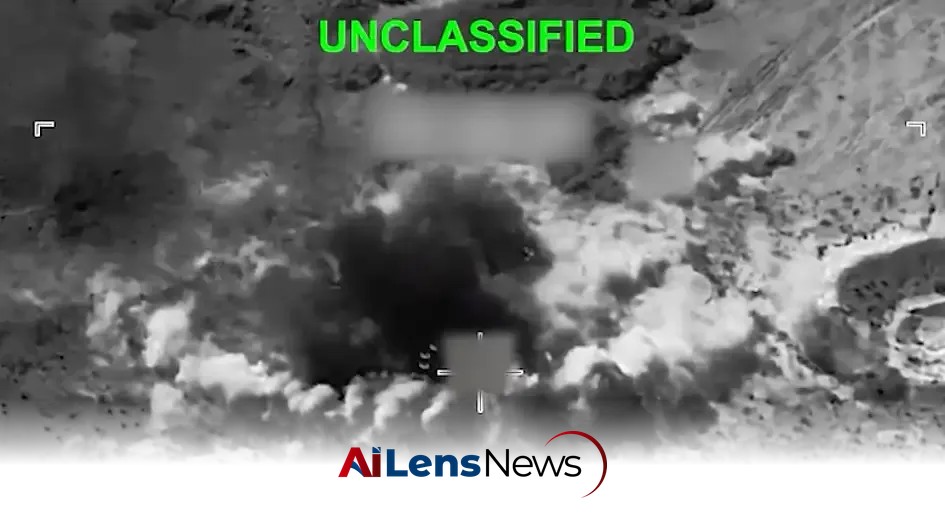


The United States has escalated its military operations against Iran, with President Trump promising severe strikes unless certain conditions are met.
Abu Dhabi, United Arab Emirates Jul 15, 2026 ALN: The United States has ramped up its military operations against Iran, following a series of hostile exchanges that have heightened tensions in the region. President Trump has made it clear that the US intends to take decisive action, stating, "We're going to hit them very hard tonight. We're going to hit them very hard tomorrow night. We're going to hit them very hard the night after... We're going to knock out all their power plants, we're going to knock out all their bridges, unless they get to the negotiating table." This statement underscores the seriousness of the situation and the US's commitment to its military strategy.
Since the signing of a 14-point deal on June 12, hostilities between the US and Iran have escalated significantly. The deal, which was intended to ease tensions, has instead led to increased military posturing from both sides. The US has conducted a new round of strikes aimed at Iranian positions, signaling a shift in its approach towards Iran. These strikes are part of a broader strategy that reflects a long-standing animosity between the two nations, rooted in decades of geopolitical conflict.
The conflict traces back to the 1979 Iranian Revolution, which resulted in the overthrow of the US-backed Shah and the establishment of the Islamic Republic of Iran. Since then, the US has viewed Iran as a destabilizing force in the Middle East, particularly due to its support for militant groups such as Hezbollah and its involvement in conflicts in Iraq and Syria. The tensions have periodically flared into military confrontations, notably in 1980 with the Iran Hostage Crisis and more recently with the assassination of Iranian General Qasem Soleimani in January 2020.
The recent military actions are not only a response to Iranian provocations but also reflect the US's broader strategy to counter Iran's influence in the region. This includes efforts to protect allies such as Israel and Saudi Arabia, who view Iran as a primary threat. The US has also sought to strengthen its military presence in the Gulf region, deploying additional troops and assets to deter Iranian aggression.
In response to the escalating situation, Kuwait has expressed concern over the recent drone activities that have been linked to the ongoing conflict. The Kuwaiti government has called for a de-escalation of tensions and has urged all parties to engage in dialogue to prevent further military actions. Kuwait's position is critical, as it is situated in close proximity to both Iraq and Iran, and any military conflict could have significant repercussions for its security and stability.
Kuwait has historically played a mediating role in regional conflicts, leveraging its diplomatic ties with both the US and Iran. The country’s leadership understands the delicate balance required to maintain its sovereignty and security while navigating the complexities of regional geopolitics. The call for dialogue reflects a broader sentiment among Gulf states, who are wary of the potential fallout from a military confrontation.
The international community is closely monitoring the situation, with various countries calling for restraint. Analysts suggest that the current trajectory could lead to a broader conflict in the region if diplomatic efforts are not prioritized. The stakes are high, and the potential for miscalculation remains a significant risk. Countries like Russia and China have criticized the US's aggressive stance, advocating for a return to diplomatic negotiations rather than military escalation.
Moreover, European nations have been vocal about their concerns regarding the US's unilateral military actions, which they argue undermine international agreements and could destabilize the region further. The 2015 Joint Comprehensive Plan of Action (JCPOA), commonly known as the Iran nuclear deal, is a focal point of contention. The US's withdrawal from the agreement in 2018 and the subsequent re-imposition of sanctions on Iran have exacerbated tensions and hindered diplomatic relations.
In this context, the potential for a wider conflict grows more concerning. The involvement of other regional players, such as Turkey, who also have vested interests in Iran's actions, could complicate the situation further. Additionally, the presence of various non-state actors in the region, including militias aligned with Iran, adds another layer of complexity to the conflict.
As the US continues its military operations against Iran, the situation remains fluid. The commitment to military action by President Trump indicates a willingness to escalate if necessary, while Kuwait's response highlights the regional implications of this conflict. The coming days will be critical in determining the future of US-Iran relations and the stability of the Middle East.
The implications of this military escalation extend beyond immediate regional security concerns. The economic ramifications could also be significant, particularly in terms of oil prices and global markets. A protracted conflict could disrupt oil supplies, given that both Iran and the broader Gulf region are critical to global energy markets. This could lead to increased prices and economic instability worldwide.
Furthermore, the ongoing military operations could influence domestic politics within the US. As tensions rise, public opinion may shift regarding the US's foreign policy approach, particularly if military actions lead to casualties or significant geopolitical consequences. The administration's strategy will likely face scrutiny from both political opponents and allies alike, who may question the long-term viability of a military-first approach to diplomacy.
In summary, the intensification of US military action against Iran is a pivotal moment that could reshape the geopolitical landscape of the Middle East. The interplay of military, diplomatic, and economic factors will be crucial in determining the outcomes of this escalating conflict, and the international community's response will play a significant role in shaping the future of US-Iran relations.
To learn more about the latest developments in Political Controversies, stay updated with our exclusive reports and analyses on AiLensNews.

