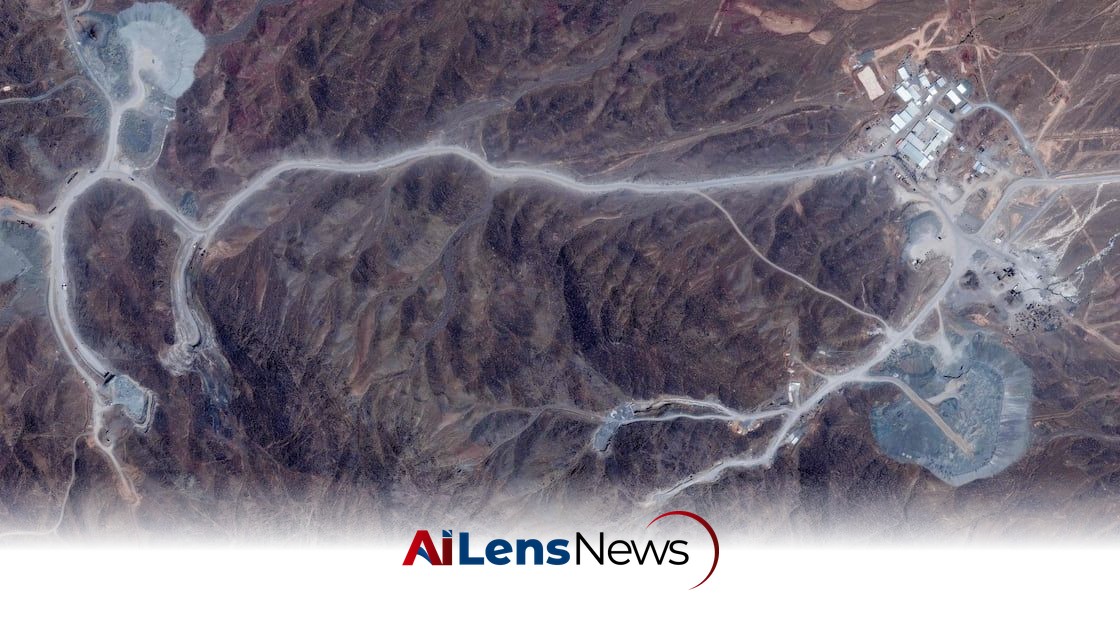


US President Donald Trump has highlighted Pickaxe Mountain, a suspected Iranian nuclear site, as a potential target amid rising tensions. This underground facility, buried deep within a mountain, poses significant challenges for military strikes.
Abu Dhabi, United Arab Emirates Jul 14, 2026 ALN: US President Donald Trump has put Pickaxe Mountain – a suspected Iranian nuclear site buried deep underground – in the spotlight, saying it could become a target as Washington considers its next steps in the ongoing conflict with Iran. The mention of this site reflects the heightened tensions in the region and the complex geopolitical dynamics surrounding Iran's nuclear ambitions.
Mr. Trump told the Salem news channel that the US was closely monitoring the site, suggesting that a military strike could be imminent. "Pickaxe is a possible, you know, target for a nice big, fat shot right in the front door," he stated, indicating the seriousness with which the US administration views the potential threat posed by Iran's nuclear capabilities. "We'll probably give Pickaxe a shot relatively soon," he added, underscoring the urgency of the situation.
This comment came amidst a backdrop of escalating military actions, as American forces carried out strikes on Iranian targets for a third consecutive night. These strikes are part of a broader strategy in response to rising tensions over the Strait of Hormuz, a critical waterway for global oil shipments. The US and Israel have previously conducted attacks on Iran's nuclear sites, notably in June of the previous year, and again in a conflict that erupted on February 28. Following a ceasefire established on April 8, the region has seen repeated violations, with heavy exchanges of fire occurring in recent days, further complicating the already volatile situation.
Known in Farsi as Kuh-e Kolang, Pickaxe Mountain is an underground complex constructed within a mountain range near the Natanz uranium enrichment facility in central Iran. This site has been identified as one of Iran's newest underground nuclear-related installations, raising significant concerns among Western governments and international watchdogs.
Unlike older Iranian nuclear facilities, which are often more exposed and vulnerable to aerial attacks, Pickaxe Mountain appears to be designed with concealment and protection in mind. Satellite imagery analysis conducted by organizations such as the Institute for Science and International Security has indicated that construction of this facility began around 2020. Iran has officially described the facility as a centrifuge assembly plant; however, the lack of access granted to UN inspectors has prevented a comprehensive verification of its true purpose.
Satellite imagery has revealed extensive excavation and tunnel construction at the site, but the exact nature of its operations remains publicly unconfirmed. Iran continues to assert that its nuclear program is peaceful, aimed at generating energy and medical isotopes. However, Western governments and experts have voiced serious concerns regarding the site's location, scale, and design, all of which suggest potential military applications.
Reports indicate that the facility is buried up to 600 meters beneath granite, which raises significant challenges for any military operation aimed at neutralizing it. A deeply buried facility could provide Iran with a secure location for sensitive nuclear activities, making it increasingly difficult for any military strike to effectively disable the site. Some weapons experts have expressed doubts about whether even the US military's most powerful bunker-buster bombs would be capable of destroying a facility constructed at such depths. Nevertheless, the extent of the site's vulnerability remains unknown, as does the full scope of its operations.
The implications of targeting Pickaxe Mountain are profound. A military strike on this facility could escalate tensions dramatically, potentially leading to a broader conflict in the region. Iran has historically responded to perceived threats with military action, and an attack on its nuclear infrastructure could provoke retaliatory strikes against US forces or allies in the region. Additionally, such an operation could undermine diplomatic efforts aimed at curbing Iran's nuclear ambitions through negotiations.
The international community has been closely monitoring Iran's nuclear activities for years, particularly since the US withdrew from the Joint Comprehensive Plan of Action (JCPOA) in 2018. This agreement had aimed to limit Iran's nuclear program in exchange for sanctions relief. The withdrawal led to increased tensions and a series of escalatory actions from both sides, culminating in the current situation where military options are being considered once again.
Moreover, the strategic significance of the Strait of Hormuz cannot be overstated. This narrow passage is a vital conduit for approximately one-fifth of the world's oil supply. Any disruption in this area could have catastrophic implications for global energy markets and international trade. As such, the US and its allies are particularly vigilant regarding Iran's activities in this region.
In conclusion, the situation surrounding Pickaxe Mountain and Iran's nuclear program is emblematic of the broader challenges facing the international community in addressing nuclear proliferation. The potential for military conflict looms large, and the stakes are high not only for the countries directly involved but also for global security. As the US considers its next steps, the implications of any action taken against Pickaxe Mountain will reverberate far beyond the immediate region, influencing geopolitical dynamics and international relations for years to come.
Understanding the broader context of Iran's nuclear ambitions is essential in this discussion. The Islamic Republic has consistently maintained that its nuclear program is for peaceful purposes, asserting its right to develop nuclear technology under the Non-Proliferation Treaty (NPT). However, the lack of transparency and the secretive nature of certain facilities, such as Pickaxe Mountain, have led to widespread skepticism among Western nations and allies in the Middle East.
The history of Iran's nuclear program dates back to the 1950s, but it gained significant international attention in the early 2000s when concerns over potential military dimensions of the program surfaced. The International Atomic Energy Agency (IAEA) has repeatedly called for Iran to provide access to its facilities for inspections, but access has often been limited or denied, raising further suspicions about the true nature of its nuclear activities.
In light of these tensions, various diplomatic efforts have been made to address the situation. The JCPOA, signed in 2015, represented a significant milestone in international diplomacy, aiming to curtail Iran's nuclear program in exchange for sanctions relief. However, the agreement's collapse following the US withdrawal has led to a precarious situation where military options are back on the table.
The ramifications of any military action against Iran, particularly targeting sites like Pickaxe Mountain, could extend beyond immediate military consequences. Such actions could lead to a reconfiguration of alliances in the region, with countries reassessing their security strategies in light of potential Iranian retaliation. Moreover, the potential for a wider conflict could draw in other nations, complicating an already intricate geopolitical landscape.
Furthermore, the response from the Iranian government to any military action would likely be swift and forceful. Iran has a history of utilizing proxy groups across the Middle East to exert influence and retaliate against perceived aggressors. These groups, which include Hezbollah in Lebanon and various militias in Iraq and Syria, could launch attacks against US interests or allies, thereby escalating the conflict further.
In summary, the situation surrounding Pickaxe Mountain serves as a focal point for understanding the broader implications of Iran's nuclear program and the potential for military conflict. The stakes are high, and the decisions made by the US and its allies in the coming days and weeks will have lasting consequences for international relations, regional stability, and global security.
To learn more about the latest developments in Political Controversies, stay updated with our exclusive reports and analyses on AiLensNews.

