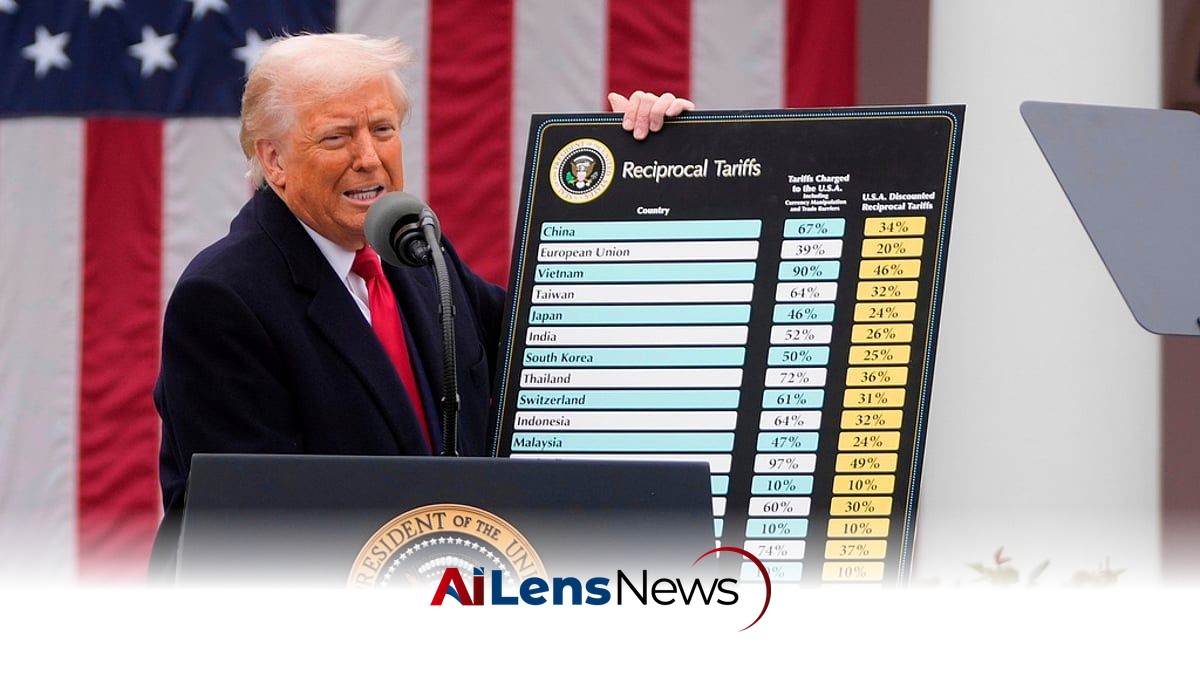


President Trump has enacted a 50% tariff on most Canadian goods, citing unfair trade practices. Key exclusions include energy products and critical minerals.
Abu Dhabi, United Arab Emirates Jul 21, 2026 ALN: President Donald Trump imposed 50% tariffs on most Canadian goods, declaring that Canada has unfairly discriminated against American autos, alcohol, and dairy products. This significant move was announced late on a Monday in July, marking a pivotal moment in U.S.-Canada trade relations.
The imposition of these tariffs could unleash a new wave of economic chaos, raising concerns about higher inflation and further fraying the relations between two nations that had been closely woven together before Trump's return to the White House. The economic implications of such tariffs are profound, affecting not only the bilateral trade dynamics but also potentially impacting consumers and industries on both sides of the border. The tariffs, which are among the highest that have been levied in recent years, could lead to increased costs for American consumers who rely on Canadian goods, ranging from everyday products to industrial supplies.
The administration official previewing the action indicated that Canada was one of the only nations, alongside China, that retaliated against Trump's previous tariffs. The official emphasized the need for Canada to be held accountable for what the Trump administration perceives as unfair trade practices. This perspective underscores a broader strategy of the Trump administration, which has often framed trade relations in terms of fairness and reciprocity. The rationale behind such tariffs is rooted in a belief that trade should benefit American workers and industries, and the administration has expressed frustration over trade deficits with Canada, particularly in sectors such as dairy and lumber.
According to the official, who insisted on anonymity during a call with reporters, Trump signed three proclamations to launch the tariffs under Section 338 of the 1930 Trade Act. This section allows the president to impose tariffs to protect national security or to respond to unfair trade practices. However, the use of this section has been contentious, with several Democratic lawmakers proposing its repeal last year. They argued that such powers could be used to destabilize the economy, raising concerns about the broader implications of unilateral trade actions. Critics have warned that the president's approach could undermine long-standing trade agreements and lead to retaliatory measures that could harm American businesses and consumers.
Notably, the 50% tariffs would exclude energy products, potash, fish, and critical minerals, which are significant components of the trade relationship between the U.S. and Canada. However, the tariffs would include goods that had previously been protected from import taxes by the United States-Mexico-Canada Agreement (USMCA). The USMCA, which replaced the North American Free Trade Agreement (NAFTA), was designed to create a more balanced trade environment among the three countries and had recently expired, triggering a new set of negotiations that could run until 2036. The expiration of USMCA raises questions about how trade will be managed in the future, especially as negotiations over tariffs and trade practices continue.
The USMCA had aimed to address various trade issues, including labor rights, environmental standards, and the digital economy. Its expiration and the subsequent negotiations pose additional challenges for trade relations, complicating the landscape for businesses and consumers alike. The agreement was seen as a critical framework for ensuring fair trade practices, and its absence could lead to a more fragmented trading environment, increasing uncertainty for companies that rely on cross-border supply chains.
In a further twist, the official mentioned that Trump had also requested his aides to explore additional tariffs on Canada due to the impact of wildfires on air quality in the U.S. This reasoning highlights the multifaceted nature of trade disputes, where environmental concerns can intersect with economic policies, leading to complex negotiations and potential retaliatory measures. The intertwining of environmental issues with trade policy demonstrates how broader concerns can influence economic decisions, complicating the already delicate balance of international relations.
The decision to impose such high tariffs is likely to provoke a strong response from Canada, which has historically viewed the U.S. as a major trading partner. Canada’s economy is heavily reliant on trade with the U.S., with a significant portion of its exports going south of the border. The imposition of tariffs could lead to retaliatory measures from Canada, further escalating the trade tensions between the two nations. Canadian officials have indicated that they are prepared to respond in kind, which could include tariffs on American goods, particularly in sectors where Canada has a competitive advantage, such as agriculture and forestry.
Trade experts have raised alarms about the potential for a trade war, where each side retaliates against the other’s tariffs, leading to a cycle of increasing tariffs and economic strain. Such a scenario could have broader implications for the North American economy, potentially leading to job losses and increased prices for consumers. The automotive industry, which is a key sector in both the U.S. and Canadian economies, could be particularly hard hit. The sector has already been grappling with supply chain disruptions and rising costs due to the COVID-19 pandemic. The introduction of a 50% tariff on Canadian automotive exports could exacerbate these challenges, leading to higher prices for consumers and reduced competitiveness for manufacturers.
The tariffs could also complicate the Biden administration's trade policy, as it seeks to navigate the fallout from Trump's previous policies while trying to maintain strong economic ties with Canada. The Biden administration has emphasized the importance of multilateral trade agreements and working with allies to address global trade challenges, but the imposition of unilateral tariffs presents a significant hurdle to these efforts. The administration may find itself in a difficult position, needing to balance domestic political pressures with the desire to maintain good relations with Canada and other trading partners.
Moreover, the tariffs may have implications for broader international trade dynamics. The U.S. and Canada are both members of various international trade organizations, and the imposition of such tariffs could strain relationships with other countries that rely on stable trade relations with North America. The potential for a trade war could also lead to increased scrutiny from international trade bodies, which may call for negotiations to resolve disputes rather than unilateral actions.
In summary, President Trump's decision to impose a 50% tariff on Canadian goods marks a significant escalation in trade tensions between the U.S. and Canada. The move is rooted in longstanding grievances over trade practices and reflects a broader strategy of using tariffs as a tool for negotiating trade agreements. However, the potential economic fallout from such tariffs raises concerns about inflation, job losses, and the overall health of the North American economy. As negotiations continue over the future of trade relations, the impact of these tariffs will be closely monitored by policymakers, businesses, and consumers alike. The ongoing developments in this area will undoubtedly shape the future of trade between the two nations and could have lasting implications for the global economy.
To learn more about the latest developments in Elections, stay updated with our exclusive reports and analyses on AiLensNews.

