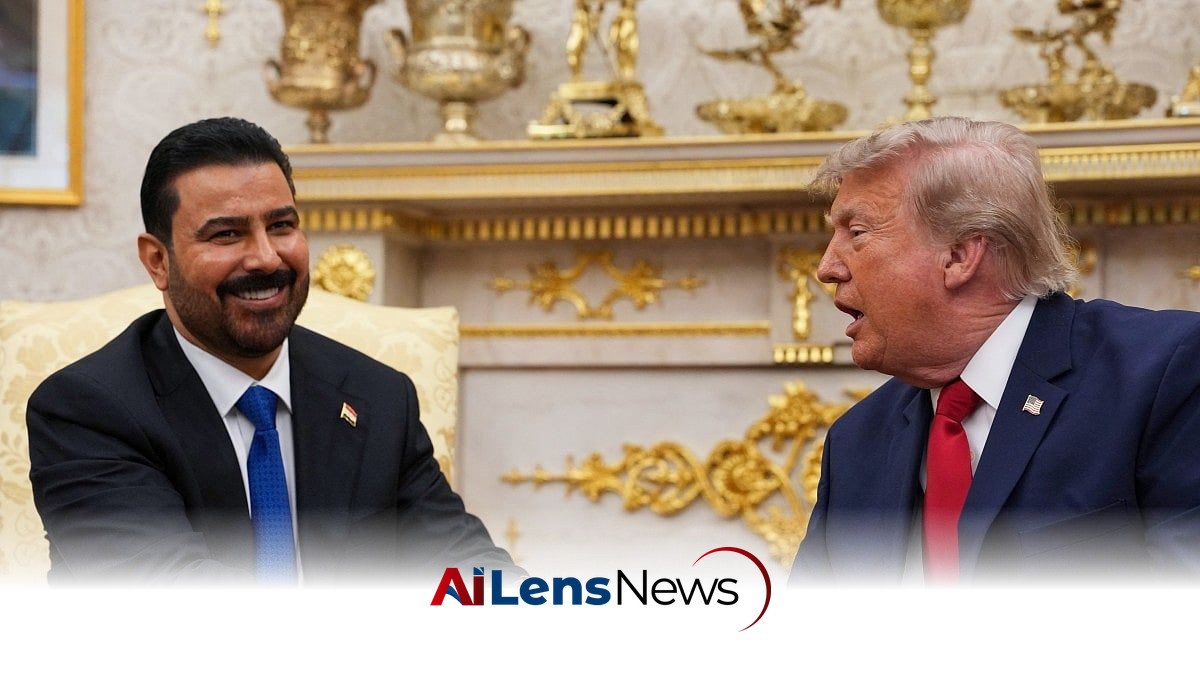


During a recent meeting, Trump praised Iraq's new Prime Minister and hinted at significant oil deals, as Iraq seeks to stabilize its economy.
Abu Dhabi, United Arab Emirates Jul 15, 2026 ALN: Oil-rich Iraq has been striving to overcome decades of conflict and instability, yet it continues to grapple with inadequate infrastructure, failing public services, mismanagement, and widespread corruption. These issues have deep roots in the country’s tumultuous history, which includes the Iran-Iraq War, the Gulf War, and the 2003 US-led invasion that toppled Saddam Hussein’s regime. The aftermath of these conflicts has left Iraq with a fragmented political landscape and a struggling economy, heavily reliant on its oil sector for revenue. The country has faced numerous challenges since the 2003 invasion, including sectarian violence, the rise of extremist groups, and ongoing political instability, which have all contributed to its current economic hardships.
Former President Donald Trump, a long-time critic of the 2003 US-led invasion of Iraq, remarked that the United States had "attacked the wrong country," suggesting that Iran should have been the target instead. This statement reflects a broader sentiment among some American political figures who believe that the focus on Iraq diverted attention and resources from addressing the threats posed by Iran, a country that has been accused of destabilizing the region through its support for various militant groups and its nuclear ambitions. Trump's comments underscore the complex and often contentious relationship between the United States and Iraq, as well as the ongoing debates about the legacy of American intervention in the region.
In recent months, Iraq has entered into several agreements with American companies in the oil and gas sector. These partnerships are part of Iraq's broader strategy to enhance its economic stability and infrastructure. The Iraqi government, led by Prime Minister Mohammed Shia' Al-Sudani, is keen on attracting foreign investment to revitalize its oil industry, which has suffered from years of underinvestment and mismanagement. The agreements with American firms are seen as a crucial step towards modernizing Iraq’s oil extraction and refining capabilities, as well as improving the overall efficiency of its energy sector. The oil industry, which is the backbone of Iraq's economy, has been plagued by outdated technology and a lack of infrastructure investment, leading to significant production losses and inefficiencies.
During his visit to the United States, Iraqi Prime Minister Mohammed Shia' Al-Sudani is anticipated to finalize additional agreements, including a significant deal to create a fund where Iraq will deposit half a million barrels of oil per day. In return, the US will assist in improving Iraq's electricity supply. The electricity sector in Iraq has been a persistent challenge, with frequent outages and insufficient infrastructure to meet the demands of its population. The proposed agreements aim not only to stabilize Iraq’s energy supply but also to foster a more reliable economic environment that can attract further investments. The electricity crisis has been a source of public frustration and unrest, underscoring the urgent need for effective governance and infrastructure development in the country.
Like many oil-producing nations, Iraq, a founding member of OPEC, has been significantly impacted by the ongoing conflicts in the Middle East. The country remains heavily reliant on oil exports, which constitute approximately 90 percent of its budget revenues. This heavy dependence on oil makes Iraq vulnerable to fluctuations in global oil prices and geopolitical tensions. Additionally, the majority of Iraq's crude oil is transported through the strategically important and disputed Strait of Hormuz, a narrow passage that is crucial for global oil shipments. Any disruption in this area can have significant implications for Iraq's economy and its ability to generate revenue. The reliance on a single commodity for economic stability poses risks, especially as global energy markets evolve and the world shifts towards renewable energy sources.
The geopolitical landscape surrounding Iraq is complex, with various regional players vying for influence. Iran, in particular, has maintained a significant presence in Iraq, leveraging its relationships with various political factions and militias. This has raised concerns about Iran's influence over Iraq's domestic policies and its potential to destabilize the region further. The United States, while critical of Iran's actions, has also been working to strengthen its ties with Iraq to counterbalance Iranian influence. This delicate balance of power is crucial for Iraq’s future stability and its ability to navigate the challenges posed by both internal and external forces. The presence of Iranian-backed militias in Iraq complicates the security environment and raises questions about the sovereignty of the Iraqi state.
Furthermore, the agreements being discussed between Iraq and the United States also highlight a broader trend of energy cooperation in the region. As countries look to secure their energy needs and enhance energy security, partnerships between oil-rich nations and energy-consuming nations like the United States become increasingly important. These collaborations can lead to technological advancements, improved infrastructure, and more sustainable energy practices, ultimately benefiting both parties involved. The potential for energy cooperation extends beyond oil and gas, as countries explore renewable energy investments and diversification strategies to reduce their dependence on fossil fuels.
In conclusion, the potential agreements between Iraq and the United States signal a significant step forward in Iraq's efforts to stabilize its economy and improve its infrastructure. However, the success of these initiatives will depend on Iraq's ability to navigate its complex political landscape, address corruption, and ensure that the benefits of its oil wealth are distributed equitably among its population. As Iraq continues to rebuild and redefine its role in the global energy market, the implications of these developments will be felt not only within its borders but also across the broader Middle East and beyond. The path forward for Iraq will require not only foreign investment but also a commitment to governance reforms, anti-corruption measures, and the promotion of inclusive economic growth to ensure a stable and prosperous future for its citizens.
To learn more about the latest developments in Political Controversies, stay updated with our exclusive reports and analyses on AiLensNews.

