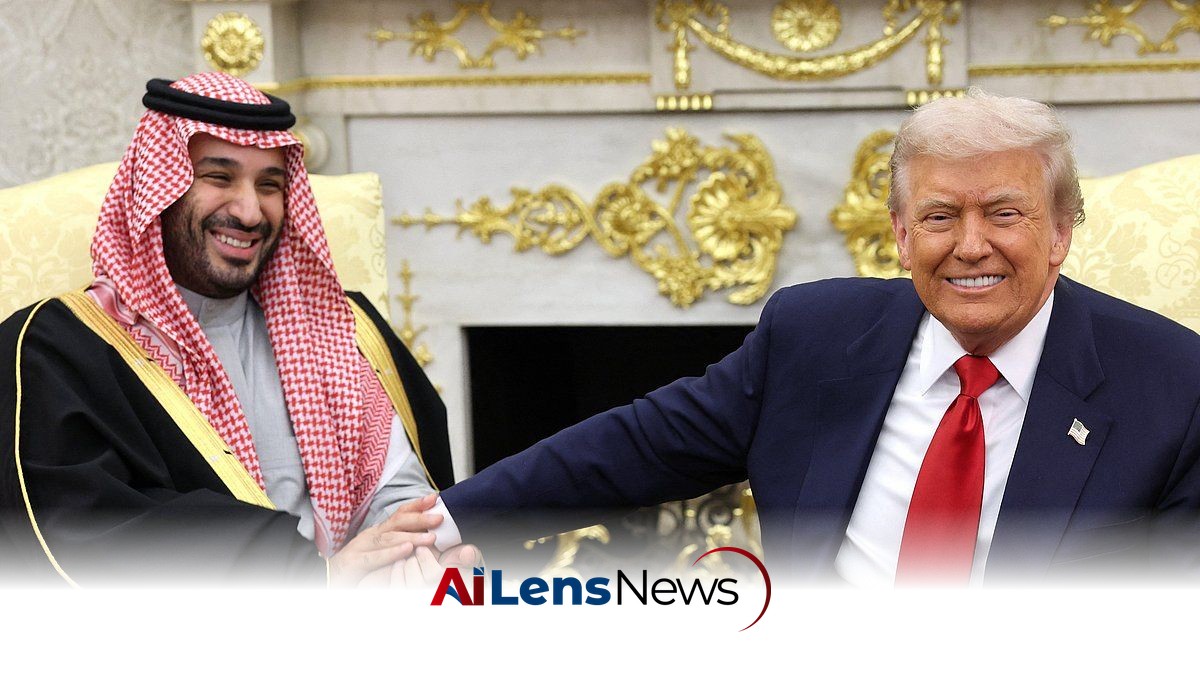


Former President Trump ties a new US-Saudi nuclear agreement to Saudi Arabia's potential normalization of relations with Israel under the Abraham Accords, raising concerns over uranium enrichment.
Abu Dhabi, United Arab Emirates Jul 23, 2026 ALN:
Former President Donald Trump has actively sought to build on the Abraham Accords, a series of agreements initiated in 2020 that expanded diplomatic relations between Israel and several Arab and Muslim-majority nations. The Accords have been hailed as a significant step towards normalizing relations in a historically tumultuous region, aiming to foster peace and stability. Among the nations that have signed onto these agreements are the United Arab Emirates, Bahrain, Sudan, and Morocco. However, Saudi Arabia, as one of the most influential Arab powers in the Middle East, has yet to formalize its participation in these accords. Trump believes that securing Saudi Arabia's involvement is crucial for establishing long-term regional stability and enhancing the geopolitical landscape in favor of American interests.
The new nuclear deal, announced recently, is expected to last 30 years and will involve American firms in the development of Saudi Arabia's nuclear energy program. This deal has the potential to allow for the construction of a uranium-enrichment facility in Saudi Arabia, contingent upon the results of a joint US-Saudi study. The specifics of this arrangement are still somewhat opaque, as details are limited due to the sensitive nature of nuclear agreements.
According to sources familiar with the negotiations, the agreement will be submitted to Congress for review, a standard practice for international treaties involving nuclear cooperation. However, critics have raised concerns about the lack of the International Atomic Energy Agency's "additional protocol" in this deal, which typically allows for more rigorous monitoring, inspections, and verification of nuclear activities. The absence of such measures has led to increased scrutiny from various stakeholders, including lawmakers and nuclear experts.
Saudi Arabia's Energy Ministry has expressed that this agreement will bolster the kingdom's efforts to diversify its energy sources, advance cutting-edge technologies, and expand opportunities for cooperation and investment that serve the mutual interests of both nations. This aligns with Saudi Arabia's Vision 2030 initiative, which aims to reduce the kingdom's dependence on oil revenue and promote economic diversification.
While uranium enrichment is often associated with the potential for developing nuclear weapons, it is important to note that enrichment alone does not equate to weaponization. A country must also master several other complex processes, including the use of synchronized high explosives, to develop a functional nuclear weapon. Nevertheless, the prospect of Saudi Arabia developing enrichment capabilities has fueled concerns, particularly in the context of Iran's nuclear program, which has long been a point of contention in regional politics.
Secretary of State Marco Rubio emphasized the importance of the nuclear deal for American businesses during a recent press briefing in Manila. He stated that the agreement ensures that Saudi Arabia will collaborate with American companies rather than turning to competitors such as China, South Korea, France, or Russia for its civil nuclear program. Rubio asserted, "We're not the only show in town, but we're the best show in town. We want to make sure that it's our companies they're picking." This sentiment reflects a broader strategy by the Trump administration to strengthen economic ties with key allies while countering the influence of rival nations in critical sectors like energy and technology.
Trump has consistently promoted the expansion of the Abraham Accords as a cornerstone of his foreign policy agenda, arguing that these agreements are essential for achieving long-term stability in the Middle East. However, the geopolitical landscape has shifted significantly following recent conflicts, including the aftermath of Israel's war in Gaza and the ongoing US-Israel campaign against Iran. These developments have complicated Trump's efforts to broaden the scope of the Accords, as public sentiment in some signatory countries has turned against the agreements, leading to protests and calls for reevaluation.
Despite these challenges, the Trump administration remains optimistic about the possibility of securing a formal agreement with Saudi Arabia to join the accords by the end of Trump's second term. The potential inclusion of Saudi Arabia in the Abraham Accords is seen as a pivotal step towards enhancing regional cooperation and countering Iranian influence.
As the details of the nuclear cooperation agreement, known as a "123 agreement," emerged, it quickly attracted scrutiny from various quarters, including Congress, Israeli officials, and nuclear experts. The White House and Saudi Arabia have yet to release the full text of the agreement, which has fueled speculation and concern regarding its implications for regional security and nuclear proliferation.
Opposition on Capitol Hill has been bipartisan, with both Republicans and Democrats questioning the prudence of the agreement. Some conservative commentators, who have generally supported Trump's policies, have expressed dismay at the prospect of granting Saudi Arabia such a significant deal without securing reciprocal commitments. This skepticism reflects a broader concern about the potential ramifications of empowering a country with a contentious human rights record and a history of regional aggression.
In a surprising turn, Trump announced that the nuclear deal is contingent upon Saudi Arabia's agreement to join the Abraham Accords. This linkage raises questions about the negotiations and the potential leverage that the United States may have in securing Saudi participation in the accords. During a briefing, White House Press Secretary Karoline Leavitt refrained from confirming whether the Saudis had agreed to sign onto the accords but reiterated that Trump has consistently advocated for their inclusion during discussions about the nuclear deal.
Senator Rubio has previously supported a bipartisan proposal that aimed to require congressional approval for any 123 agreement with Saudi Arabia. This proposal was reintroduced by a group of Democratic lawmakers in March but has yet to pass into law. The discussion surrounding this proposal underscores the complexities of balancing national security interests with legislative oversight and accountability in foreign policy matters.
Representative Brad Sherman, a California Democrat, who co-sponsored the 2018 bill with Rubio, expressed concern over the apparent shift in Rubio's stance. During a recent meeting of the House Foreign Affairs Committee, Sherman remarked, "I hope that Sen. Rubio will return to us and insist that Congress approve any agreement." This statement highlights the ongoing debate within Congress regarding the appropriate level of scrutiny and oversight for nuclear agreements, particularly with a nation like Saudi Arabia that has been at the center of numerous geopolitical controversies.
As the situation evolves, the implications of the nuclear deal and its connection to the Abraham Accords will continue to unfold, shaping the future of US-Saudi relations and the broader dynamics of the Middle East. The administration's approach to this agreement will likely be closely monitored by various stakeholders, including international allies, regional adversaries, and domestic political actors, as the balance of power in the region remains delicate and fraught with potential conflict.
To learn more about the latest developments in Elections, stay updated with our exclusive reports and analyses on AiLensNews.

