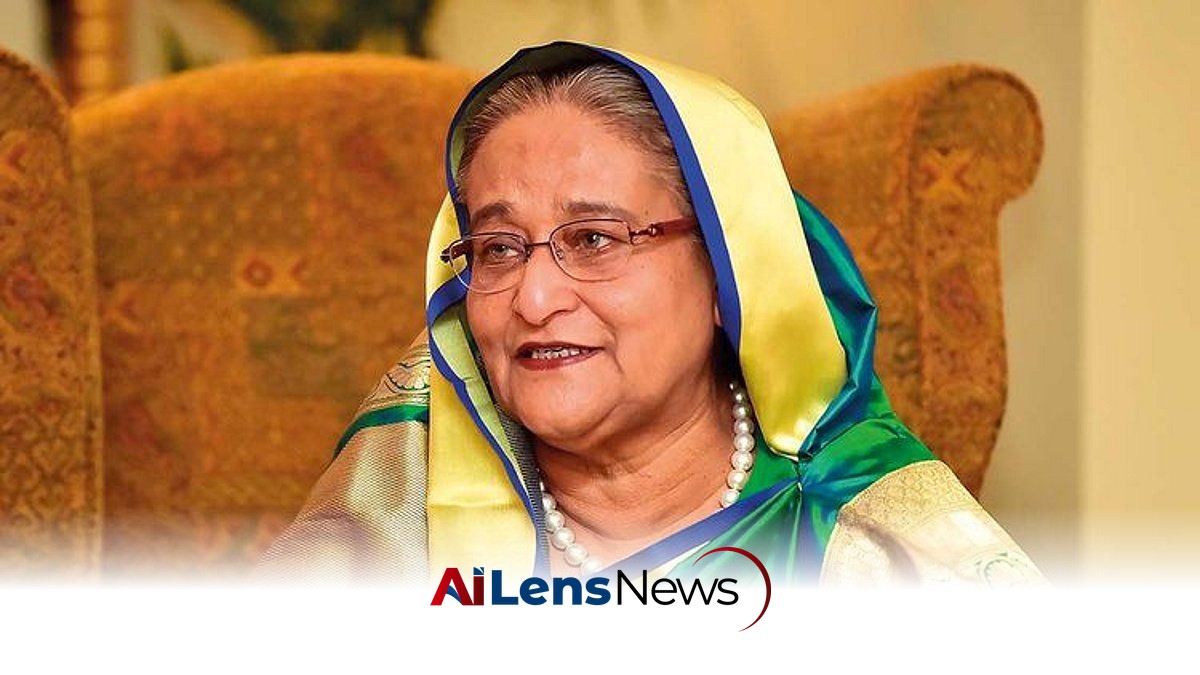


Bangladesh authorities have confiscated assets worth $6.2 billion linked to former Prime Minister Sheikh Hasina amid ongoing corruption investigations.
Abu Dhabi, United Arab Emirates Jul 15, 2026 ALN: Dhaka: Bangladesh has confiscated assets worth 760 billion taka (about $6.2 billion) linked to ousted prime minister Sheikh Hasina, her family, and 10 business groups, authorities said Wednesday. This significant action marks a pivotal moment in Bangladesh's ongoing political and judicial landscape, which has been shaped by decades of rivalry between major political factions and a complex web of corruption allegations.
The seizure of assets is part of a broader investigation into the wealth amassed by Hasina and her allies during her 15-year tenure, often characterized by allegations of authoritarianism and corruption. Since Hasina was toppled in a student-led mass uprising in 2024, she has been living in exile in India. Following her ousting, authorities began scrutinizing her financial dealings and those of her family members and business associates, who are accused of illicitly benefiting from her administration.
The Bangladesh Financial Intelligence Unit (BFIU) has reported that a substantial portion of the seized assets—570 billion taka—was located within Bangladesh, while the remaining 190 billion taka was identified overseas. The agency's chief, Ikhtiar Mohammad Mamun, indicated that the investigations have led to the opening of 98 cases related to Hasina and her associates. Mamun expressed optimism about recovering laundered funds from abroad, stating, "We hope to share positive developments by the end of this year." This recovery effort reflects the government's commitment to addressing corruption and restoring public trust in its institutions.
Since her removal from power, Hasina has faced multiple convictions in absentia, including serious corruption charges linked to the allocation of valuable land plots in upscale areas of Dhaka. These legal proceedings underscore the significant challenges that the former prime minister faces as she contemplates a potential return to Bangladesh. Additionally, a court has sentenced her to death for crimes against humanity, further complicating her situation and raising questions about her future.
Hasina has remained in India since fleeing Bangladesh in August 2024. Recently, she stated her intention to return to Bangladesh by the end of the year, a move that could have profound implications for the political climate in the country. Home Minister Salahuddin Ahmed has reiterated the government's desire to see Hasina extradited to face justice, emphasizing that the verdicts against her will be enforced. He remarked, "The verdict will be implemented. The court will decide whether there is any scope for an appeal," highlighting the legal complexities surrounding her potential return.
The political rivalry between Sheikh Hasina and her long-time adversary, Khaleda Zia, has been a central theme in Bangladesh's political narrative. Zia, who served as prime minister before Hasina, has also faced legal challenges, including corruption charges. The recent death of Zia at the age of 80 has left a significant vacuum in Bangladeshi politics, prompting discussions about the future of the Bangladesh Nationalist Party (BNP), which she led. Zia's passing may alter the dynamics of opposition politics in Bangladesh, as her party navigates its next steps in a landscape dominated by Hasina's Awami League.
The implications of the asset seizure and ongoing investigations extend beyond individual accountability. They signal a broader shift in Bangladesh's governance and judicial processes, suggesting a potential commitment to tackling corruption that has plagued the country for years. The public's perception of government integrity may hinge on the outcomes of these investigations and the extent to which justice is perceived to be served.
International observers have also taken note of the situation in Bangladesh, particularly concerning human rights and the rule of law. The United Nations Secretary-General, António Guterres, has voiced opposition to the death penalty, including in relation to Sheikh Hasina's case. This international perspective adds another layer of complexity to the unfolding drama, as Bangladesh navigates its domestic legal challenges while also considering its standing on the global stage.
The political landscape in Bangladesh is further complicated by the role of civil society and student movements, which played a crucial part in the uprising that led to Hasina's ousting. The student-led protests were fueled by widespread dissatisfaction with corruption and governance issues, reflecting a broader demand for accountability and transparency in the political system. As the country moves forward, the voices of these activists will likely continue to influence the discourse around governance and reform.
Looking ahead, the situation remains fluid, with potential ramifications for both the Awami League and the BNP. The outcome of the investigations into Hasina's assets, her potential return to Bangladesh, and the public's response to these developments will shape the future of Bangladeshi politics. The stakes are high, as the government seeks to establish a narrative of accountability while navigating the legacies of its past leaders.
In conclusion, the seizure of $6.2 billion in assets linked to Sheikh Hasina marks a significant chapter in Bangladesh's political saga. As investigations continue and the prospect of Hasina's return looms, the implications for the country's governance, rule of law, and political stability will be closely watched both domestically and internationally. The unfolding events will not only define the future trajectory of Hasina and her political legacy but also set the tone for the broader struggle against corruption in Bangladesh.
To fully understand the context of these developments, it is important to consider the historical backdrop of Sheikh Hasina's political career. Hasina, a member of the Awami League party, first served as prime minister from 1996 to 2001 and then again from 2009 until her ousting in 2024. Her tenure has been marked by significant economic growth in Bangladesh, yet it has also been marred by accusations of human rights abuses and authoritarian governance. The political rivalry with Khaleda Zia, leader of the Bangladesh Nationalist Party (BNP), has often led to violent confrontations and political unrest, further complicating the governance landscape.
The mass uprising that led to Hasina's removal was fueled by a coalition of students, civil society groups, and opposition parties, all united against perceived government corruption and a lack of democratic freedoms. This uprising not only resulted in Hasina's exile but also sparked a renewed interest in governance reform among the Bangladeshi populace. The public's demand for accountability has become a rallying cry for various movements, emphasizing the need for transparency and integrity within the political system.
The ongoing investigations into Hasina and her associates are seen as a litmus test for the current government’s commitment to tackling corruption. Many citizens are hopeful that these actions will lead to meaningful reforms, while others remain skeptical, fearing that political motivations may overshadow the pursuit of justice. The outcome of these investigations could either bolster or undermine the current administration's legitimacy, depending on how they are perceived by the public and international observers alike.
Moreover, the international community's reaction to these events will play a crucial role in shaping Bangladesh's future. As the government seeks to navigate its legal and political challenges, it must also consider its relationships with foreign nations and international organizations. The potential for sanctions or diplomatic repercussions could influence how the government approaches its internal issues and its dealings with Hasina's case.
In summary, the asset seizure linked to Sheikh Hasina is not merely a legal matter; it is a reflection of the broader societal struggles within Bangladesh. The implications of these events will resonate throughout the political landscape, influencing not only the future of the Awami League and the BNP but also the very fabric of governance and civil society in Bangladesh. As the country stands at a crossroads, the outcomes of these investigations and the potential return of Hasina will undoubtedly shape the trajectory of Bangladeshi politics for years to come.
To learn more about the latest developments in Political Controversies, stay updated with our exclusive reports and analyses on AiLensNews.

