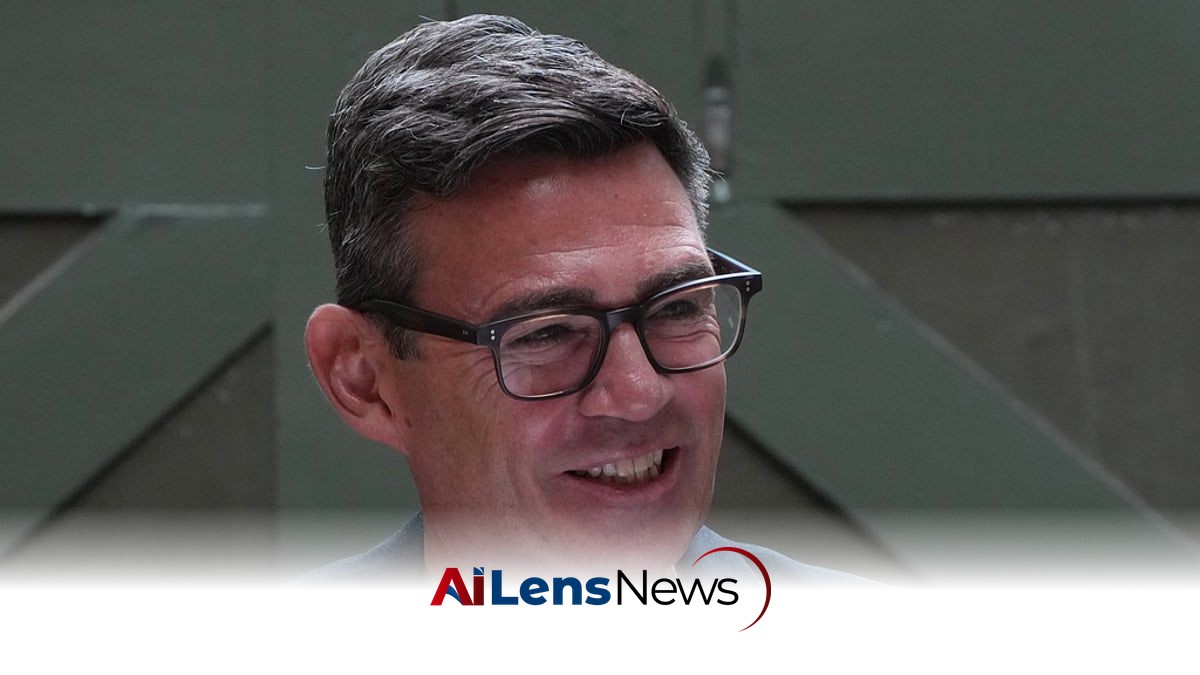


Andy Burnham has been declared the new leader of the Labour Party, set to take office as Prime Minister next week, succeeding Keir Starmer.
Abu Dhabi, United Arab Emirates Jul 17, 2026 ALN: Andy Burnham was officially declared leader of Britain's governing Labour Party on Friday, clearing his final hurdle to taking office as prime minister next week. This leadership contest comes at a crucial time for the Labour Party, which has been navigating a turbulent political landscape marked by internal challenges and external pressures. The announcement was a foregone conclusion after he secured nominations from 379 of the 403 Labour lawmakers in the House of Commons as of Thursday night, showcasing a strong backing from his party colleagues.
In his first speech as leader, Burnham expressed gratitude and determination, stating, "We're going to give them hope back. This is a proud moment you have given me and my family today, and an emotional one, but it is one for which I am ready." His words reflect a commitment to rejuvenate the party's image and reconnect with the electorate, particularly in light of recent electoral setbacks for Labour. The Labour Party has faced criticism in recent years for its inability to connect with a diverse voter base, and Burnham's leadership is seen as a pivotal opportunity to change that narrative.
Burnham, the former mayor of Greater Manchester, has been viewed as a prime minister-in-waiting for weeks. However, he has revealed little detail about his policy priorities, which raises questions about how he plans to engage with the wider electorate, particularly those outside of Manchester, where he has built his political career. His recent election to Parliament in a special election has given him a platform, but many voters may still be unfamiliar with his vision and policies. The challenge for Burnham will be to translate his local successes into a national agenda that resonates with constituents across the U.K.
His leadership style contrasts sharply with that of his predecessor, Keir Starmer, who was often perceived as stern and overly cautious. Burnham is recognized as one of the Labour Party's best communicators, potentially allowing him to connect more effectively with voters. Nevertheless, he inherits many of the same challenges that plagued Starmer, including a sluggish economy, rising living costs exacerbated by global conflicts, and public services that are under significant strain. The economic landscape in the U.K. remains precarious, with inflation affecting household budgets and a cost-of-living crisis that has left many struggling to make ends meet.
In his initial address as Labour leader, Burnham began to outline his priorities, emphasizing the need for "the courage to fix the big things that politics has neglected." His office has indicated that he will focus on economic renewal, advocating for increased public control over key sectors and the creation of modern industrial jobs. This approach signals a shift towards addressing the economic disparities that have grown over the years, particularly in the wake of the policies implemented during the 1980s under Conservative Prime Minister Margaret Thatcher, which emphasized privatization and centralization of political power. Burnham's acknowledgment of the mistakes made in the past, particularly during the Thatcher era, suggests a desire to recalibrate Labour’s approach to economic policy.
He argues that the U.K. took "a series of wrong turns in the 1980s," leading to a concentration of power that has left many regions behind. This historical context is significant, as it frames his vision for a more equitable distribution of resources and opportunities across the country. The legacy of Thatcherism continues to shape British politics, and Burnham's critique of this era may resonate with voters who feel marginalized by current economic policies.
Another pressing issue that Burnham has pledged to address is the inconsistent access to social care for individuals affected by age, illness, or disability. This challenge is particularly acute in a country with an aging population, and it has been a persistent issue that has confounded both Labour and Conservative governments over the years. By prioritizing social care, Burnham aims to tackle a critical aspect of public welfare that resonates with many families across the U.K. The importance of social care has been highlighted by various reports and studies that indicate a growing demand for services, yet funding and access remain contentious political issues.
Starmer’s resignation announcement last month followed a tumultuous two years marked by missteps and judgment errors that eroded his standing with both party members and the public. Labour's struggles in opinion polls, where they frequently trailed behind the anti-immigration party Reform UK, and their poor performance in local elections in May, culminated in pressure for Starmer to resign. His departure opens a new chapter for the party as it seeks to regain its footing and present a united front to the electorate. The internal dynamics of the Labour Party will be crucial in determining Burnham's ability to implement his vision, as he will need to balance the interests of various factions within the party.
Starmer will remain in office until Monday, when he is expected to formally tender his resignation to King Charles III. Following this, the king will invite Burnham to form a government, a process that underscores the flexibility of the U.K.'s parliamentary democracy, which allows for changes in leadership without necessitating a general election. The next national election is not required until 2029, giving Burnham some time to establish his leadership and policy agenda. This time frame may provide Burnham with the opportunity to solidify his position and implement changes, but it also places pressure on him to deliver tangible results to the electorate.
The trend of frequent changes in prime ministers has become increasingly pronounced in recent years, with Burnham set to become the U.K.'s seventh leader since 2016. This rapid turnover raises questions about political stability and the ability of governments to implement long-term strategies effectively. Burnham's leadership will be closely scrutinized, not only by his party but also by the electorate, as he seeks to navigate the challenges ahead. The political landscape is marked by a growing disillusionment among voters, and Burnham will need to work diligently to restore faith in the Labour Party as a viable alternative to the current government.
In addition to his leadership ambitions, Burnham's victory signals a potential shift in Labour's approach to governance, particularly in how it engages with the public and addresses pressing social issues. His commitment to tackling the challenges of economic inequality and social care may resonate with voters who are increasingly concerned about these issues. Furthermore, his style of leadership could foster a more inclusive political environment, encouraging dialogue and collaboration within the party and beyond. The ability to foster unity within the party will be critical as Labour seeks to present a coherent and compelling vision to the electorate.
As Burnham prepares to take the reins as prime minister, he must also consider the broader implications of his policies and leadership style on the Labour Party's future. With a focus on unity and hope, he aims to rebuild trust with the electorate and position Labour as a viable alternative to the current government. The coming weeks and months will be critical as he outlines his vision and priorities, and as the party seeks to regain its footing in a challenging political landscape. His leadership will not only define his tenure but also shape the trajectory of the Labour Party in the years to come, as it seeks to navigate the complexities of modern governance and respond to the evolving needs of the British public.
To learn more about the latest developments in Political History & Legacy, stay updated with our exclusive reports and analyses on AiLensNews.

