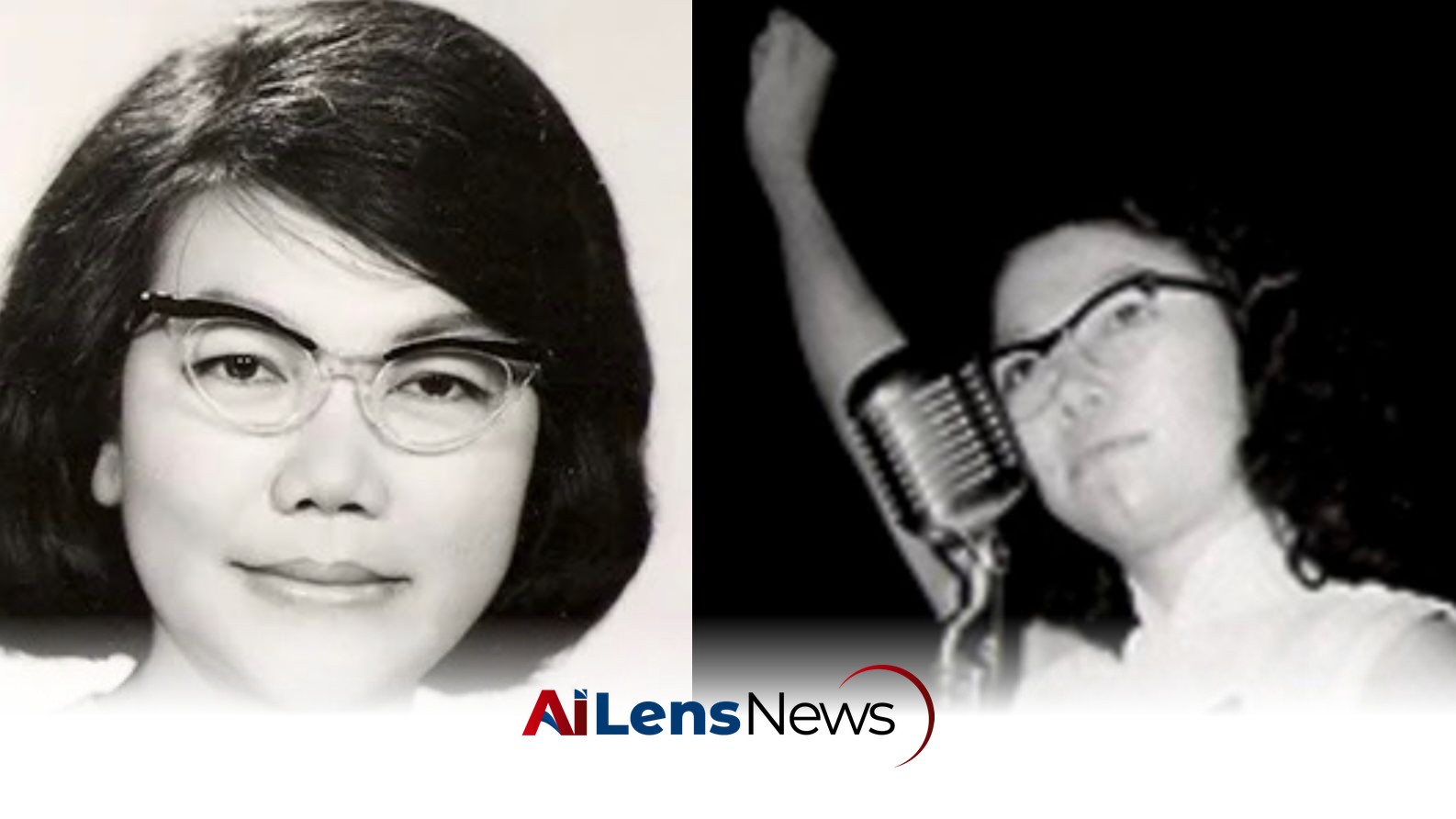


Singaporeans pay tribute to Chan Choy Siong, a pioneering politician who played a crucial role in advancing women's rights and outlawing polygamy.
Singapore, Singapore Jul 18, 2026 ALN: A social media post that paid tribute to Chan Choy Siong, one of Singapore’s pioneering women’s rights advocates, has received a lot of attention, with one netizen calling her “another iron lady that deserves recognition.” This acknowledgment reflects the growing awareness and appreciation for the contributions of women in Singapore's history, especially in the realm of social justice and gender equality.
The entrepreneur Joel Chue wrote about Ms Chan, one of the first women to be elected to Parliament, in a July 16 post that carried her image with a text that reads “the hawker’s daughter who forced Singapore to outlaw polygamy.” This description encapsulates not only her humble beginnings but also her significant role in shaping the legal framework surrounding women's rights in Singapore.
Ms Chan's story is rooted in her upbringing. Born into a modest family, she attended Nanyang Girls’ High School, a prestigious institution, but financial constraints prevented her from pursuing further education. This background is a testament to her resilience and determination, which would later define her career as a politician and advocate. In 1955, at the age of 23, she joined the People’s Action Party (PAP), a pivotal moment that would lead her to co-found the party’s Women’s League the following year. This organization aimed to empower women and address the social issues they faced, laying the groundwork for future legislative changes.
“Then came the (Women’s) Charter. A law to end polygamy. To outlaw child marriage. To put a wife on equal legal footing with her husband — property, divorce, protection. You’d think a bill like that would sail through. It didn’t. The resistance came from inside her own party. From men who didn’t want the rules changed,” wrote Mr Chue, highlighting the challenges Ms Chan faced in her advocacy efforts. The Women's Charter, introduced in the late 1950s, was a groundbreaking piece of legislation aimed at protecting the rights of women in Singapore, but it did not come without significant opposition.
On April 6, 1960, Ms Chan stood up in the Legislative Assembly and delivered a powerful speech that underscored the urgency of the issues at hand: “Women in our society are like pieces of meat put on the table for men to slice.” This statement illustrated the pervasive misogyny of the time and the societal norms that relegated women to subordinate roles. Her words resonated with many, capturing the frustrations of women who felt marginalized and voiceless.
The passage of the Charter in 1961 marked a significant victory for women's rights in Singapore, but it was not just a triumph for the government; it was largely attributed to Ms Chan's relentless advocacy. Despite lacking formal legal training, her passion and determination made a profound impact on the legislative process. “What she had was fury… (She) just refused to be told her anger wasn’t an argument. Conviction moved a room that credentials couldn’t,” Mr Chue noted, emphasizing that her emotional intelligence and commitment to justice were as powerful as any academic qualification.
Ms Chan served as an Assemblywoman and Member of Parliament from 1959 to 1970, a period during which she played a crucial role in shaping policies that would affect generations of women. Her retirement from politics in 1970 did not diminish her influence; instead, it allowed her to focus on other avenues of advocacy and community service. The legacy she left behind continues to inspire those who fight for gender equality and social justice in Singapore.
While the Women's Charter is celebrated today as a cornerstone of women's rights in Singapore, it is essential to recognize the societal context in which it was enacted. The 1950s and 1960s were times of significant political and social change in Singapore, with the nation grappling with issues of independence, identity, and modernization. Ms Chan's work was not only about legal reforms; it was also about challenging deeply ingrained cultural norms and advocating for a shift in societal attitudes towards women.
Even if perhaps younger generations of Singaporeans no longer know Ms Chan and are unfamiliar with her contributions to society, like the post author, there are still many who remember her fondly. “I recall she was one real feisty woman. This country needs more citizens like her,” a netizen wrote, reflecting a sentiment that resonates with many who value strong female leadership.
“Many thanks to this brave and courageous woman who had fought for women’s rights. If not for the women’s charters, many young girls would be forced into marriage, and pedophiles would be acceptable. Women would have to accept their husbands being shared with other mistresses,” another added, illustrating the practical implications of the Charter on the lives of women and children in Singapore. This highlights the ongoing relevance of Ms Chan's work, as the issues she fought against continue to be pertinent in discussions about gender equality today.
“Women and their children are well served and protected by the Charter. Earned the respect in our multi-racial society ever since. Kudos to her,” wrote a third, acknowledging the broader societal benefits that have arisen from the legal protections established through the Women's Charter. The Charter has become a symbol of progress in Singapore, representing the nation’s commitment to gender equality and the protection of women's rights.
Chan Choy Siong's legacy as a champion for women's rights continues to resonate, reminding us of the importance of advocacy and the fight for equality. Her journey serves as a powerful reminder that change is possible, even in the face of resistance. As Singapore continues to evolve, the impact of her work remains a critical part of the narrative surrounding women's rights in the country. The ongoing discussions about gender equality, empowerment, and social justice can be traced back to the foundations laid by pioneers like Ms Chan, who dared to challenge the status quo and advocate for a better future for all.
To learn more about the latest developments in Political History & Legacy, stay updated with our exclusive reports and analyses on AiLensNews.

