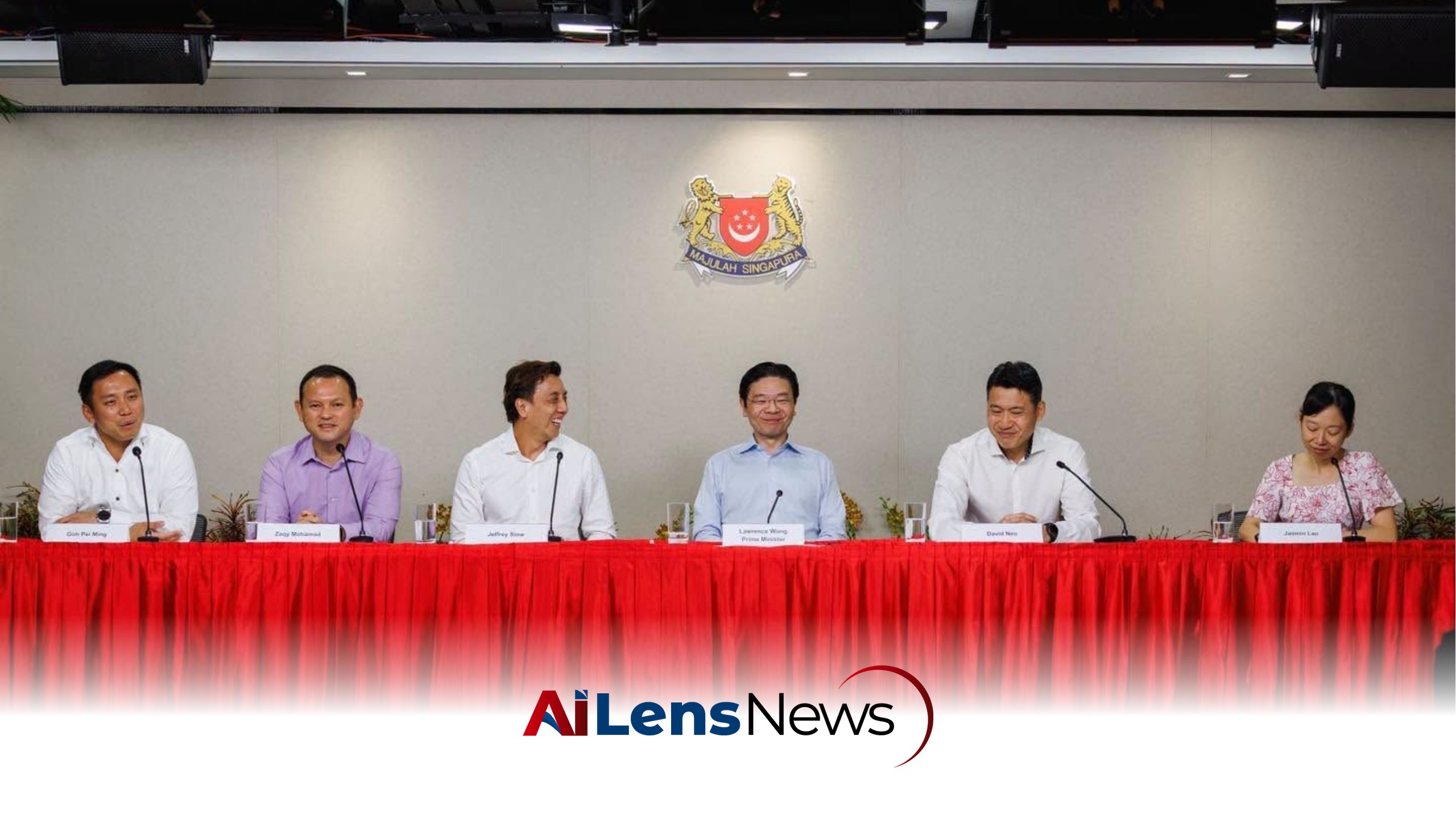


Prime Minister Lawrence Wong announces a significant Cabinet reshuffle, promoting younger politicians to key positions, signaling a leadership transition in Singapore.
Singapore, Singapore Jul 23, 2026 ALN: On Wednesday (July 22), Prime Minister Lawrence Wong announced significant changes to his Cabinet and other key appointments, alongside the renaming of a pivotal ministry. This reshuffle is perceived by many as one of the most consequential reorganisations since Wong's inauguration as Premier in 2024. The changes prominently feature a number of younger politicians being elevated to ministerial positions, which is widely interpreted as a strategic move to prepare for the next generation of leadership in Singapore.
“We are continuing our leadership transition – with younger and newer members of the team taking on larger responsibilities,” PM Wong stated, underscoring the importance of infusing fresh perspectives into the government. This leadership transition reflects a broader trend observed in global politics, where nations are increasingly turning to younger leaders to address contemporary challenges and engage with younger constituents.
In this Cabinet reshuffle, three first-term Parliamentarians have received noteworthy promotions. Jeffrey Siow, 48, and David Neo, 48, who previously served as Acting Transport Minister and Acting Minister for Culture, Community and Youth respectively, have been elevated to full ministerial roles. Additionally, Jasmin Lau, 43, has been appointed as Acting Minister of Manpower and promoted to Senior Minister of State for Digital Development and Information. Lau’s appointment is particularly significant as she is among Singapore’s youngest political office holders at the ministerial level, which may resonate with younger voters and reflect a commitment to inclusivity in governance.
By Singaporean political standards, the rapid promotions of Mr. Siow, Mr. Neo, and Ms. Lau are noteworthy. Such swift advancements are seen as indicative of Prime Minister Wong's intention to provide newcomers to politics with substantial governing experience early in their careers. This approach aligns with global trends in leadership, where younger leaders are increasingly being entrusted with significant responsibilities, fostering a new generation of governance.
The reshuffle also includes several other new appointments. Goh Pei Ming, 44, has been appointed as Senior Minister of State in the Ministry of Home Affairs (MHA) and the Ministry of Social and Family Development. Alvin Tan, 46, takes on the role of Minister of State in the Ministry of Foreign Affairs (MFA) and the Ministry of National Development. Zhulkarnain Abdul Rahim, 45, has been appointed Minister of State in both the MFA and MHA, while Foo Cexiang, 41, will serve as Minister of State in the Ministry of Manpower and the Ministry of Trade and Industry. Finally, Shawn Loh, 39, has been named Minister of State in the Ministry of Education and the Ministry of Health.
It is important to note that the younger appointees will not be navigating their new roles in isolation. The average age of the previous Cabinet was 56, while the new Cabinet's average age is slightly lower, at 54 to 55. This adjustment is intentional, as the older cohort remains in place to mentor their younger colleagues, ensuring a smooth transition and continuity in governance. The presence of experienced leaders can provide valuable guidance to the new ministers, helping them navigate the complexities of their roles and responsibilities.
K Shanmugam, 67, who has served as Home Affairs Minister for over a decade, has been appointed as Senior Minister. Prime Minister Wong emphasized that both he and Lee Hsien Loong, 74, will continue to offer valuable counsel and will play a crucial role in mentoring the younger officeholders. This continuity of leadership is vital in maintaining stability and ensuring that the new generation of leaders can benefit from the wisdom and experience of their predecessors.
Another significant aspect of PM Wong’s reshuffle is the return of Ng Chee Meng to the Cabinet. Ng, who had previously requested to be left out of the Cabinet last year, has been appointed as Minister in the Prime Minister’s Office while continuing his role as NTUC Secretary-General. His return signifies a renewed commitment to labor representation within the Cabinet, which is essential in addressing the concerns and needs of workers in Singapore's evolving economy.
Deputy Prime Minister Gan Kim Yong remains in his position as Trade and Industry Minister, overseeing the city-state’s economic strategy. However, the reshuffle also sees former Manpower Minister Tan See Leng jointly leading the Ministry of Trade and Industry, with a specific focus on energy and industry. This restructuring is indicative of the government's recognition of the importance of energy and industry sectors in driving Singapore's economic growth and sustainability.
The implications of this Cabinet reshuffle extend beyond mere appointments. It reflects a broader vision for Singapore's future, one that seeks to engage younger generations in the political process while ensuring that experienced leaders continue to guide the nation. As Singapore faces various challenges, including economic recovery post-pandemic, climate change, and social cohesion, the infusion of younger leaders with fresh ideas and perspectives may be crucial in addressing these issues effectively.
Moreover, the reshuffle can be seen as a response to the changing demographics of Singapore's population, where younger citizens are increasingly seeking representation and engagement in governance. By promoting younger leaders, the government may enhance its connection with this demographic, fostering a sense of inclusivity and responsiveness to their concerns.
In conclusion, Prime Minister Lawrence Wong's Cabinet reshuffle marks a significant moment in Singapore's political landscape. By promoting younger leaders and maintaining a mentorship structure, the government is positioning itself to navigate the complexities of modern governance while preparing for the future. As these new leaders take on their responsibilities, their performance will be closely watched, not only for its immediate impact on governance but also for its long-term influence on the political culture of Singapore.
To learn more about the latest developments in Elections, stay updated with our exclusive reports and analyses on AiLensNews.

