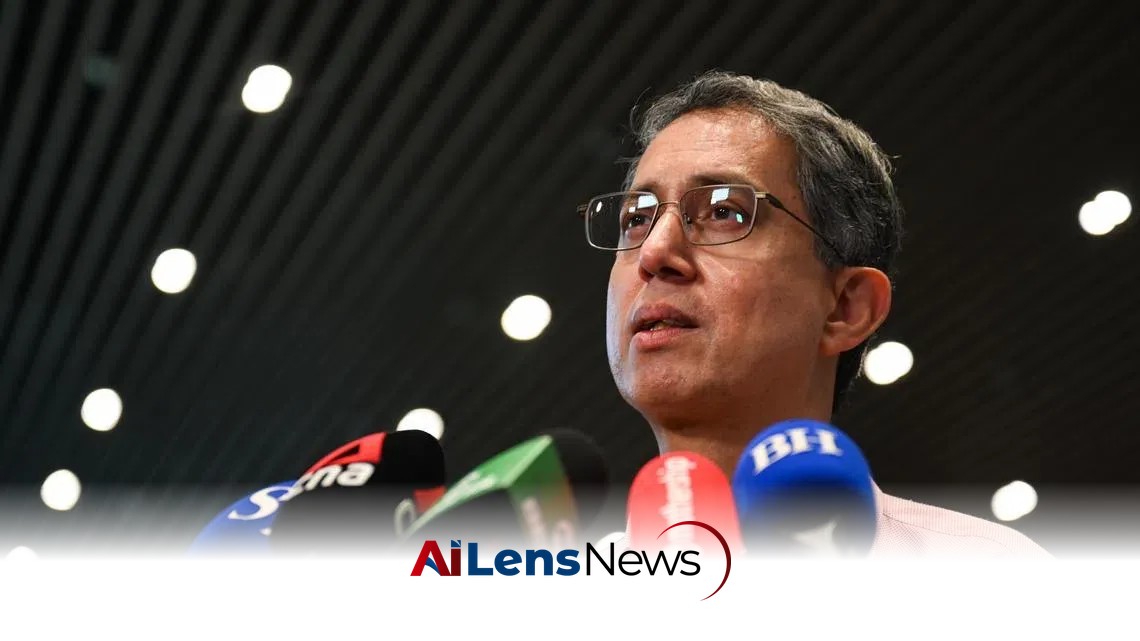


Prime Minister Lawrence Wong discusses the resignation of Faishal Ibrahim, emphasizing the need for accountability and adherence to standards in political conduct.
Singapore, Singapore Jul 22, 2026 ALN: A review of the evidence and facts surrounding former Acting Minister-in-charge of Muslim Affairs Faishal Ibrahim’s case made it clear that his conduct had fallen short of the standards expected of him, said Prime Minister Lawrence Wong. This statement reflects the government's commitment to maintaining high ethical standards among its officials, particularly in sensitive roles that involve community relations and public trust.
Several key colleagues in his team had independently reviewed the evidence and came to the same conclusion, PM Wong added. The collective assessment by his colleagues underscores the importance placed on accountability within the government, particularly when it comes to matters involving personal conduct that could affect public perception and trust.
As such, he agreed with Faishal’s decision to resign, PM Wong told reporters during a press conference on July 22. This resignation was not merely a personal decision but a necessary step in upholding the integrity of the political office Faishal held. The Prime Minister's remarks indicate a broader principle that public officials must be held to a standard that reflects their responsibilities and the trust placed in them by the public.
Faishal – who was also Senior Minister of State for Home Affairs – had on July 20 resigned from political office over a “lapse of judgment” in handling his interactions with an unidentified woman. This incident has raised questions about the boundaries of professional conduct, especially in the context of online communications, which have become increasingly prevalent in today's digital age.
He also resigned as an MP for Marine Parade-Braddell Heights GRC and from the People's Action Party (PAP). The dual resignation from both his ministerial position and his role as a Member of Parliament signifies the seriousness of the allegations and the implications they hold for his political career. It also reflects the PAP's stringent stance on maintaining ethical standards among its members.
PM Wong said he first learnt of the situation when the woman in question e-mailed his office. This direct communication with the Prime Minister's office highlights the gravity of the situation and the need for transparency in addressing such complaints. The fact that a member of the public felt compelled to reach out to the highest levels of government indicates a breakdown of trust that needed to be addressed promptly and decisively.
He described the e-mail as “detailed”, noting it contained screenshots and other information regarding the interactions with Faishal. The inclusion of tangible evidence such as screenshots suggests that the allegations were not made lightly and were substantiated by documented interactions. This level of detail is critical in evaluating the legitimacy of the claims and understanding the context of the interactions.
“My initial reaction was disbelief and shock,” PM Wong said, adding that he had at first thought the contents were fabricated. Such a reaction from the Prime Minister reflects the unexpected nature of the allegations, particularly against a colleague who had served in various capacities within the government. It also illustrates the challenges faced by leaders in balancing personal relationships with professional responsibilities.
On whether the response to the situation was too harsh, he noted that Faishal himself, upon reflection, realised it was not tenable to continue as a political office-holder and as an MP. This acknowledgment from Faishal indicates a level of self-awareness and accountability that is crucial in public service. It suggests that he understood the implications of his actions and their potential impact on public trust.
“His explanation is that he was trying his best to manage what he felt was an awkward situation, and he did not want to abruptly cut off the interactions with the lady,” PM Wong said. This statement sheds light on the complexities of personal interactions in professional settings, particularly when boundaries can sometimes become blurred in the digital realm.
“He accepts that he made a very serious mistake in engaging her, even when the nature of the interactions crossed the line, and he also accepts that his responses, his interactions with her, objectively speaking, were questionable and inappropriate,” he said. This admission of fault is significant as it reinforces the idea that public officials are not exempt from the consequences of their actions, regardless of their intentions.
Faishal thus asked to step down, PM Wong said, noting that the Government had as far as possible respected his request for privacy for himself and his family. The emphasis on privacy reflects a compassionate approach to a difficult situation, recognizing the personal toll such public scrutiny can take on individuals and their families.
PM Wong said he had tried his “very best” to see if there was a way for Faishal to continue in office despite the circumstances. This statement illustrates the Prime Minister's efforts to balance the need for accountability with the desire to retain experienced leaders within the government. However, the situation was no longer a private matter between two individuals as the complaint against Faishal had made it a public matter.
As such, it had to be looked at objectively, taking into consideration the accounts shared by both parties, PM Wong said. This objectivity is crucial in maintaining the integrity of the investigation process and ensuring that all parties are treated fairly.
“If this matter had happened to any other MP in the PAP, we would have done the same thing. The same process (and) the same standards would apply, and the same consequences would have followed,” he said. This statement reinforces the notion that accountability is a universal principle within the party and government, and that no individual is above the standards set for public officials.
Separately, Minister for Home Affairs K. Shanmugam said there was a series of online interactions between Faishal and the woman. The nature of these interactions has become a focal point of the investigation, highlighting the challenges of navigating personal relationships in an increasingly digital world.
Faishal’s responses to the woman were “objectively, inappropriate and questionable” and came across as engaging with her, Shanmugam said in a Facebook post on July 22. This characterization of Faishal’s conduct is critical in understanding the implications of his actions, as it sets a precedent for how similar situations may be handled in the future.
“Indeed, that was how the lady interpreted his responses, and said she was encouraged to continue,” he added. This acknowledgment of the woman's perspective is crucial in recognizing the impact of Faishal's actions on others and the importance of consent in all interactions.
The woman, however, became angry when Faishal tried to stop their online exchanges. She subsequently e-mailed PM Wong and sent some of the messages, pictures, and alleged harassment by Faishal, Shanmugam said. The escalation of the situation from private interactions to a formal complaint illustrates the potential consequences of crossing boundaries in personal conduct.
“Faishal too alleged that the lady had harassed him. That is why the matter was referred to the police to investigate,” he added. This counter-allegation adds another layer of complexity to the situation, highlighting the nuances of interpersonal dynamics and the potential for miscommunication and misunderstanding.
Once the woman e-mailed PM Wong, Shanmugam said it ceased being a purely private, consensual matter between two individuals. This transition from a private to a public matter underscores the responsibilities of public officials to maintain appropriate boundaries in all interactions.
It became necessary for the Prime Minister’s Office to consider the appropriateness of Faishal’s interactions, he said, adding: “Faishal was given a fair hearing.” This commitment to fairness and transparency in the investigation process is essential in maintaining public trust and ensuring accountability within the government.
The standards governing personal conduct in such situations were set out by founding prime minister Lee Kuan Yew, and more recently by Senior Minister Lee Hsien Loong when he was prime minister, Shanmugam noted. These established standards provide a framework for evaluating conduct and ensuring that public officials adhere to the expectations set for their roles.
“The principle is straightforward. Where a matter remains entirely private and inappropriate conduct stops after counselling, it can remain a private matter,” he said. This principle emphasizes the importance of context in evaluating conduct and the need for appropriate responses to ensure accountability.
“But when the matter enters the public domain through a complaint or otherwise, it must be examined and if there has been impropriety appropriate action must follow.” This statement reinforces the idea that public accountability is paramount in maintaining the integrity of public institutions.
PM Wong described it as “painful and difficult” to lose someone like Faishal, adding that he understood the outpouring of support from Singaporeans and in particular the Malay/Muslim community following the news. The emotional toll of such situations is significant, both for the individual involved and for the communities they represent.
The case does not diminish Faishal’s contributions over his 20-year political career, PM Wong said, noting that he recognised the temptation to make an exception for him. This acknowledgment of Faishal's past contributions reflects the complexities of leadership and the difficulty of navigating personal failings within a public context.
“But I think doing so will only cause more damage and harm to Singapore,” said PM Wong. This statement underscores the importance of upholding standards and the potential repercussions of failing to do so on public trust and institutional integrity.
“We have to do the right thing, and we have to continue to uphold the trust that Singaporeans have in our political system and in our public institutions,” he said. This commitment to integrity is essential in ensuring that the government remains accountable to the people it serves.
The good work that Faishal had done in his short time as Acting Minister-in-charge of Muslim Affairs will continue under Zaqy Mohamad, together with the other Malay/Muslim political office-holders and MPs, he added. This transition highlights the continuity of governance and the importance of ensuring that the work of public servants continues despite individual shortcomings.
To learn more about the latest developments in Political Controversies, stay updated with our exclusive reports and analyses on AiLensNews.

