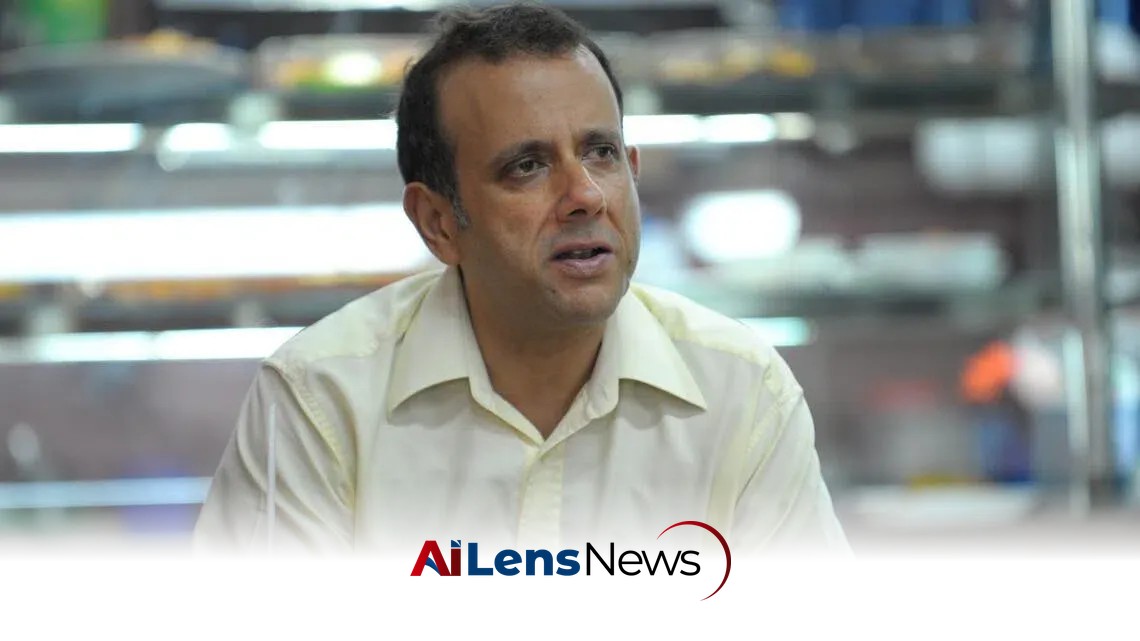


Kenneth Jeyaretnam, the secretary-general of Singapore's Reform Party, has died at the age of 67. His contributions to politics and the opposition will be remembered.
Singapore, Singapore Jul 19, 2026 ALN: Kenneth Jeyaretnam, secretary-general of the Reform Party (RP) and veteran opposition figure, died on July 18. He was 67.
His death was announced by his wife, Amanda Jeyaretnam, in a Facebook post on the afternoon of July 19. She stated that Jeyaretnam “died peacefully in his sleep surrounded by family.” This intimate detail reflects the close-knit nature of the Jeyaretnam family and highlights the personal loss felt by those closest to him. In Singapore, where political figures often become public symbols, the private lives of such individuals can sometimes be overshadowed by their public personas.
Funeral details for a small family service are still being finalized, and a memorial to celebrate his life will be arranged at a later date. Amanda expressed gratitude for the love and support received during his illness, stating, “Thank you for your love and support and to everyone who managed to visit him in the hospital. Please know it meant a lot to him.” Such expressions of gratitude are common in the wake of loss, emphasizing the importance of community and support systems in times of grief.
In a post on July 6, 2024, Jeyaretnam revealed he was “seriously ill” and had been receiving medical care in London for deep vein thrombosis and bilateral pulmonary embolism, alongside recovering from pneumonia. His health issues, which he candidly shared with the public, illustrate the challenges he faced in his later years. Deep vein thrombosis and pulmonary embolism are serious medical conditions that can significantly impact one's quality of life and ability to engage in regular activities, including political endeavors.
He also shared that he was under police investigation in Singapore for possible offences under contempt laws, which required his attendance for inquiries. This aspect of his life adds a layer of complexity to his political career, as it highlights the often contentious relationship between opposition figures and the ruling government in Singapore. The political landscape in Singapore has historically been characterized by a dominant ruling party, and opposition figures frequently face legal challenges that can hinder their political activities.
Jeyaretnam was the elder son of the late opposition MP J.B. Jeyaretnam, who was the first opposition politician elected to Singapore's post-independence Parliament in 1981. His father's groundbreaking achievements in Singapore's political history paved the way for Kenneth's own involvement in politics. J.B. Jeyaretnam was known for his fierce advocacy for democracy and transparency, and his legacy undoubtedly influenced Kenneth's political ideology and commitment to opposition politics.
Kenneth took over the leadership of RP in April 2009 after his father's passing in September 2008. The transition of leadership from father to son is a poignant narrative in Singapore's political history, reflecting both continuity and change within the opposition movement. Kenneth's leadership came at a time when the political landscape was evolving, with increasing calls for greater political plurality and reform.
Educated at the United World College of South-East Asia and Charterhouse School in England, he graduated from the University of Cambridge in 1983 with a double first-class honours in economics. His academic background in economics provided him with a strong foundation for understanding the complexities of Singapore's economic policies and their social implications. After completing his education, he began his career in finance, working for various prestigious institutions including HSBC and Lehman Brothers. This experience in the financial sector contributed to his analytical skills and understanding of economic issues, which he later applied in his political career.
Throughout his political career, Jeyaretnam contested in three general elections as part of RP’s slate, but the party faced challenges in gaining electoral success. He stood in West Coast GRC in 2011 and 2015, and in Ang Mo Kio against then-Prime Minister Lee Hsien Loong’s team in 2020, but was unsuccessful each time. The repeated electoral defeats highlight the difficulties faced by opposition parties in Singapore, where the People's Action Party (PAP) has maintained a dominant position since the country's independence. Despite these challenges, Jeyaretnam's persistence in contesting elections underscored his commitment to providing an alternative voice in Singapore's political discourse.
In a by-election in 2013, he garnered less than 2% of the vote, which saw the Workers’ Party candidate emerge victorious. This result was particularly disheartening for Jeyaretnam and the RP, as it reflected the uphill battle opposition parties face in gaining traction among the electorate. The low voter turnout for the RP during this election may also indicate broader societal attitudes towards opposition parties in Singapore, where historical allegiances to the PAP remain strong.
In April 2025, he announced that he would not contest the upcoming General Election due to health concerns but expressed hope to return to politics in the future. This statement reveals Jeyaretnam's enduring passion for public service and his desire to remain engaged in Singapore's political landscape, despite the personal challenges he faced. His decision not to contest reflects a growing awareness among politicians of the importance of health and well-being, particularly in a demanding political environment.
Jeyaretnam is survived by his wife Amanda and their son, Jared. His contributions to Singapore's political landscape and his commitment to opposition politics will be remembered. As Singapore continues to navigate its political future, the legacy of figures like Kenneth Jeyaretnam serves as a reminder of the ongoing struggle for political plurality and the importance of diverse voices in shaping the nation’s democratic processes. The impact of his work will likely resonate beyond his lifetime, as new generations of political activists may draw inspiration from his dedication to challenging the status quo and advocating for a more inclusive political environment.
To learn more about the latest developments in Political History & Legacy, stay updated with our exclusive reports and analyses on AiLensNews.

