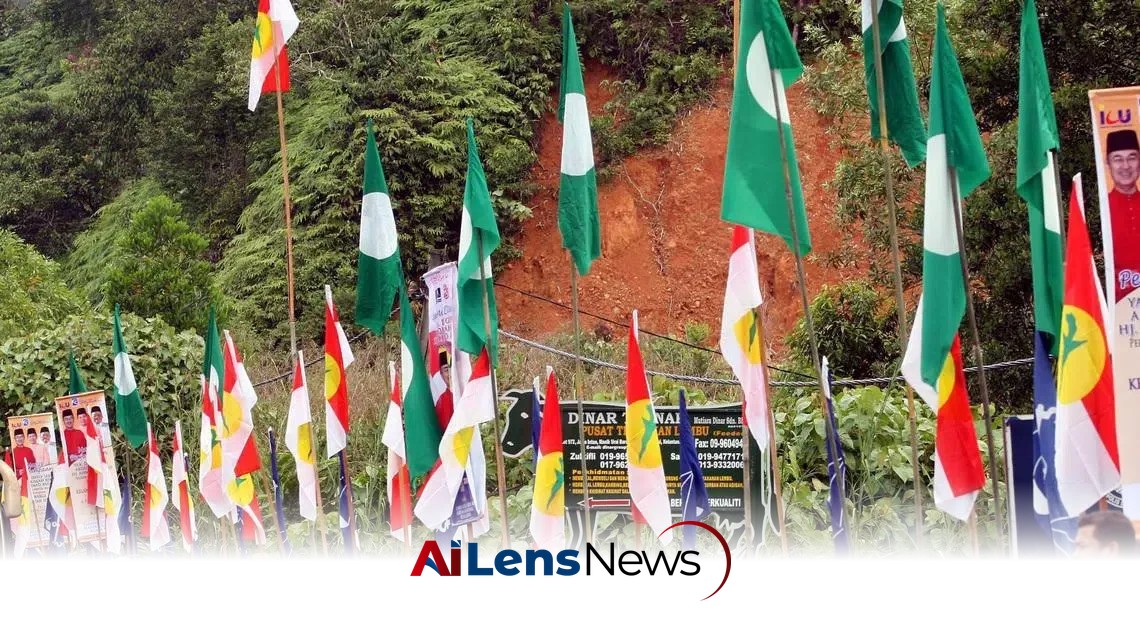


Despite economic growth, Anwar Ibrahim struggles to regain Malay voter support, complicating his political landscape in Malaysia.
Singapore, Singapore Jul 27, 2026 ALN: The political landscape in Malaysia is currently marked by a complex interplay of ethnic identity, economic performance, and party dynamics, particularly as Prime Minister Anwar Ibrahim grapples with the challenges posed by the rekindling of a Malay unity pact. The potential for a renewed alliance between the United Malays National Organization (UMNO) and the Malaysian Islamic Party (PAS) raises questions about the future of Anwar's leadership and the political direction of the country.
Historically, UMNO has been a dominant force in Malaysian politics, representing the interests of the Malay-Muslim majority. Established in 1946, UMNO has played a critical role in shaping the nation’s policies and governance, often positioning itself as the defender of Malay rights and interests. However, its relationship with PAS, which has positioned itself as a champion of Islamic values and Malay rights, has been fraught with tension and competition for voter loyalty. The two parties have occasionally found common ground, particularly when facing the opposition, but their alliance has often been temporary and opportunistic. The historical rivalry between UMNO and PAS, rooted in differing ideologies—UMNO's secular nationalism versus PAS's Islamic governance—has made the political landscape particularly volatile.
In recent years, the political dynamics have shifted significantly. Anwar's Pakatan Harapan coalition, which includes a multi-ethnic and multi-religious framework, has struggled to gain traction among Malay voters, despite the coalition's efforts to promote economic development and social justice. This is particularly concerning given that the Malay-Muslim community constitutes a significant portion of the electorate, and their support is crucial for any political party hoping to secure a majority in Malaysia's parliamentary system. The coalition's inability to resonate with this demographic has raised alarms, as it threatens to undermine the broader vision of a unified Malaysia.
The economic landscape in Malaysia has shown resilience, with key indicators pointing towards growth and stability. The government has implemented various measures aimed at boosting the economy, including infrastructure projects, investment incentives, and initiatives to support small and medium enterprises. Despite these efforts, Anwar's administration faces the uphill battle of translating economic success into political capital, particularly among the Malay demographic. The challenge lies in convincing voters that economic growth benefits all communities, especially when some segments feel that they are not reaping the rewards of national progress.
In an interview with TIME magazine in October 2023, Anwar acknowledged the challenges posed by the rise of Malay-Islamist rhetoric, particularly in light of the recent electoral successes of PAS. The party's gains in state polls across six states, including a notable victory in Terengganu, have underscored the growing appeal of its conservative platform among Malay voters. Anwar's response to these challenges has centered on promoting economic development and ensuring that all communities feel represented and valued in the political arena. This approach reflects a recognition of the need for a more inclusive governance model that addresses the aspirations of various ethnic groups while maintaining a focus on the dominant Malay identity.
His assertion that a "more just, equitable system" is necessary reflects a broader recognition of the need to address the concerns of marginalized communities, including the ethnic Chinese and Indian minorities, who have historically felt sidelined in favor of Malay interests. Anwar's commitment to inclusivity may resonate with some voters, but it also risks alienating those who prioritize Malay identity and Islamic values above economic considerations. The delicate balancing act of appealing to diverse voter bases while staying true to the core values of his coalition is a significant challenge for Anwar.
The implications of a revived UMNO-PAS alliance could be profound. Such a coalition would likely consolidate the Malay vote, presenting a formidable challenge to Anwar's coalition and potentially reshaping the political landscape in the lead-up to the next general elections. A united front between UMNO and PAS could mobilize support around a nationalist and religious agenda, emphasizing Malay supremacy and Islamic governance, which could further marginalize non-Malay communities. This shift towards a more pronounced ethnic and religious identity in politics raises concerns about the erosion of Malaysia’s multicultural fabric, which has been a hallmark of its national identity.
Moreover, the potential for a Malay unity pact raises questions about the future of political pluralism in Malaysia. Anwar's vision for a multi-ethnic, multi-religious society may come under increasing pressure as the narrative shifts towards a more homogenized Malay identity. This could lead to heightened ethnic tensions and a further entrenchment of identity politics, complicating efforts to foster national unity and social cohesion. The resurgence of identity politics not only threatens the stability of Anwar's government but also risks igniting long-standing grievances among various ethnic groups.
As Anwar navigates these challenges, he must also contend with the internal dynamics of his coalition. The Pakatan Harapan coalition comprises several parties, each with its own interests and priorities. Ensuring cohesion among these diverse groups while appealing to the broader electorate will require strategic maneuvering and adept political leadership. The coalition's ability to present a united front on key issues, particularly those affecting the Malay community, will be crucial in maintaining its relevance and support.
In addition, Anwar's government must address pressing socio-economic issues that resonate with voters, including rising living costs, unemployment, and access to education and healthcare. Failure to effectively tackle these concerns could further erode support for his administration, particularly among the Malay community, who may feel disillusioned by unmet expectations. Economic challenges, exacerbated by global trends and local policies, have placed significant strain on households, making it imperative for Anwar to demonstrate tangible improvements in the quality of life for all Malaysians.
Looking ahead, the political landscape in Malaysia is likely to remain fluid and contentious. Anwar's ability to maintain support among the Malay-Muslim electorate while promoting an inclusive agenda will be critical to his political survival. The stakes are high, as the outcome of this struggle will not only determine the future of Anwar's leadership but also the broader trajectory of Malaysian democracy. The interplay of ethnic identity, political allegiance, and economic performance will continue to shape the narratives that dominate the political discourse.
In conclusion, the challenges facing Anwar Ibrahim amid the Malay unity dilemma are multifaceted and deeply rooted in Malaysia's complex socio-political fabric. As he seeks to navigate these turbulent waters, the implications of his decisions will reverberate throughout Malaysian society, shaping the nation's political future for years to come. The ongoing struggle for balance between ethnic identities, economic prosperity, and democratic principles will remain a defining feature of Malaysia's political landscape, necessitating thoughtful and inclusive leadership to steer the country towards a cohesive and prosperous future.
To learn more about the latest developments in Elections, stay updated with our exclusive reports and analyses on AiLensNews.

