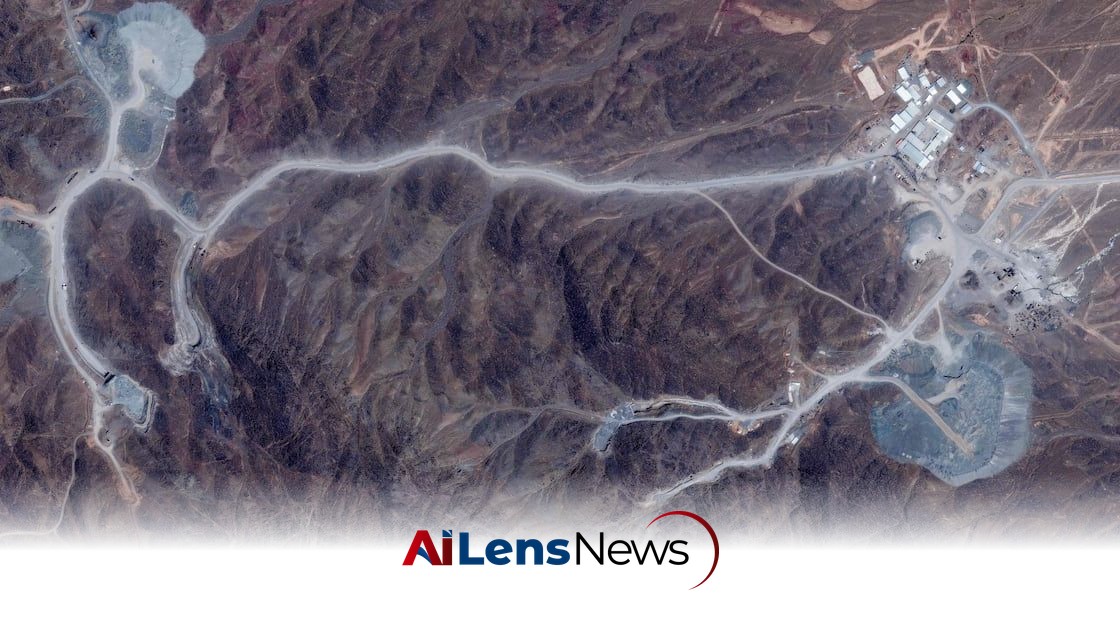


Pickaxe Mountain, a suspected Iranian nuclear site, has gained attention as a potential target for U.S. military action amidst rising tensions in the region.
Riyadh, Saudi Arabia Jul 15, 2026 ALN: US President Donald Trump has put Pickaxe Mountain – a suspected Iranian nuclear site buried deep underground – in the spotlight, saying it could become a target as Washington considers its next steps in the conflict. His remarks come amidst escalating tensions in the region, particularly concerning Iran's nuclear ambitions and its military activities in the Middle East.
Mr. Trump told the Salem news channel that the US was monitoring the site and suggested a strike could come soon. His comments reflect a broader strategy of the US government regarding Iran's nuclear capabilities, which have been a point of contention for years. The ongoing discourse surrounding Iran's nuclear program is not merely a matter of national security for the United States but is also tied to its relationships with allies in the region and the global community.
“Pickaxe is a possible, you know, target for a nice big, fat shot right in the front door,” he said. “We'll probably give Pickaxe a shot relatively soon.” This statement underscores the urgency and seriousness with which the Trump administration views Iran's nuclear developments, especially given the backdrop of recent military actions. The rhetoric surrounding potential military action against Iranian targets has grown increasingly aggressive, reflecting a strategic pivot that prioritizes military options over diplomatic engagement.
The comment came as American forces carried out strikes on Iran for a third straight night, amid rising tensions over the Strait of Hormuz. The strategic waterway is crucial for global oil transportation and has been a flashpoint for military confrontations between the US and Iran. The Strait of Hormuz is a narrow passage that connects the Persian Gulf to the Arabian Sea and is one of the most important maritime chokepoints in the world. Approximately 20% of the world's oil passes through this strait, making it a vital artery for global energy supplies.
The US and Israel attacked Iran's nuclear sites in June last year and did so again in the war that began on February 28. A ceasefire put in place on April 8 has been repeatedly tested, with heavy exchanges of fire occurring again in the past week. This cycle of violence reflects the fragile nature of peace in the region and the complexities involved in US-Iran relations. The historical context of these tensions is rooted in decades of geopolitical maneuvering, sanctions, and military engagements that have shaped the current landscape.
Known in Farsi as Kuh-e Kolang, the site is an underground complex built into a mountain near the Natanz uranium enrichment plant in central Iran. Pickaxe Mountain has been identified as one of Iran's newest underground nuclear-related sites, which has raised alarms among international observers and governments. The Natanz facility itself has been under scrutiny since its establishment, as it is a central component of Iran's uranium enrichment program, which is a critical aspect of its nuclear ambitions.
Unlike older Iranian facilities, which are more exposed and vulnerable to aerial attacks, Pickaxe Mountain appears to be designed around concealment and protection. This strategic choice indicates an evolution in Iran's approach to its nuclear program, moving towards more secure and hidden facilities. The construction of such sites suggests that Iran is taking steps to safeguard its nuclear capabilities from potential military strikes, thereby complicating any military planning by adversaries.
Satellite imagery analysis by groups including the Institute for Science and International Security has indicated construction began in about 2020, suggesting a rapid advancement in Iran's nuclear capabilities. The timeline of construction raises concerns about Iran's intentions and the potential for it to develop nuclear weapons, despite its claims of pursuing peaceful nuclear energy. As the international community grapples with the implications of this development, the lack of transparency surrounding Iran's nuclear activities continues to fuel skepticism.
Iran has described the facility as a centrifuge assembly plant, which is a critical component in the uranium enrichment process. However, UN inspectors have not been granted access for full inspection, raising questions about the transparency of Iran's nuclear activities. The lack of oversight has led to increased skepticism from Western governments and experts who are concerned about potential military dimensions of Iran's nuclear program. The absence of a robust verification mechanism has been a contentious point in negotiations and has contributed to the deterioration of trust between Iran and other nations.
Satellite imagery has shown extensive excavation and tunnel construction at Pickaxe Mountain, but the exact purpose of the complex has not been publicly confirmed. Iran maintains that its nuclear program is peaceful, aimed at generating energy and medical isotopes. However, the site's location, scale, and design have led many to believe that it could be used for weaponization purposes, further complicating diplomatic relations. This dual narrative of peaceful intent versus military capability is a central theme in the discourse surrounding Iran's nuclear ambitions.
The plant is reportedly sitting up to 600 metres under granite, which presents significant challenges for any military intervention aimed at disabling the facility. A deep underground complex could provide Iran with a secure location for sensitive nuclear activities, making it harder for any military strike to effectively neutralize the site. Some weapons experts have questioned whether even the US military's most powerful bunker-buster bombs would be sufficient to destroy a plant built at such depth. The extent of the site's vulnerability remains unknown, which adds a layer of complexity to any potential military action. This uncertainty complicates the strategic calculus for the US and its allies as they consider their options.
The implications of a strike on Pickaxe Mountain would be far-reaching. Such an action could escalate tensions in the region, potentially leading to broader conflict involving not only Iran but also its allies and proxy groups in the Middle East. Iran has a network of allies and proxy forces throughout the region, including in Iraq, Syria, and Lebanon, which could respond to an attack on Iranian soil. This interconnectedness of regional conflicts means that a military strike could have cascading effects, drawing in multiple actors and exacerbating existing tensions.
Furthermore, an attack on Iranian soil could provoke retaliatory measures from Tehran, which has vowed to defend its sovereignty and nuclear rights. Iran's leadership has consistently framed its nuclear program as a matter of national pride and sovereignty, making it unlikely that they would respond passively to an attack. The potential for retaliatory strikes against US interests or allies in the region raises the stakes for any military action.
Additionally, the international community's response to a potential strike would be critical. Countries such as Russia and China, which have historically supported Iran in the face of US sanctions and military threats, might react strongly to any military aggression. This could lead to a fracturing of international alliances and complicate efforts to negotiate a peaceful resolution to the ongoing tensions surrounding Iran's nuclear program. The geopolitical landscape is already fraught with complexities, and any military action could further polarize the situation.
As the situation evolves, the role of diplomacy remains crucial. Efforts to engage Iran in negotiations regarding its nuclear program have been ongoing for years, with varying degrees of success. The Joint Comprehensive Plan of Action (JCPOA), commonly known as the Iran nuclear deal, was a significant diplomatic achievement aimed at curtailing Iran's nuclear ambitions in exchange for sanctions relief. However, the US withdrawal from the agreement in 2018 under the Trump administration has led to increased hostilities and a deterioration of trust between Iran and Western nations. The JCPOA's collapse has left a diplomatic vacuum that has yet to be filled, and the prospect of renewed negotiations appears increasingly remote.
In conclusion, the spotlight on Pickaxe Mountain is emblematic of the larger issues surrounding Iran's nuclear program and the geopolitical dynamics in the Middle East. As the US considers its options, the implications of military action and the potential for diplomatic engagement will continue to shape the region's future. The situation remains fluid, with developments occurring rapidly and the stakes growing higher for all parties involved. The interplay between military strategy and diplomatic efforts will likely define the trajectory of US-Iran relations and the broader security landscape in the Middle East for the foreseeable future.
To learn more about the latest developments in Political Controversies, stay updated with our exclusive reports and analyses on AiLensNews.

