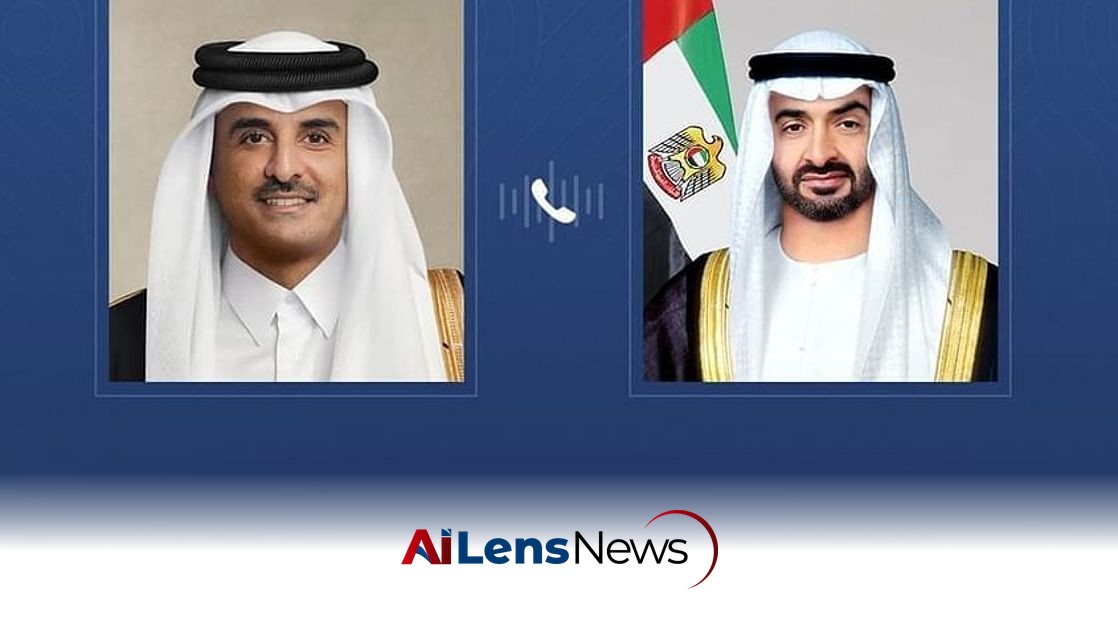


In a heartfelt phone call, UAE President Sheikh Mohamed bin Zayed Al Nahyan expressed condolences to Qatar's Emir Sheikh Tamim bin Hamad Al Thani on the death of Sheikh Hamad bin Khalifa Al Thani.
Riyadh, Saudi Arabia Jul 13, 2026 ALN: The passing of Sheikh Hamad bin Khalifa Al Thani marks a significant moment in the history of Qatar and the broader Gulf region. Sheikh Hamad, who served as the Emir of Qatar from 1995 until his abdication in 2013, was a pivotal figure in shaping modern Qatar. His leadership was characterized by a focus on economic diversification, cultural development, and a prominent role in international diplomacy. Under his stewardship, Qatar transformed from a relatively small and less influential nation into a regional powerhouse, with a strong economy and a notable presence on the world stage.
In a phone conversation today, UAE President His Highness Sheikh Mohamed bin Zayed Al Nahyan reached out to His Highness Sheikh Tamim bin Hamad Al Thani, the current Emir of Qatar, to express his condolences on the loss of Sheikh Hamad bin Khalifa Al Thani. This gesture of solidarity reflects the close ties between the United Arab Emirates and Qatar, despite the complexities that have sometimes characterized their relationship. The UAE and Qatar share cultural, historical, and economic ties that have often been strengthened through diplomatic efforts, even during challenging times.
Sheikh Mohamed bin Zayed also extended his condolences to the Al Thani family, emphasizing the importance of familial bonds and the collective grief felt across the region. In his remarks, he prayed for the deceased's eternal peace and offered strength and comfort to those mourning his loss. Such condolences are not merely formalities; they signify the deep respect and recognition of Sheikh Hamad's contributions to the region. The expression of condolences at such a time serves to reinforce the bonds of kinship and respect among the ruling families of the Gulf states, which is a significant aspect of their political culture.
Sheikh Tamim bin Hamad Al Thani, in response, expressed his appreciation to Sheikh Mohamed bin Zayed for his heartfelt sentiments. This exchange underscores the diplomatic niceties that often accompany the passing of prominent leaders, where expressions of sympathy can serve to reinforce alliances and foster goodwill among neighboring nations. The relationship between the UAE and Qatar, while sometimes fraught with tension, has also been characterized by mutual respect and cooperation, particularly in areas such as trade, investment, and cultural exchange.
Sheikh Hamad bin Khalifa Al Thani was known for his transformative leadership. During his reign, he oversaw a period of unprecedented economic growth in Qatar, largely driven by the country’s vast natural gas reserves. Under his guidance, Qatar emerged as one of the wealthiest nations per capita in the world. His vision included significant investments in infrastructure, education, and healthcare, laying the groundwork for a modern state. The development of the country’s infrastructure, including the construction of roads, schools, hospitals, and the expansion of the Hamad International Airport, has been pivotal in supporting Qatar's rapid economic growth.
Additionally, Sheikh Hamad was instrumental in elevating Qatar's profile on the global stage. He championed the establishment of Al Jazeera, the influential news network that has become a significant player in international media. Al Jazeera has played a crucial role in shaping public discourse in the Arab world and beyond, often providing a platform for voices that are underrepresented in mainstream media. His foreign policy was marked by a willingness to engage with various global actors, including those who were often marginalized in traditional diplomatic circles. This approach helped position Qatar as a mediator in regional conflicts and a host for international dialogue, further enhancing its reputation as a neutral ground for diplomacy.
The Emir’s abdication in 2013, when he handed power to his son Sheikh Tamim, was a historic moment for Qatar. It was one of the few peaceful transfers of power in the Gulf region and was seen as a sign of progressive leadership. Sheikh Hamad’s decision to step down was met with respect and admiration, as it demonstrated a commitment to the principles of governance and the future of the nation. The transition was smooth, and Sheikh Tamim has continued many of his father's policies while also introducing his own vision for Qatar's future, particularly in the areas of economic diversification and cultural development.
The legacy of Sheikh Hamad is multifaceted. He is remembered not only for his economic policies but also for his cultural initiatives, which included the establishment of museums, educational institutions, and a vibrant arts scene in Qatar. His efforts to promote Qatar as a center for culture and education have had lasting impacts, and they continue to influence the country’s direction under Sheikh Tamim’s leadership. Institutions such as the Qatar Museum Authority and the Qatar Foundation were established during his reign, and they continue to play a crucial role in fostering creativity and innovation in the country.
In the context of the Gulf Cooperation Council (GCC), Sheikh Hamad's passing may have implications for regional dynamics. The GCC, which includes Qatar and the UAE, among other member states, has faced challenges in recent years, including a diplomatic rift that began in 2017. This rift saw several Gulf nations, including the UAE, Saudi Arabia, Bahrain, and Egypt, severing ties with Qatar over accusations of supporting terrorism and destabilizing the region. While relations have improved since then, the loss of a figure like Sheikh Hamad could serve as a reminder of the need for unity and collaboration among the member states. His legacy of diplomacy and mediation may inspire current leaders to seek common ground and work towards resolving ongoing disputes.
Furthermore, the condolences expressed by Sheikh Mohamed bin Zayed may pave the way for further dialogue between the UAE and Qatar. The UAE has sought to strengthen its ties with Qatar, and such gestures can be foundational in rebuilding trust and cooperation. The regional landscape is complex, and the passing of a prominent leader often prompts reflections on the past and considerations for the future. This moment could serve as an opportunity for both nations to reaffirm their commitment to collaboration and to address shared challenges, including economic diversification and security concerns.
As the region mourns the loss of Sheikh Hamad bin Khalifa Al Thani, it is essential to recognize the broader implications of his legacy. His contributions to Qatar and the Gulf region will be felt for generations, and the ongoing dialogue between the UAE and Qatar may serve to honor his memory by fostering a spirit of cooperation and mutual respect. The future of the Gulf region hinges on the ability of its leaders to navigate the complexities of their relationships while honoring the legacies of those who have come before them.
In conclusion, the phone call between Sheikh Mohamed bin Zayed and Sheikh Tamim bin Hamad Al Thani highlights the importance of solidarity during times of loss. It is a reminder of the interconnectedness of the Gulf states and the shared histories that bind them. As the region navigates its future, the values of diplomacy, respect, and cooperation will be crucial in addressing the challenges ahead, ensuring that the legacy of leaders like Sheikh Hamad continues to inspire future generations. The passing of such a significant figure serves not only as a moment of reflection but also as a catalyst for renewed efforts towards unity and collaboration in a region that has historically faced divisions.
To learn more about the latest developments in Regional Politics, stay updated with our exclusive reports and analyses on AiLensNews.

