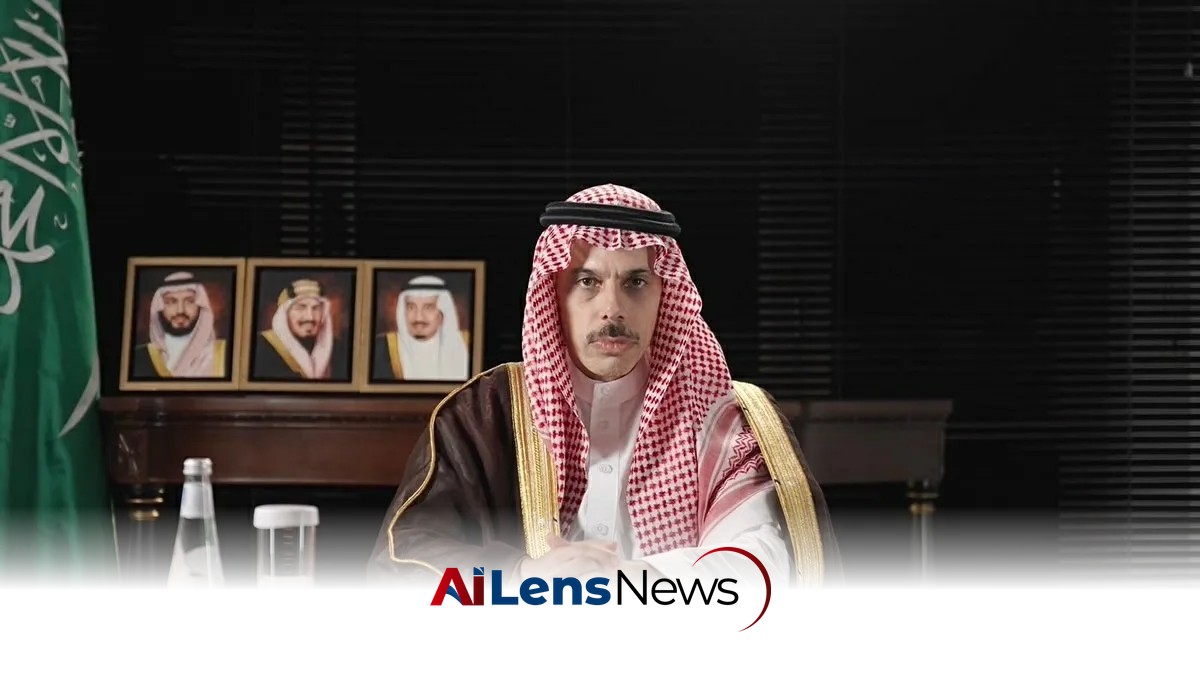


Prince Faisal bin Farhan warns that escalating tensions in the Middle East threaten global security and calls for sustainable diplomatic solutions.
Riyadh, Saudi Arabia Jul 22, 2026 ALN: Saudi Foreign Minister Prince Faisal bin Farhan recently articulated a pressing call for diplomacy as a means to achieve stability in the Middle East. In his virtual address at the 16th Gulf Research Meeting, he underscored that the region is once again at a critical juncture, where escalating tensions have the potential to affect not only regional dynamics but also global security, energy markets, and economic growth.
The Middle East has long been a region characterized by complex geopolitical conflicts, historical grievances, and shifting alliances. The current state of affairs, marked by heightened tensions among various state and non-state actors, has raised alarms about the potential for conflict escalation. Prince Faisal's remarks come against a backdrop of ongoing disputes, including tensions between Iran and Saudi Arabia, the Israeli-Palestinian conflict, and the ongoing civil war in Syria, among others. These issues have created an environment where military confrontations can easily spiral into broader conflicts, impacting global stability.
During his address, Prince Faisal emphasized the urgency of addressing these tensions, stating, "Recent developments have demonstrated how quickly tension can spread beyond the regional context and affect global security, energy markets, and economic growth." Such statements highlight the interconnectedness of regional conflicts and their implications on a global scale. The Middle East is home to some of the world's most vital energy resources, and instability in this region often leads to fluctuations in oil prices, affecting economies worldwide.
Furthermore, Prince Faisal pointed out that the reliance on military force to resolve conflicts has historically failed to produce lasting peace. He stated, "They have also reinforced a lesson that remains as relevant today as ever: there is no alternative to diplomacy, and lasting stability cannot be secured through military force alone." This assertion reflects a growing recognition among international leaders that sustainable peace requires dialogue, negotiation, and mutual understanding rather than coercive measures.
In advocating for a diplomatic approach, Prince Faisal called for the pursuit of "sustainable diplomatic solutions that provide real security and lasting peace." He articulated the need to move beyond temporary ceasefires or episodic de-escalation tactics, which often fail to address the root causes of conflict. Instead, he argued for a focus on resolving the underlying issues that generate tension and instability in the region.
Achieving long-term stability, according to the Saudi Foreign Minister, will necessitate "confidence-building, responsible statecraft, and a shared commitment to a more predictable and stable regional order." This vision for a stable Middle East involves not only the cessation of hostilities but also the establishment of trust among nations, fostering an environment where cooperation can flourish. Such an environment is essential for addressing common challenges, including economic development, security threats, and humanitarian crises.
In concluding his address, Prince Faisal outlined several principles that he believes should underpin any future regional security framework. These principles, he noted, are already clearly established in the United Nations Charter and include respect for sovereignty, non-interference in internal affairs, good neighborliness, non-aggression, freedom of navigation, adherence to international law, and refraining from providing support to non-state actors. These foundational elements are critical for creating a stable regional order that can withstand the pressures of geopolitical rivalries and internal conflicts.
The emphasis on these principles reflects a broader Saudi vision for the Middle East, one that prioritizes stability and cooperation over confrontation. Saudi Arabia, as a leading power in the region, has a vested interest in promoting a secure and prosperous environment, not only for its own citizens but for neighboring countries as well. The Kingdom's approach to diplomacy and conflict resolution is increasingly seen as a necessary component for achieving a sustainable peace in the region.
In the context of ongoing global challenges, such as climate change, economic inequality, and public health crises, the need for regional stability becomes even more pressing. The Middle East, with its diverse population and rich cultural heritage, has the potential to contribute significantly to global progress if peace can be achieved. However, this requires a concerted effort from regional powers to engage in constructive dialogue and work towards common goals.
As the international community observes the developments in the Middle East, the call for diplomacy, as articulated by Prince Faisal, serves as a reminder of the importance of dialogue in resolving conflicts. The stakes are high, and the implications of inaction could be dire, not only for the region but for the world as a whole. The pursuit of a stable and peaceful Middle East is a shared responsibility that requires the commitment of all nations involved.
In conclusion, Prince Faisal bin Farhan's address underscores the critical need for a diplomatic approach to address the complex challenges facing the Middle East. As tensions continue to rise, the call for sustainable solutions grounded in respect for sovereignty, international law, and mutual cooperation becomes increasingly relevant. The future of the region—and indeed, the broader global community—may depend on the ability of leaders to engage in meaningful dialogue and work towards a shared vision of peace and stability.
Historically, the Middle East has been a theater of both conflict and cooperation, with its geopolitical landscape shaped by colonial legacies, the Cold War, and the post-9/11 world. The rise of non-state actors, such as ISIS and various militia groups, has further complicated the situation, leading to a fragmented political landscape where traditional state power is often challenged. The Saudi Foreign Minister's call for diplomacy is not just a reflection of the current crises but also a recognition of the need to adapt to a changing world where old paradigms of power and influence are being redefined.
The Kingdom's push for a diplomatic resolution also aligns with its Vision 2030 initiative, which aims to diversify the economy and reduce dependence on oil revenues. A stable Middle East is crucial for achieving these economic goals, as it would allow for greater trade, investment, and collaboration in various sectors, including technology and renewable energy. The interconnectedness of security and economic prosperity is a central theme in the Kingdom's foreign policy, highlighting the importance of a holistic approach to regional stability.
Moreover, the role of external powers, particularly the United States, Russia, and China, cannot be overlooked in the quest for Middle Eastern stability. Each of these nations has its own interests and alliances within the region, which can complicate diplomatic efforts. Prince Faisal's emphasis on dialogue may also be seen as a call for these external powers to engage constructively rather than exacerbate existing tensions through military interventions or unilateral actions.
In light of these complexities, the Saudi Foreign Minister's address serves as a crucial reminder that while the challenges are immense, the potential for a peaceful and cooperative Middle East exists. It requires a collective effort from all stakeholders, including regional powers, international organizations, and civil society, to foster an environment conducive to dialogue and reconciliation. The path to stability may be fraught with difficulties, but the alternative—a continuation of conflict and instability—poses far greater risks, not only to the region but to global peace and security.
As the world watches, the call for diplomacy articulated by Prince Faisal bin Farhan resonates with a growing recognition that sustainable solutions to the Middle East's challenges require a commitment to dialogue, respect for international norms, and a willingness to engage in meaningful negotiations. The future of the region hinges on the ability of its leaders to rise above historical grievances and work towards a common vision that prioritizes peace, stability, and prosperity for all its people.
To learn more about the latest developments in Elections, stay updated with our exclusive reports and analyses on AiLensNews.

