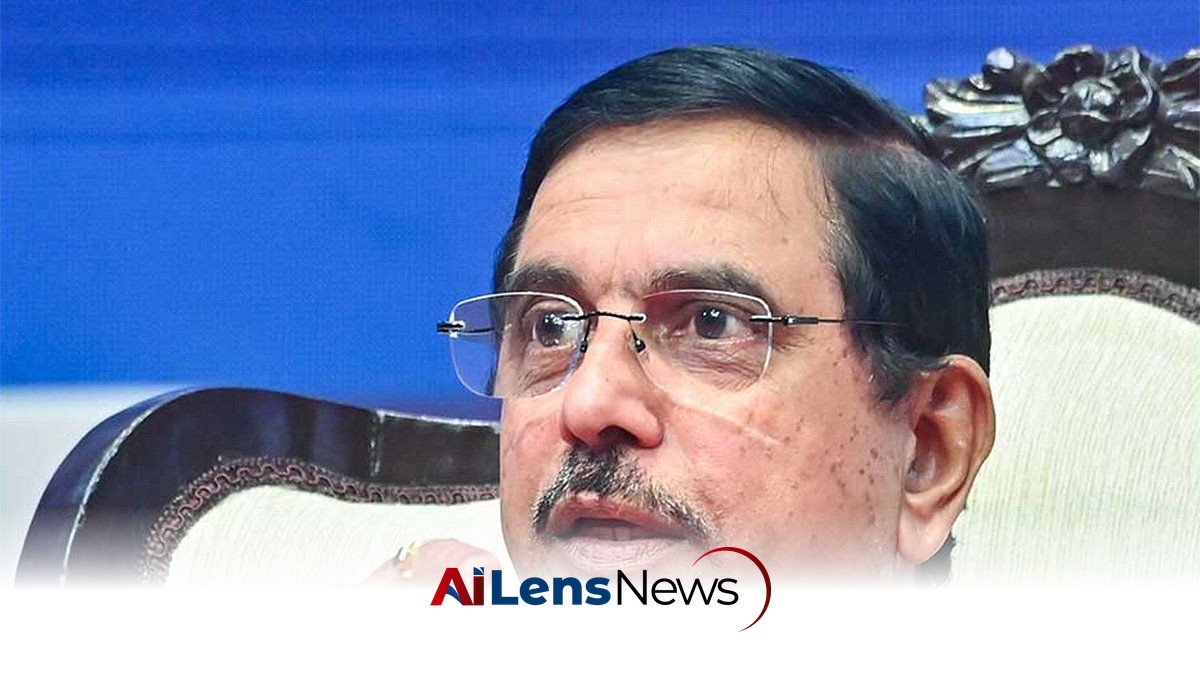


Pralhad Joshi takes over the Education Ministry amid protests over exam paper leaks after Dharmendra Pradhan's resignation.
Riyadh, Saudi Arabia Jul 25, 2026 ALN: New Delhi: India's Union Minister Pralhad Joshi has been assigned the additional charge of the Ministry of Education following the resignation of Dharmendra Pradhan. This development comes amid ongoing protests over exam paper leaks, which have sparked widespread unrest among students and raised significant concerns regarding the integrity of the examination process in the country.
The President's office confirmed the appointment through an official communique issued on Saturday, marking a notable shift in the leadership of the Education Ministry. President Droupadi Murmu, acting on the advice of Prime Minister Narendra Modi, has accepted the resignation of Dharmendra Pradhan from the Union Council of Ministers with immediate effect. The acceptance was made under Article 75(2) of the Constitution, which outlines the procedure for the appointment and resignation of ministers.
Pradhan's resignation signifies a significant change in the Union Cabinet, especially considering that he had been at the helm of the Education Ministry during a particularly tumultuous period characterized by heightened student unrest. This unrest has been linked to a series of alleged paper leaks in various examinations, including the National Eligibility cum Entrance Test (NEET) and others, which are critical for students seeking admission to medical and other professional courses across the nation.
The protests, which gained momentum in several parts of the country, have put the Ministry under intense public and political scrutiny. Students have expressed their dissatisfaction with the examination process, citing concerns over fairness and transparency. The protests have often involved large gatherings and demonstrations, drawing attention to the grievances of students and their demands for accountability from the government.
In a joint press conference organized on Saturday, Union Health Minister JP Nadda and Cockroach Janata Party leader Saurav Das urged the students to drop the protest and return home, asserting that the government has accepted all demands of the students. This statement reflects an attempt by the government to quell the unrest and restore normalcy in the education sector, which has been disrupted by the ongoing protests.
Pralhad Joshi, a senior Cabinet Minister, will now oversee the Union Education Ministry in addition to his responsibilities in the Food and Consumer Affairs portfolio. Joshi's dual charge arrangement is intended to ensure continuity in the functioning of the Education Ministry without disruption. His extensive experience in the cabinet is expected to help navigate the challenges that lie ahead, particularly in addressing the concerns raised by students and the public regarding the examination process.
Officials have indicated that the dual charge arrangement is a strategic decision aimed at maintaining stability within the Education Ministry during this transitional phase. The President's communique made it clear that the change takes effect immediately, allowing the new arrangement to come into force without delay. This swift action is indicative of the government's recognition of the urgency of the situation and its commitment to addressing the underlying issues affecting the education sector.
The constitutional process followed in this instance adhered to the standard procedure under Article 75(2), which governs the tenure of Ministers and their resignation from the Council of Ministers. By accepting the resignation on the advice of the Prime Minister and simultaneously assigning the additional charge, President Murmu has formalized both the exit of Pradhan and the interim arrangement under Pralhad Joshi.
Further details on any long-term restructuring of the Education Ministry are expected to be announced in due course. The government is likely to assess the current situation and consider potential reforms aimed at restoring public confidence in the examination system. This may involve reviewing existing protocols for conducting examinations, enhancing security measures to prevent leaks, and increasing transparency in the evaluation process.
The implications of this leadership change extend beyond the immediate crisis. The Education Ministry plays a crucial role in shaping the future of millions of students across India. With the increasing emphasis on quality education and the need for a robust examination system, the new leadership under Pralhad Joshi will face the challenge of balancing the demands for reform with the practicalities of implementation.
Moreover, the protests have highlighted broader issues within the Indian education system, including access to quality education, the need for systemic reforms, and the importance of student voices in policymaking. As the government navigates these challenges, it will be essential to foster dialogue with students, educators, and other stakeholders to ensure that their concerns are addressed effectively.
In conclusion, Pralhad Joshi's appointment as the new Education Minister comes at a critical juncture for India's education system. As he takes on this additional responsibility, the focus will be on restoring stability, addressing the concerns raised by students, and ensuring the integrity of the examination process. The government's response to this situation will likely have lasting implications for the future of education in India and the trust that students and parents place in the system.
The backdrop of this leadership change is set against a growing sentiment among students regarding the need for accountability and transparency in the education sector. The recent protests have not only drawn attention to the specific issues surrounding exam paper leaks but have also highlighted the broader systemic challenges that students face in navigating the education landscape in India. These challenges include access to quality resources, the pressure of competitive exams, and the need for clear and fair evaluation criteria.
In the wake of these events, the Ministry of Education will likely be under pressure to implement reforms that address the root causes of student dissatisfaction. This may involve engaging with educational experts, conducting surveys to gather student feedback, and collaborating with educational institutions to ensure that policies reflect the needs of the student population. The government may also consider introducing technological solutions to enhance the security and integrity of examination processes, such as biometric verification and the use of blockchain technology for record-keeping.
Furthermore, the role of educational institutions in fostering an environment of trust and transparency cannot be understated. Universities and colleges will need to work closely with the Ministry to ensure that they uphold standards of academic integrity and provide a supportive environment for students. This collaboration could be pivotal in rebuilding confidence among students and parents in the examination system.
As Pralhad Joshi steps into his new role, he will need to prioritize communication with student bodies and actively engage in dialogue to understand their concerns. Establishing a feedback mechanism that allows students to voice their grievances and suggestions could be an essential step towards rebuilding trust. Additionally, fostering a culture of accountability within the Ministry and among educational institutions will be vital in preventing future crises.
In summary, the appointment of Pralhad Joshi as India's Education Minister comes at a critical time when the education sector is facing significant challenges. The ongoing protests over exam paper leaks have brought to the forefront the urgent need for reform and transparency in the examination process. As Joshi takes on this additional responsibility, the focus will be on addressing the immediate concerns of students while laying the groundwork for long-term improvements in the education system. The government's approach to these issues will have lasting implications for the future of education in India, shaping the experiences of millions of students and their families.
To learn more about the latest developments in Elections, stay updated with our exclusive reports and analyses on AiLensNews.

