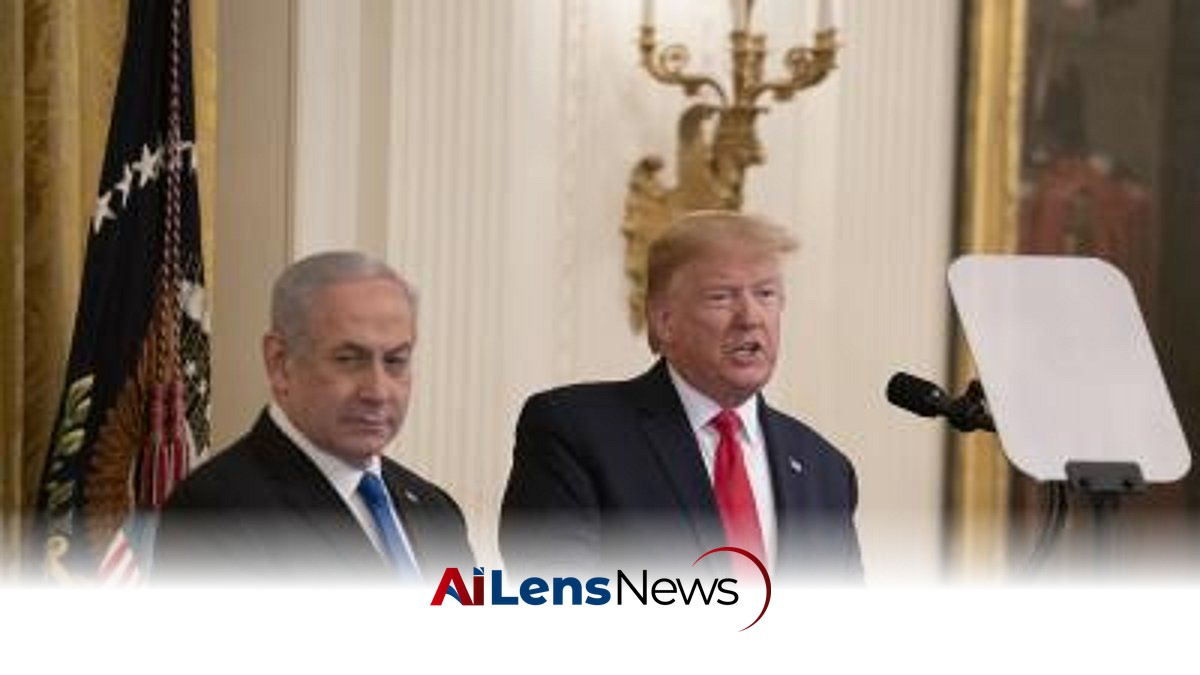


Israeli PM Netanyahu asserts that President Trump seeks to explore all diplomatic avenues with Iran regarding its nuclear program before considering military action.
Riyadh, Saudi Arabia Jul 13, 2026 ALN: Tel Aviv: Israeli Prime Minister Benjamin Netanyahu has stated that US President Donald Trump aims to "exhaust the possibility" of reaching a diplomatic agreement with Iran before pursuing alternative actions regarding the nuclear issue. This statement comes at a time of heightened tensions between the United States and Iran, particularly concerning Iran's nuclear ambitions and its military activities in the region.
In an interview with NBC's Meet the Press, Netanyahu emphasized that the US leader would not hesitate to use force if Tehran violated its commitments. He articulated a clear stance on the necessity of a diplomatic approach, while simultaneously underscoring the potential for military action should Iran fail to adhere to agreements. "I think President Trump wants to exhaust the possibility of achieving an agreement, especially on the nuclear issue, through negotiations. But he is obviously not shy about using force when the Iranians break every commitment they make--and usually a few hours or a few minutes after they make it. So, I think we should let the President have his opportunity," Netanyahu remarked.
This approach reflects a broader strategy that has characterized US-Israel relations over the years, particularly when it comes to dealing with threats perceived to be posed by Iran. The historical context of these relations is crucial to understanding the current dynamics. The US and Israel have long viewed Iran's nuclear program as a significant threat not only to their interests but also to regional stability. The Joint Comprehensive Plan of Action (JCPOA), commonly known as the Iran nuclear deal, was an attempt to curb Iran's nuclear ambitions through diplomatic means. However, the agreement has faced considerable criticism and challenges, particularly after the US withdrew from the deal in 2018 under Trump's administration, citing Iran's non-compliance and the deal's perceived inadequacies.
Netanyahu expressed gratitude for the US-Israel cooperation in countering Iran's nuclear ambitions, highlighting that their joint efforts had prevented Tehran from acquiring nuclear weapons and the means to deliver them. "You know, Israel is keenly grateful for the fact that America joined -- and Israel joined forces -- to prevent Iran from getting nuclear weapons and the means to deliver them, not only against us but against the entire West and against the United States," he stated. This statement underscores the cooperative security framework that has developed between the two nations, particularly in the context of intelligence sharing and military collaboration aimed at countering Iranian influence in the region.
Moreover, Netanyahu noted that many people do not realize how close Iran had come to advancing its nuclear capabilities, adding that recent military operations by the US and Israel had significantly set back Tehran's program. He referred to specific operations, stating, "The fact that we had these two operations, which are called Midnight Hammer and Epic Fury... we call them Rising Lion and Roaring Lion; we actually drove it back." This reference to operations indicates a level of military engagement that is often not publicly detailed, suggesting that both nations have engaged in covert operations to disrupt Iran's nuclear development.
These remarks come amid renewed tensions between the US and Iran. On Sunday, the United States launched strikes on 140 Iranian military targets using precision munitions deployed by land- and sea-based fighter aircraft, drones, and naval vessels. The scale of these strikes indicates a significant escalation in military engagement, reflecting a shift in US policy towards a more aggressive posture against Iranian military capabilities.
The targets included Iranian missile and drone sites, naval capabilities, ammunition storage facilities, communication networks, and coastal surveillance locations. This extensive targeting suggests a comprehensive strategy aimed at crippling Iran's military infrastructure, which the US perceives as a direct threat to its interests and those of its allies in the region.
This development followed an attack by the Islamic Revolutionary Guard Corps (IRGC) on the Cyprus-flagged container vessel M/V GFS Galaxy in the Strait of Hormuz. The Strait of Hormuz is a critical chokepoint for global oil transport, and any military activity in this area can have significant implications for international trade and energy prices. The IRGC’s actions, described as a show of force, have raised alarms about the potential for broader conflict in a region already fraught with tension.
Additionally, the IRGC of Iran claimed it has executed a "heavy and surprise" attack on logistics support centers and refueling platforms used by US aircraft carriers at the Port of Duqm in Oman, according to the IRIB state broadcaster. This claim, if substantiated, would indicate a direct confrontation between Iranian forces and US military assets, further escalating the situation. The IRGC's public relations office reported that the sites were "destroyed" in the attack, which, if true, could lead to a significant response from the United States.
Fresh Iranian attacks drew sharp condemnation from the Organisation of Islamic Cooperation (OIC) and triggered formal diplomatic protests as the standoff in the Strait of Hormuz continues. The OIC, which comprises 57 member states, has expressed its concern over the escalating hostilities and the potential for broader regional instability. The diplomatic protests highlight the international ramifications of the conflict, as nations around the world are closely monitoring the situation due to its implications for global oil supply and security.
In conclusion, Netanyahu's comments reflect a complex interplay of diplomacy and military strategy in the context of US-Iran relations. The ongoing tensions and military actions underscore the precarious nature of regional security in the Middle East, where the potential for conflict remains high. As the situation evolves, the international community will be watching closely to see how diplomatic efforts are balanced against military readiness, particularly regarding Iran's nuclear ambitions and its military activities in the region.
To learn more about the latest developments in Political Controversies, stay updated with our exclusive reports and analyses on AiLensNews.

