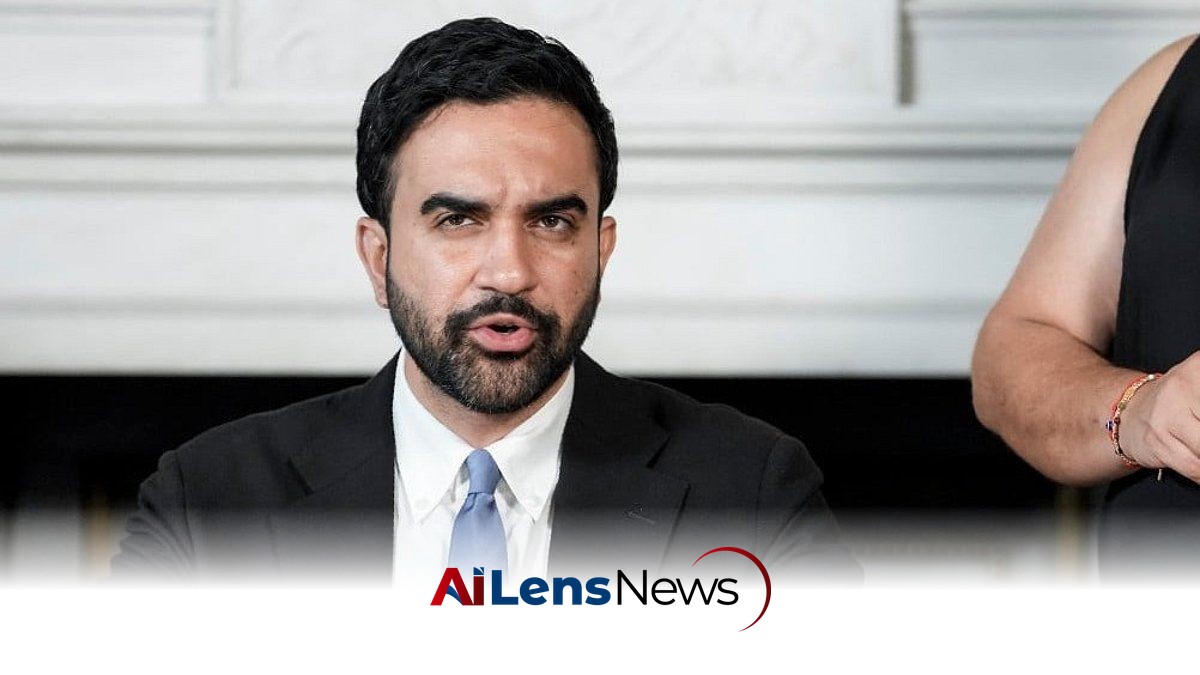


Mayor Mamdani contemplates arresting Israeli PM Netanyahu during UN meeting, citing war crimes allegations, prompting backlash from Israeli officials.
Riyadh, Saudi Arabia Jul 18, 2026 ALN: New York Mayor Zohran Mamdani is contemplating the possibility of attempting to arrest Israeli Prime Minister Benjamin Netanyahu during an upcoming UN summit, as revealed in an interview published Saturday. This statement has elicited a strong response from Netanyahu's camp.
"I believe that Prime Minister Netanyahu belongs in The Hague," Mamdani stated to The New York Times. "He's a war criminal who has been charged by the International Criminal Court." This assertion comes amidst a backdrop of heightened tensions surrounding Israel's military operations, particularly in Gaza, which have drawn international scrutiny and condemnation.
The leftist mayor, who has labeled Israel an "apartheid regime," emphasized, "That is an opinion that is held by many, purely because of what his actions have wrought over these last many years." Mamdani's comments reflect a growing sentiment among certain political factions and activists who argue that Israel's policies towards Palestinians and its military actions constitute violations of international law.
In recent years, the term "apartheid" has been used in various contexts to describe Israel's treatment of Palestinians, particularly in relation to the Israeli occupation of the West Bank and the blockade of Gaza. This characterization has been a point of contention, with supporters of Israel arguing that it delegitimizes the Jewish state's right to exist and undermines efforts towards peace. Critics, however, assert that the label is justified based on documented human rights abuses and systemic inequalities faced by Palestinians.
Mamdani acknowledged uncertainty regarding his authority to instruct the New York Police Department to detain a foreign leader but confirmed he is in discussions with the city's legal team on the matter. "Whatever the law allows me to do in New York City, that's what we will do," he asserted. This statement raises complex legal questions about the powers of local officials in relation to international law and diplomatic immunity, which typically protects foreign leaders from arrest while they are in office.
The UN General Assembly, a significant gathering of world leaders, is scheduled to take place in September at the UN headquarters in New York. This annual event serves as a platform for leaders to address pressing global issues, including conflicts, human rights, and international cooperation. The presence of high-profile figures such as Netanyahu at the summit often draws significant media attention and public demonstrations, reflecting the polarized views surrounding Israeli policies.
Previously, Mamdani has pledged to direct the NYPD to enforce arrest warrants against leaders wanted by the International Criminal Court, including Netanyahu and Russian President Vladimir Putin. The ICC, which was established to prosecute individuals for war crimes, genocide, and crimes against humanity, has faced criticism for its perceived bias and the challenges it encounters in enforcing its rulings. Mamdani's commitment to uphold these warrants signals a willingness to confront controversial figures and advocate for accountability, though it also raises questions about the feasibility and implications of such actions.
In 2024, the Hague-based ICC stated it had reasonable grounds to believe Netanyahu was responsible for alleged war crimes and crimes against humanity related to Israel's military actions in Gaza following the unprecedented October 7, 2023 attack by Hamas. This attack, which resulted in significant casualties and escalated the ongoing conflict, has intensified calls for accountability and justice for the victims. The ICC's findings have been met with both support and skepticism, as critics argue that the court's investigations can be politicized and may not fully address the complexities of the Israeli-Palestinian conflict.
Danny Danon, Israel's ambassador to the United Nations, swiftly condemned Mamdani's remarks. "Instead of focusing on his responsibilities as mayor and confronting the rising wave of antisemitism in his city, he has chosen to incite hostility and generate headlines by attacking the State of Israel," Danon wrote on X, a platform for social media engagement. This statement highlights the ongoing tensions surrounding discussions of antisemitism, particularly in the context of criticism of Israel's policies. Many Jewish organizations and leaders have expressed concern that such criticisms can sometimes cross the line into antisemitism, complicating the discourse around Israel and its right to defend itself.
He added, "It will not change a thing. Israeli Prime Minister will come to New York, address the United Nations General Assembly with pride, and stand before the world to state Israel's truth and its unwavering right to defend its citizens. And if anyone should be arrested, it is Zohran Mamdani." This response underscores the contentious nature of the discourse surrounding Israel and its leaders, as well as the political ramifications of Mamdani's statements. The mayor's comments have sparked a debate not only about the legality of potential arrests but also about the broader implications for U.S.-Israel relations and the political landscape in New York City.
Netanyahu has accused Mamdani of harboring anti-American sentiments, stating on a recent New York radio show, "I think, secretly, he hates America." This accusation points to the charged political climate in which discussions about foreign policy, particularly regarding Israel and Palestine, often intersect with domestic politics. Such claims can resonate with certain voter bases, particularly among those who view support for Israel as a cornerstone of American foreign policy.
The implications of Mamdani's statements extend beyond the immediate political landscape of New York City. They reflect a broader shift in how some political leaders and activists are approaching the Israeli-Palestinian conflict, advocating for accountability and justice in ways that challenge traditional narratives. As public opinion continues to evolve, particularly among younger generations, the discourse around Israel, human rights, and international law is likely to remain a focal point of contention in both domestic and international arenas.
In conclusion, the potential for Mamdani to pursue legal action against Netanyahu raises significant questions about the intersection of local governance, international law, and diplomatic relations. As the UN summit approaches, the world will be watching to see how this situation unfolds and what it may mean for future interactions between political leaders and the legal frameworks that govern their actions on the global stage.
To learn more about the latest developments in Political Controversies, stay updated with our exclusive reports and analyses on AiLensNews.

