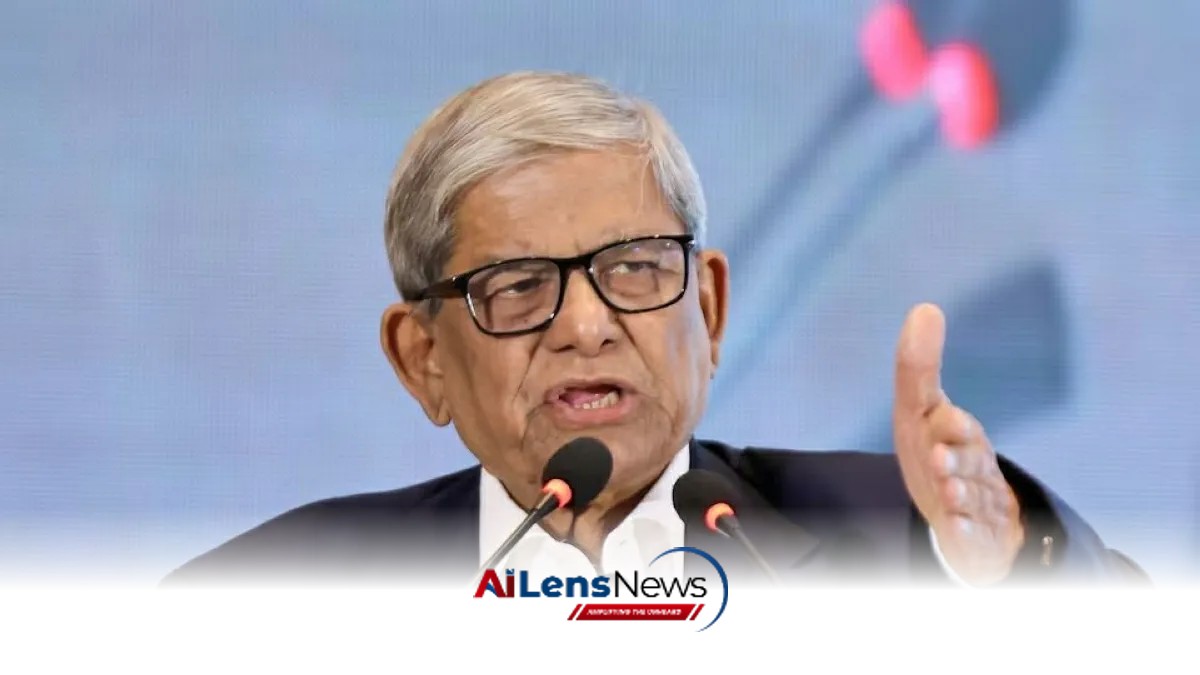



Bangladesh's Parliament has elected Mirza Fakhrul Islam Alamgir as president, marking a significant political transition as the BNP returns to power.
Riyadh, Saudi Arabia Aug 22, 2026 ALN: Bangladesh’s Parliament on Thursday elected Mirza Fakhrul Islam Alamgir, a stalwart of the ruling Bangladesh Nationalist Party (BNP), to the presidency, making the longtime opposition figure the head of state after his party came to power in a major political transition. This election marks a significant shift in the political landscape of Bangladesh, which has been characterized by intense rivalry between the BNP and the Awami League, the party that has dominated the political scene for over a decade.
Alamgir, 78, defeated Oli Ahmed, a retired army colonel and chairman of the Liberal Democratic Party and candidate of the Jamaat-e-Islami-led 11-party opposition alliance, in a parliamentary vote. Chief Election Commissioner A.M.M. Nasir Uddin declared Alamgir the winner after the 255-to-88 vote, showcasing a decisive victory that reflects the current political dynamics in the country.
The largely ceremonial post fell vacant last month following the resignation of the former president, who was a close ally of ousted Prime Minister Sheikh Hasina. The resignation of Mohammed Shahabuddin on health grounds halfway through his five-year term triggered the presidential election, a situation that has further accentuated the ongoing political upheaval in Bangladesh.
A total of 349 members of Parliament were eligible to vote in what was the first contested presidential election since October 1991, when the nation became a parliamentary democracy. Every presidential election since then had been uncontested, drawing no challengers to the ruling party’s candidate, highlighting the significant change in the political environment that has allowed for this competitive election.
Alamgir was a long-time secretary-general of the BNP and steered the political movement against the 15-year rule of Hasina. She fled the country in August 2024 during a mass uprising over allegations of autocratic rule and corruption in the allocation of government jobs. This mass uprising was a culmination of public discontent that had been brewing for years, fueled by rising inflation, allegations of human rights abuses, and a crackdown on dissent. Following her departure, her party has been barred from politics since last year, creating a vacuum that the BNP has capitalized on.
During Hasina’s rule, Alamgir became one of the opposition’s most prominent voices, facing repeated arrests and a series of legal cases that were widely perceived as politically motivated. His resilience in the face of government repression has made him a symbol of the opposition's struggle against authoritarianism in Bangladesh. The political climate has been fraught with tension, with allegations of election rigging and suppression of dissent marking the last few years of Hasina's administration.
Bangladesh’s president is the head of state and commander-in-chief of the influential armed forces. Though the presidency is largely ceremonial, it has important roles to play during political crises. The president's functions include appointing the prime minister, approving legislation, and representing the country in diplomatic matters. However, executive authority remains firmly with the prime minister and cabinet in the South Asian nation of about 173 million people, indicating that while Alamgir's role may be largely symbolic, it still carries weight in times of political instability.
The BNP and its allies hold a two-thirds majority in parliament after winning the February 12 general election, which returned the party to power after years in opposition and brought Tarique Rahman to the office of prime minister. Rahman, the son of former Prime Minister Khaleda Zia, is seen as a key figure in the BNP's resurgence and is expected to push forward a reform agenda aimed at addressing the issues that led to the previous government's unpopularity.
The political transition in Bangladesh comes at a time when the country is grappling with various challenges, including economic instability, rising unemployment, and social unrest. The BNP's return to power raises questions about the future of governance in Bangladesh and the potential for reconciliation between the rival political factions. Observers are keenly watching how Alamgir's presidency will influence the political discourse and whether it will pave the way for a more inclusive political environment.
Alamgir began his career as a teacher after studying economics at the University of Dhaka. He joined the BNP in the early 1990s and rose steadily through the party ranks to become one of its best-known national leaders. Over the course of his political career, he held several ministerial posts, most recently serving as local government minister before stepping down following his nomination for the presidency. His extensive experience in governance and deep roots within the BNP position him as a capable leader during this critical juncture.
He is expected to be sworn in on Friday evening, marking the beginning of a new chapter in Bangladesh’s political history. The implications of his presidency will be closely monitored both domestically and internationally, as stakeholders evaluate the potential for political reform and stability in a nation that has seen its share of political turmoil. The coming months will be crucial in determining whether the BNP can effectively govern and address the pressing issues facing the country, or if the cycle of political conflict will continue to hinder progress.
To learn more about the latest developments in Elections, stay updated with our exclusive reports and analyses on AILensNews.

