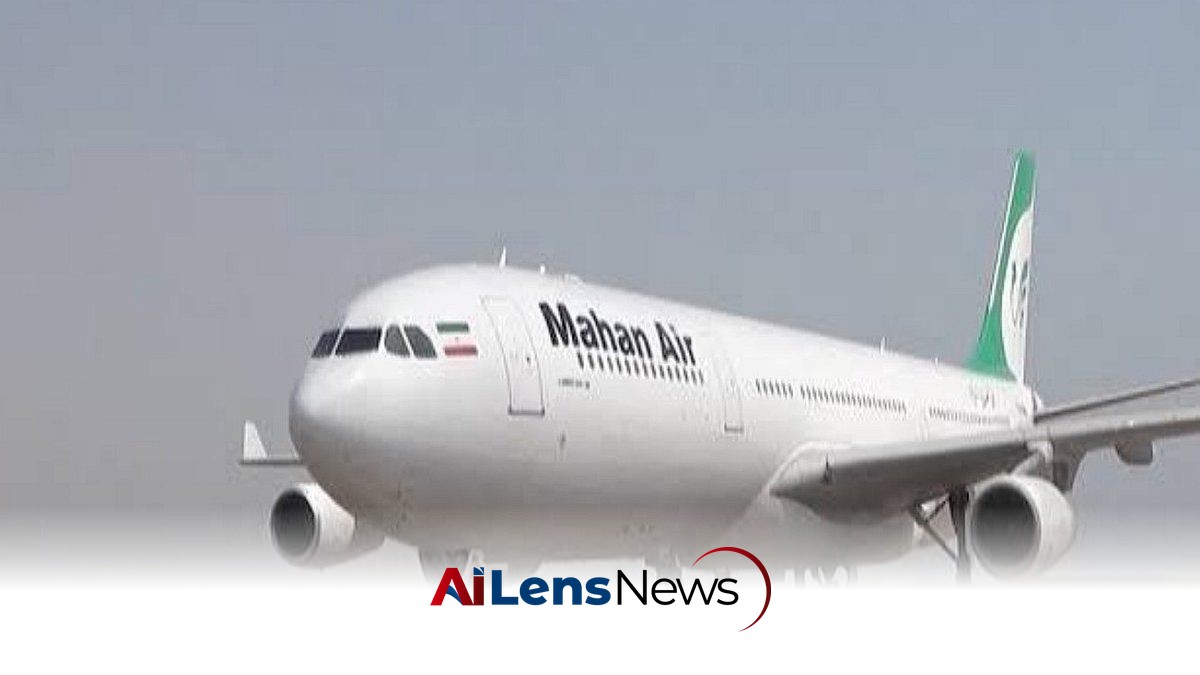


The US Treasury has imposed sanctions on six entities across China, India, Russia, and Iran for aiding Mahan Air, linked to the IRGC.
Doha, Qatar Jul 31, 2026 ALN: The US Treasury Department has announced the imposition of sanctions on six entities and individuals across China, India, Russia, and Iran for providing sales, logistics, and commercial support to Mahan Air, the Iranian airline long accused of ferrying personnel, weapons, and equipment for the Islamic Revolutionary Guard Corps (IRGC). This action reflects the ongoing efforts by the United States to curb Iran's influence and military capabilities in the region, particularly those associated with the IRGC, which has been designated as a terrorist organization by the US government.
Treasury’s Office of Foreign Assets Control (OFAC) targeted general sales agents for Mahan Air and other facilitators, aiming to disrupt what officials describe as the airline’s role in sustaining IRGC operations. Mahan Air has presented itself as a civilian carrier but has been under US sanctions for years over its ties to the IRGC. The airline has been implicated in various activities that support military operations, including transporting troops and military supplies to conflict zones.
Treasury Secretary Scott Bessent stated that those providing financial services, logistics, or commercial support to the IRGC or Mahan Air “are helping sustain a terrorist enterprise.” Bessent emphasized the commitment of the Treasury to identify and expose such entities while cutting them off from the US financial system. This statement underscores the broader strategy of the US government to leverage economic sanctions as a tool to counteract perceived threats from Iran and its proxies.
The action comes as the US maintains military pressure on Iran, including a naval blockade of Iranian ports and recent strikes, amid ongoing tensions in the Middle East. This military posture is intended to deter Iranian aggression and protect US interests in the region. The sanctions against Mahan Air and its affiliates highlight efforts to use economic tools alongside military measures to constrain Tehran’s ability to project power.
Specific targets of the sanctions include companies and individuals acting as sales agents or providing logistical support for Mahan Air. The sanctions are designed to disrupt the operational capabilities of the airline, which has been accused of facilitating IRGC activities. Among the designated entities were companies based in Shanghai, a Russian air cargo firm, and other logistics service providers that have enabled Mahan Air’s operations, according to the Office of Foreign Assets Control (OFAC).
OFAC plays a crucial role in enforcing economic and trade sanctions, providing access to the Specially Designated Nationals (SDN) list, sanction programs, and compliance guidance. The sanctions effectively block the designated parties from accessing the US financial system and generally prohibit Americans from engaging in business with them. Additionally, Treasury warned that foreign companies and banks risk secondary sanctions for continued business with the sanctioned entities, thereby extending the reach of US sanctions beyond its borders.
Mahan Air has faced repeated US designations for its alleged role in transporting IRGC-Quds Force members and military cargo, including to conflict zones in Syria and Iraq. Despite these accusations, the airline has consistently denied the claims, asserting that they are politically motivated and aimed at undermining its operations.
The latest sanctions reflect the Trump administration’s strategy of maximum economic pressure on Iran, which has been a cornerstone of its foreign policy approach. This strategy is coordinated with broader efforts to counter Iran's proxy networks and military activities, particularly in regions where Iran has significant influence, such as Iraq, Syria, and Lebanon.
No immediate reaction was available from the Iranian government or the sanctioned parties, but the Iranian regime has historically responded to such sanctions with criticism, often labeling them as unjust and detrimental to the Iranian people.
The Islamic Revolutionary Guard Corps (IRGC) has built a sprawling financial network that extends far beyond its military role. Analysts and sanctions authorities assert that the organization generates revenue through a combination of state-backed business interests, investment foundations, and sanctions-evasion networks. This economic empire enables the IRGC to fund its military operations and support allied groups throughout the region.
State-Backed Business Empire: The IRGC controls major commercial interests through large engineering firms and investment foundations, holding significant stakes in various sectors of Iran's economy. This extensive network allows the IRGC to operate with a degree of financial independence from the Iranian government.
Khatam al-Anbiya: The IRGC's flagship engineering conglomerate, Khatam al-Anbiya, has secured major government contracts in infrastructure, telecommunications, oil, gas, and petrochemicals, making it one of Iran's largest contractors. This organization plays a pivotal role in executing projects that bolster the IRGC’s influence within the country.
Bonyad-e Ta'avon-e Sepah (IRGC Cooperative Foundation): This investment arm manages holdings in manufacturing, banking, real estate, and other commercial ventures. The profits generated by this foundation support personnel welfare and other IRGC activities, further entrenching the organization’s power.
Shadow Oil Trade: US and allied authorities have accused the IRGC of employing covert oil sales, ship-to-ship transfers, and "ghost tanker" operations to export Iranian crude while circumventing international sanctions. This illicit trade is critical for the IRGC's financial sustainability, especially in light of stringent sanctions targeting Iran’s oil sector.
Global Front Companies: Investigators have identified that the IRGC relies on shell companies and intermediary firms in various countries to facilitate trade, move funds, and acquire restricted technologies. These front companies are often designed to obscure the true nature of transactions and evade detection by sanctions authorities.
Smuggling and Regional Networks: Western governments have alleged that the IRGC oversees smuggling operations and channels financial support to allied armed groups across the Middle East through informal financial systems. In some cases, these operations have involved the use of digital assets such as cryptocurrencies, which present new challenges for tracking and enforcement.
The interconnectedness of the IRGC's military and economic activities complicates efforts to undermine its influence through sanctions. The organization's ability to leverage its commercial interests to fund military operations poses a significant challenge for US policymakers and their allies.
As the US continues to impose sanctions on entities associated with the IRGC and Mahan Air, the long-term implications of these actions will likely influence Iran's strategic calculations and its relationships with other nations. The effectiveness of sanctions in curbing Iranian military capabilities and regional ambitions remains a subject of ongoing debate among analysts and policymakers, particularly as Iran seeks to adapt to the evolving geopolitical landscape.
To learn more about the latest developments in Elections, stay updated with our exclusive reports and analyses on AiLensNews.

