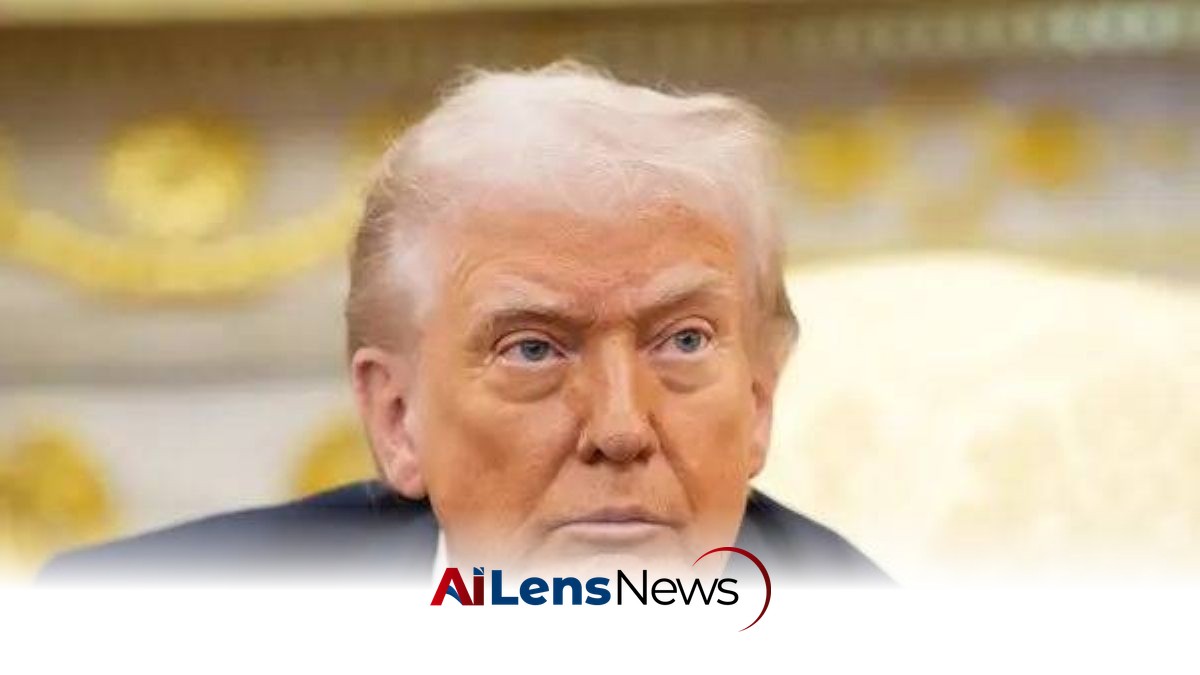


President Trump has vowed to target Iranian bridges and power plants if Tehran fires on ships in the Strait of Hormuz, escalating tensions in the region.
Doha, Qatar Jul 23, 2026 ALN: President Donald Trump on Wednesday pledged that the United States would bomb Iranian civil infrastructure every time that Tehran fires at ships in the strategic Strait of Hormuz. This statement represents a bold and aggressive stance from the U.S. administration, reflecting the heightened tensions between the two nations.
"Any time the Islamic Republic of Iran shoots at a ship in the Strait of Hormuz, whether it be by Missile, Rocket, Drone, or any other device or weapon, the United States will bomb and destroy ONE BRIDGE OR POWER PLANT," he wrote on social media. This declaration marks a significant escalation in rhetoric as tensions between the U.S. and Iran continue to rise, potentially leading to a more volatile situation in an already sensitive region.
The Strait of Hormuz is a crucial waterway for global oil shipments, with approximately 20% of the world's oil supply passing through it. The strategic importance of this narrow passage cannot be overstated, as it serves as a vital artery for energy exports from the Gulf states, particularly Saudi Arabia, the United Arab Emirates, and Iran. Any military action in the area could have serious implications for international trade and security, potentially causing disruptions that could ripple through global markets. The U.S. has long viewed the security of this passage as vital to maintaining stability in the energy sector and preventing any unilateral actions by Iran that could threaten maritime navigation.
Trump's comments come amid ongoing concerns about Iran's military capabilities and its recent actions in the region. The U.S. has previously accused Iran of threatening maritime navigation, particularly through the use of drone technology and missile systems. In response to these perceived threats, the U.S. has deployed additional military resources to the area, including naval vessels and aircraft, in an effort to deter Iranian aggression. This military buildup has included the deployment of aircraft carriers, destroyers, and surveillance drones, signaling a readiness to respond to any provocations.
The potential for military conflict raises alarms among allies and adversaries alike. Countries that rely on the Strait of Hormuz for oil imports, including several in Europe and Asia, are particularly concerned about the implications of a military confrontation. Many have called for diplomatic solutions to avoid escalation, emphasizing the need for dialogue and negotiation rather than military action. The international community is closely monitoring the situation as both sides appear to be on high alert, with Iran also responding to U.S. military maneuvers by conducting its own military exercises in the region.
Historically, the relationship between the U.S. and Iran has been fraught with tension, particularly since the 1979 Iranian Revolution, which saw the overthrow of the U.S.-backed Shah and the establishment of the Islamic Republic. The U.S. has imposed various sanctions on Iran over the years, particularly regarding its nuclear program and its support for militant groups in the Middle East. The 2015 Joint Comprehensive Plan of Action (JCPOA), a landmark agreement aimed at curbing Iran's nuclear ambitions, was a brief moment of thawing relations, but the U.S. withdrawal from the agreement in 2018 under Trump's administration reignited hostilities. The re-imposition of sanctions has severely impacted Iran's economy, leading to widespread protests and civil unrest within the country.
In recent years, Iran has been accused of engaging in proxy warfare throughout the Middle East, supporting groups such as Hezbollah in Lebanon and various militias in Iraq and Syria. These actions have contributed to the perception of Iran as a destabilizing force in the region, prompting the U.S. to adopt a more confrontational policy. The recent attacks on shipping vessels in the Strait of Hormuz, attributed to Iranian forces, have only intensified calls for a robust U.S. response. These incidents have included attacks on oil tankers and the downing of drones, further escalating tensions and increasing the likelihood of miscalculations that could lead to broader conflict.
Moreover, Trump's threats to target Iranian infrastructure could have far-reaching consequences, not only for Iran but also for the wider region. Bombing bridges and power plants could lead to significant humanitarian crises, exacerbating the already dire situation in Iran, where the economy is struggling under the weight of U.S. sanctions. Such actions could also provoke a strong retaliatory response from Iran, potentially leading to a cycle of escalation that could spiral out of control. The Iranian government has historically responded to military threats with a mix of defiance and strategic retaliation, often leveraging its regional influence to counter U.S. actions.
As the situation develops, it remains to be seen how Iran will respond to Trump's threats and what measures the U.S. will take to enforce its position. Iran has historically responded to threats with a mix of defiance and calculated retaliation, often leveraging its regional influence to counter U.S. actions. The Iranian government may seek to rally domestic support by portraying itself as a defender against U.S. aggression, potentially complicating diplomatic efforts. Furthermore, Iran's leadership may view military actions against its infrastructure as an existential threat, prompting a more aggressive posture in the region.
The implications of this escalating rhetoric are profound, not only for U.S.-Iran relations but also for the broader geopolitical landscape. Allies of the U.S. in the region, such as Saudi Arabia and the United Arab Emirates, may feel emboldened to take a more aggressive stance against Iran, leading to increased tensions and potential conflict. Conversely, adversaries of the U.S. may view this as an opportunity to exploit perceived weaknesses in U.S. foreign policy. The risk of miscalculation is high, and the international community remains on edge as both sides prepare for possible confrontation.
In conclusion, President Trump's threats to bomb Iranian infrastructure in response to attacks on maritime vessels signal a significant escalation in U.S.-Iran tensions. The potential for military conflict in the Strait of Hormuz raises alarms among nations that depend on this critical waterway for their energy needs. As both sides prepare for possible confrontation, the international community watches closely, hoping for a diplomatic resolution to avert further escalation and ensure stability in the region. The situation remains fluid, and the potential for conflict looms large as both nations navigate the complex and often volatile dynamics of their relationship.
To learn more about the latest developments in Political Controversies, stay updated with our exclusive reports and analyses on AiLensNews.

