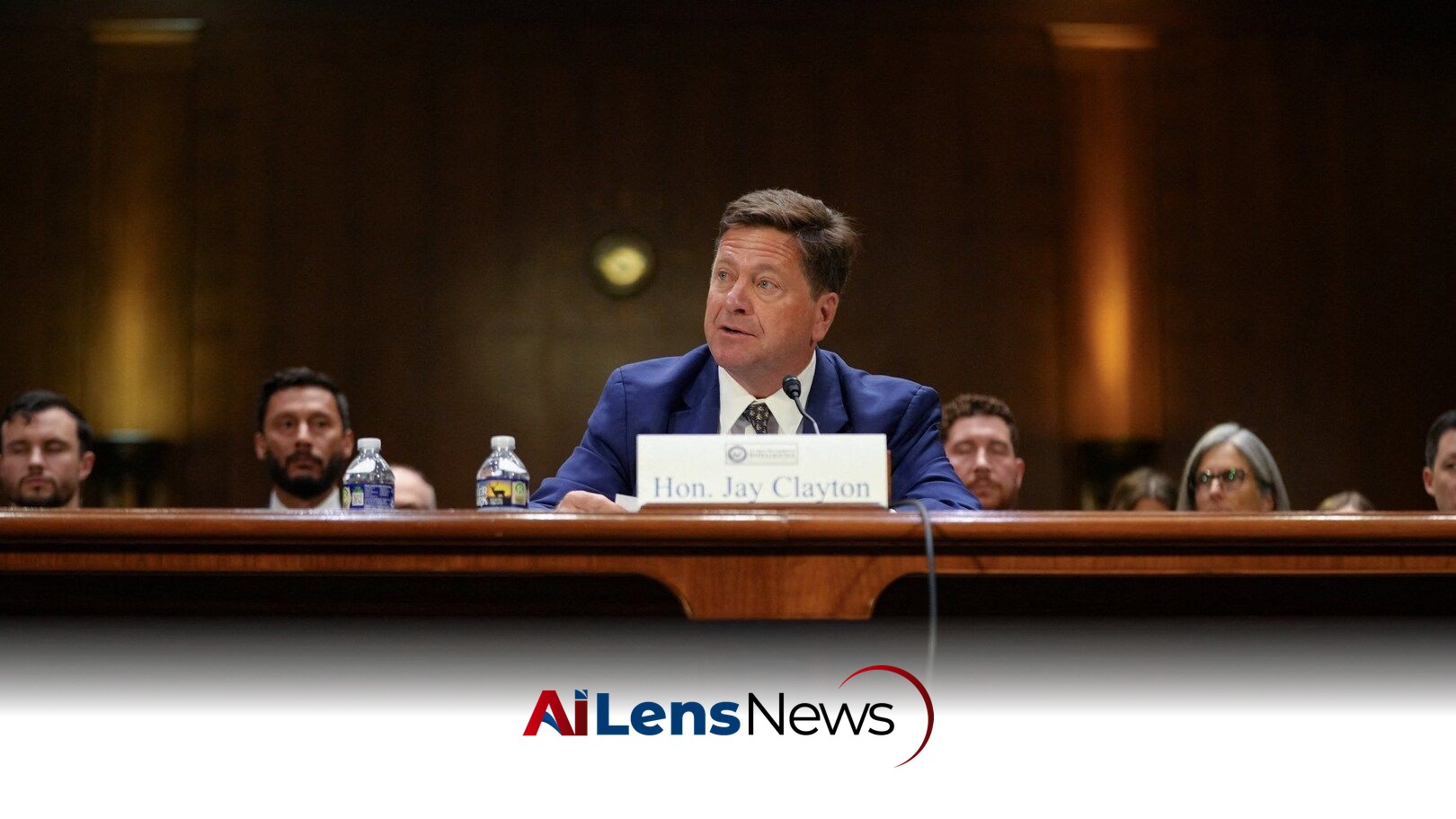


During his Senate confirmation hearing, Jay Clayton, nominated by Trump for a top intelligence position, refrained from directly stating that Biden won the 2020 election.
Doha, Qatar Jul 16, 2026 ALN: During a recent Senate confirmation hearing, Jay Clayton, nominated by former President Donald Trump to serve as the nation’s top intelligence official, notably avoided directly confirming that Joe Biden won the 2020 presidential election. Instead, he stated that Biden had been ‘certified’ as president, which left many observers questioning his stance on the contentious issue.
Clayton's remarks came as he faced scrutiny from senators regarding his views on the integrity of the electoral process. When pressed, he emphasized, ‘I am not an election denier,’ which further complicated his position. His evasive response has drawn criticism from various political commentators and analysts who argue that clarity on such a fundamental issue is essential for a nominee in a critical intelligence role.
Jay Clayton, who previously served as the chairman of the Securities and Exchange Commission, was nominated to lead the intelligence community amidst ongoing debates about election integrity and misinformation. His nomination reflects Trump's continued influence over the Republican Party and the broader political landscape. Clayton's background in finance and regulation, particularly in the realm of securities, positions him uniquely for the role, but his views on electoral matters have raised eyebrows.
The nomination process for intelligence officials is crucial, especially as the United States faces various national security threats, both domestic and foreign. Clayton's nomination comes at a time when the intelligence community is under scrutiny for its handling of misinformation and its role in safeguarding electoral integrity. The implications of his confirmation extend beyond Clayton himself; they touch on the broader relationship between intelligence agencies and the political landscape, particularly in the wake of the 2020 election, which has become a focal point of division within American politics.
Clayton's reluctance to affirm Biden's victory has raised concerns about the potential impact on public trust in the electoral process. As the head of the intelligence community, his role would involve safeguarding national security and ensuring the integrity of information disseminated to the public and government officials. The intelligence community has a responsibility to provide accurate assessments and to counter misinformation that could undermine democratic processes. Clayton's ambiguous stance could signal a troubling precedent, where intelligence officials might prioritize political loyalty over factual integrity.
The integrity of elections is a cornerstone of democracy, and the failure to acknowledge the legitimacy of the electoral outcome can have far-reaching consequences. It can lead to increased polarization, diminished public confidence in government institutions, and the potential for political violence. Given the historical context of the 2020 election, where claims of widespread voter fraud were widely debunked, Clayton's position may be interpreted as an endorsement of unfounded conspiracy theories that have permeated political discourse.
Reactions to Clayton's confirmation hearing have been mixed. Some Republican senators have praised his qualifications and experience, emphasizing the need for experienced leadership in the intelligence community. They argue that Clayton's background in regulation and finance equips him to handle the complexities of national security and intelligence matters.
However, others within the party have expressed concern over his ambiguous statements regarding the election. This division reflects a broader rift within the Republican Party, where loyalty to Trump and adherence to his narrative about the 2020 election has become a litmus test for many candidates and officials. Democratic senators have criticized Clayton's failure to acknowledge the legitimacy of Biden's presidency, arguing that it undermines the democratic process. They assert that a clear and unequivocal recognition of the election results is essential for restoring public trust in government institutions.
The 2020 presidential election was one of the most contentious in American history, marked by a global pandemic, widespread mail-in voting, and unprecedented claims of electoral fraud. Following the election, numerous lawsuits were filed by Trump and his allies, all of which were dismissed due to lack of evidence. The aftermath of the election culminated in the January 6th Capitol riot, where a mob of Trump supporters stormed the U.S. Capitol in an attempt to overturn the election results. This event has since been a catalyst for discussions about the state of democracy in the United States and the role of political leaders in upholding electoral integrity.
In this context, Clayton's nomination and his responses during the confirmation hearing are particularly significant. They reflect not only his personal views but also the broader ideological battles within American politics regarding the legitimacy of electoral processes and the responsibilities of public officials in addressing misinformation.
As the confirmation process continues, Clayton's ability to navigate these sensitive topics will be closely monitored. His responses may not only influence his confirmation but also set the tone for how the intelligence community addresses issues of electoral integrity moving forward. The implications of his nomination extend beyond the immediate political landscape; they touch on fundamental questions about the role of intelligence in a democracy, the responsibilities of public officials to uphold the truth, and the importance of public trust in governmental institutions.
Ultimately, the outcome of Clayton's confirmation will be a reflection of the current state of American politics and the extent to which the intelligence community can remain insulated from partisan divisions. As the nation grapples with the consequences of the 2020 election and its aftermath, the role of intelligence leaders in promoting democratic values and integrity will be more critical than ever.
To learn more about the latest developments in Political Controversies, stay updated with our exclusive reports and analyses on AiLensNews.

