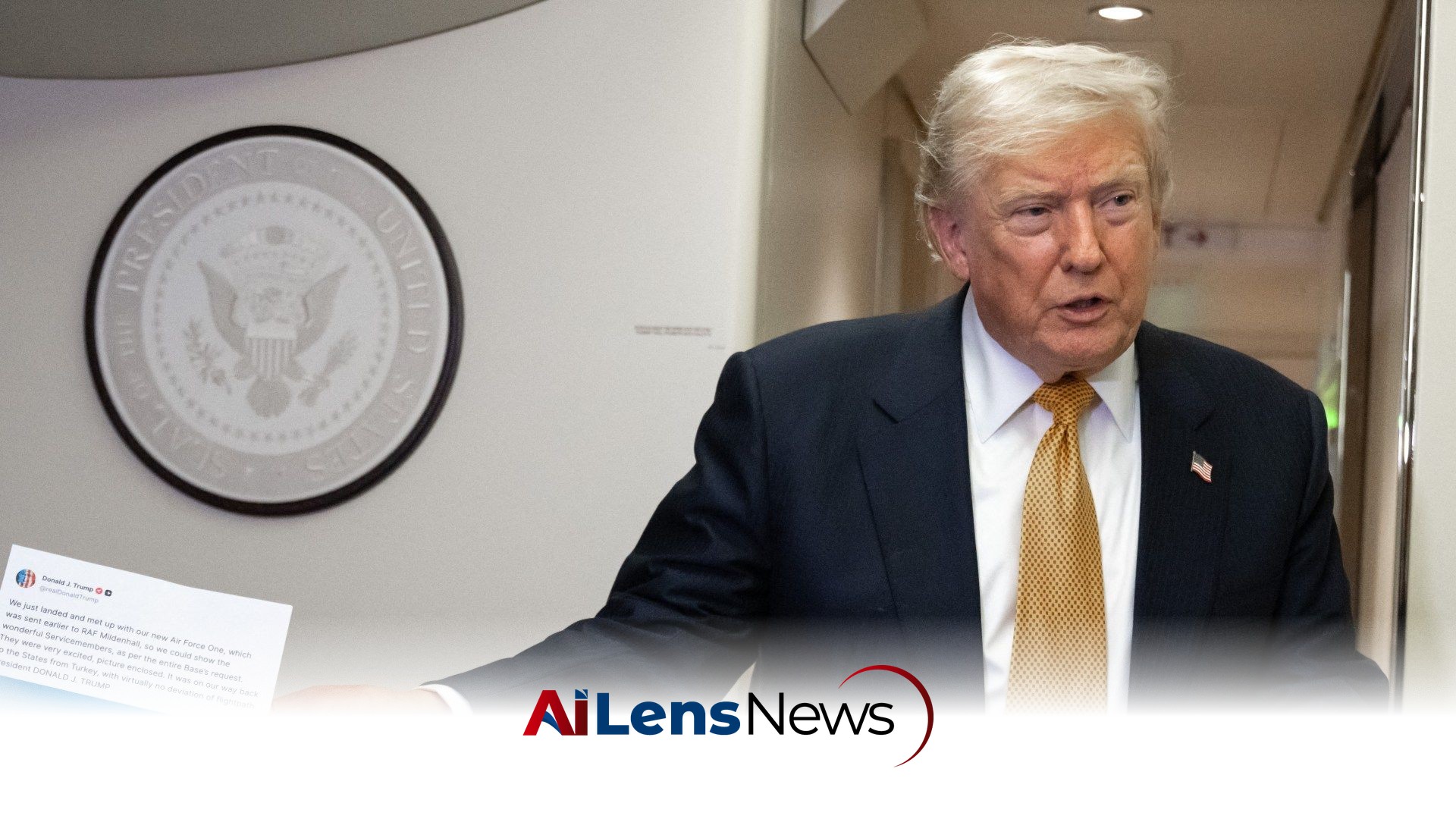


Trump Media is reportedly exploring a $100,000 monthly fee for priority access to Donald Trump's social media posts, raising ethical concerns about government transparency.
Doha, Qatar Jul 18, 2026 ALN: United States President Donald Trump’s social media company is reportedly considering charging a $100,000 monthly fee for priority access to his social media posts. This proposal has sparked significant debate and raised major ethical concerns, with critics denouncing the idea as a barrier to government transparency and a potential means for Trump to profit from his presidency.
The Trump Media and Technology Group (TMTG), which owns the website Truth Social, is exploring the possibility of offering financial traders and firms early access to Trump’s posts at a steep price, according to reports from various news agencies, including Reuters. A lower-tier fee of $60,000 a month has also been discussed for firms that commit to a three-year plan. The Financial Times corroborated these details, highlighting the financial implications of such a move.
The proposal to monetize access to Trump’s social media posts has drawn immediate criticism from a variety of sources. Ethics experts and political analysts have expressed concern that this move could undermine the principles of transparency and accountability that are foundational to democratic governance. Critics argue that by charging for access to his communications as president, Trump would be effectively commodifying information that should be freely available to the public, thereby creating a two-tiered system where only those with sufficient financial resources can gain insights into government actions and policies.
“He’s selling expedited, privileged access to information about what he is doing as president,” said Kathleen Clark, an expert in conflict-of-interest rules at Washington University School of Law. She characterized the proposal as a blatant exploitation of government power for personal gain.
Clark further elaborated that such actions could lead to a significant erosion of public trust in government institutions. The concern is that if individuals or entities are able to pay for privileged access to presidential communications, it could create an environment where policy decisions are influenced by those who can afford to pay for information, rather than by the democratic process.
As president of one of the world’s largest economies, Trump's statements on social media have historically had the potential to move markets. Economists have noted that his remarks regarding new policies, tariffs, or international conflicts can significantly affect global financial prospects. For instance, announcements related to trade agreements or sanctions can lead to fluctuations in stock prices and impact investor sentiment worldwide.
During his presidency, Trump was known for his active engagement on social media, particularly on Twitter, now rebranded as X. However, following his false claims about the 2020 presidential election and the ensuing attack on the US Capitol on January 6, 2021, several social media platforms suspended his accounts. In response, Trump pivoted to create his own media company, where he could continue to communicate his messages without the restrictions imposed by mainstream platforms.
Truth Social, one of the flagship products of TMTG, has become Trump's primary platform for communication since his departure from Twitter. He frequently uses the platform to announce policy changes, criticize opponents, and share his views on various national and international issues. This direct line to his supporters has made Truth Social a significant player in the realm of social media, particularly among Trump’s base.
The financial implications of Trump's social media posts cannot be overstated. For instance, during the US-Israel conflict involving Iran, Trump's statements on social media often led to dramatic swings in global energy markets, particularly when tensions escalated, and Iran threatened to close the Strait of Hormuz to commercial traffic. Such geopolitical developments can have far-reaching effects on oil prices and, by extension, the global economy.
Additionally, a social media post from Trump announcing a 90-day pause on new tariffs on April 9, 2025, resulted in a sharp rise in financial indices, showcasing the immediate impact of his words on market performance. This ability to influence financial markets raises questions about the ethical implications of monetizing access to such information.
In a related development, Trump Media and Technology Group recently announced plans to offer a paid-for, licensed data feed dubbed “Truth API” for banks and trading firms. This service would grant privileged access to the website’s ten most influential accounts, with Trump’s account being the most prominent among them. This move has further fueled concerns about the potential for financial exploitation and the ethical ramifications of blending business interests with political communication.
Democratic lawmakers have been vocal in their criticism of this announcement, with Senator Ron Wyden stating that it would “make Wall Street traders rich” alongside the Trump family. Such statements underscore the growing apprehension among lawmakers regarding the intersection of business and politics, especially in the context of a former president leveraging his position for financial gain.
The implications of Trump’s proposed fee for priority access to his social media posts extend beyond individual financial transactions. They touch upon fundamental questions about the integrity of democratic institutions and the role of public officials in maintaining transparency. If leaders can monetize access to information, it could set a precedent that undermines the public’s right to know about government actions and decisions.
Moreover, this situation raises broader concerns about the potential for corruption and the erosion of ethical standards in politics. The idea that a sitting or former president could profit from the dissemination of information related to their official duties challenges the principles of public service and accountability that are essential to a healthy democracy.
As the conversation around this proposal continues, it is clear that the intersection of social media, politics, and finance will remain a contentious issue. The outcome of this discussion will likely have lasting implications for how political communication is conducted in the digital age and how public trust in government institutions is maintained or eroded.
In conclusion, while the proposal by Trump Media and Technology Group to charge for priority access to Trump’s social media posts may be framed as a business opportunity, it raises profound ethical questions that warrant careful consideration. The potential for such a model to undermine democratic principles and facilitate corruption cannot be overlooked, and it is imperative that both lawmakers and the public engage in a robust dialogue about the implications of monetizing political communication.
To learn more about the latest developments in Political Controversies, stay updated with our exclusive reports and analyses on AiLensNews.

