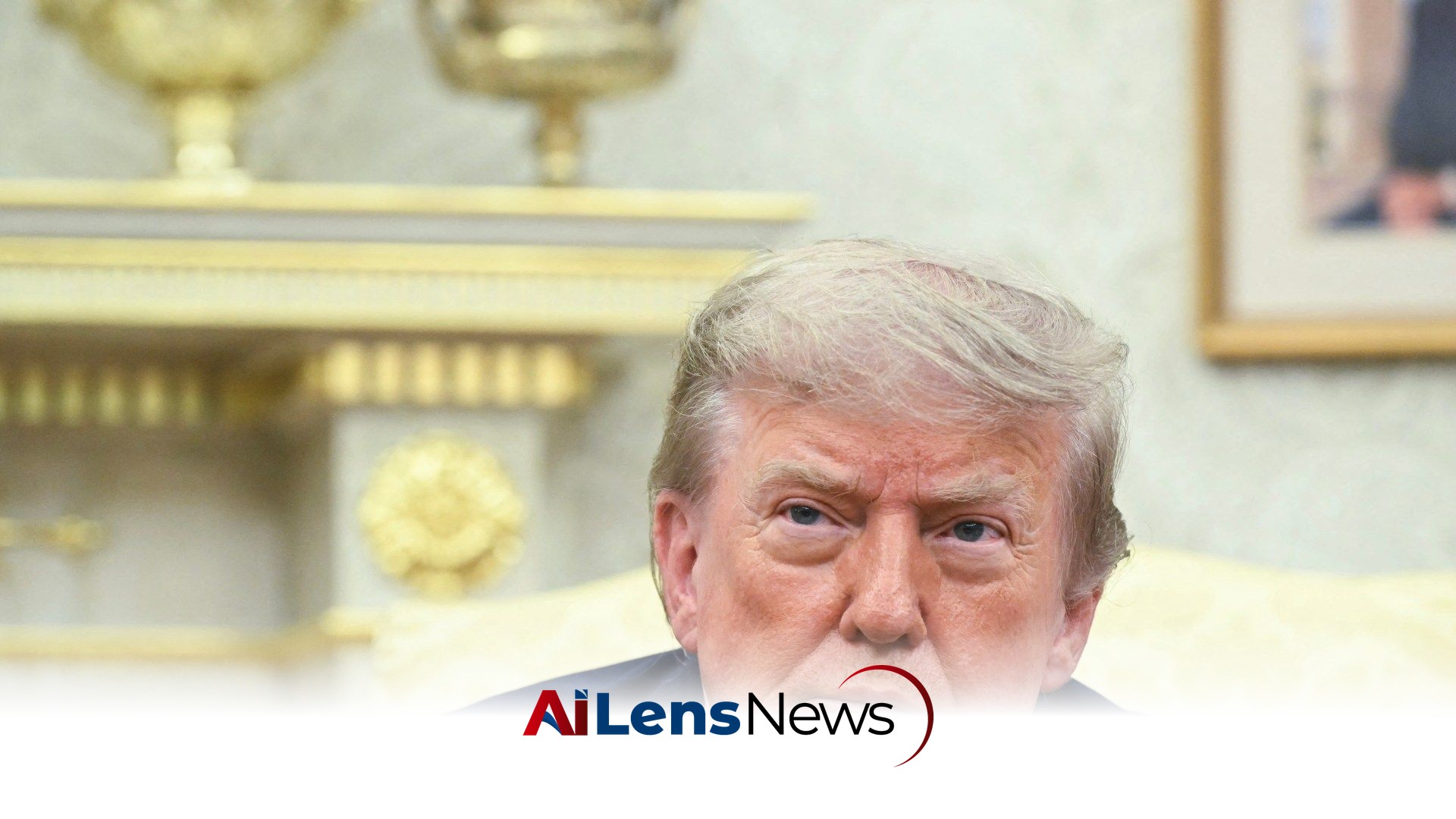


President Trump retracts proposed transit fee for vessels in the Strait of Hormuz, opting for investment deals with Gulf states instead.
Doha, Qatar Jul 14, 2026 ALN: United States President Donald Trump has recently retracted his previous assertion that Washington would impose a 20 percent transit fee for vessels navigating through the strategically significant Strait of Hormuz. This decision comes amid escalating tensions between the US and Iran, which have been marked by a series of military confrontations and diplomatic strains. The Strait of Hormuz is not only a critical maritime chokepoint but also a vital artery for global oil supplies, making the dynamics in this region particularly consequential not just for the involved nations but for the global economy as a whole.
The announcement of the transit fee was made on a Monday, but just a day later, Trump reversed course, indicating a shift in strategy. Initially, he had described the fee as a form of “reimbursement” for the costs associated with ensuring safety and security in what he referred to as a "volatile section of the World." However, specifics regarding how the US would enforce safe passage through the Strait—an international waterway not under US control—were not provided. This lack of clarity raised questions among international shipping entities and maritime law experts about the feasibility and legality of such a fee.
In his latest remarks, Trump stated that the proposed transit fee would be replaced with “Trade and Investment Deals that the various Gulf States will be making with the United States.” He claimed that this decision was influenced by “highly productive conversations with Middle East leadership,” suggesting a pivot from a confrontational approach to one that emphasizes economic collaboration and partnership. This shift reflects an understanding that economic incentives may be more effective in fostering stability in the region than military posturing.
The idea of a transit fee had generated considerable debate and concern among international shipping entities and geopolitical analysts alike. The Strait of Hormuz is a critical maritime chokepoint through which approximately 20 percent of the world’s oil passes. The potential for the US to levy fees for transit raised questions about the implications for international trade and maritime law, particularly as the US has historically opposed similar fees imposed by Iran. Such a fee could be interpreted as an infringement on international maritime rights, potentially leading to a backlash from other nations and shipping companies that rely on this vital route.
Trump further asserted that investments from Gulf countries would be “massive,” although he refrained from providing detailed figures or specific commitments. Prior to the escalation of hostilities between the US and Iran, several Gulf nations had already signified their intentions to invest billions in the American economy. This included pledges for infrastructure projects, technology partnerships, and energy cooperation, which were seen as part of a broader strategy to bolster ties with the US. These investments are crucial for the US economy, especially in sectors that could benefit from foreign capital and expertise.
While Trump had previously floated the idea of the US taking “control” of the Strait of Hormuz and charging tolls, Monday’s announcement represented a significant departure from that notion. It was the closest indication that the administration might translate its aggressive rhetoric into actionable policy, which had raised alarms among allies and adversaries alike. The reversal also suggests a recognition of the potential backlash that could arise from such a fee, particularly given the international community's established norms regarding freedom of navigation in international waters.
In the context of international maritime law, the Trump administration had previously dismissed the notion of Iran charging fees for transiting ships, with US Secretary of State Marco Rubio emphasizing that such actions would undermine the principles governing international waters. This highlights the complexity of the situation, where the US seeks to maintain a balance between asserting its interests and adhering to international norms. The administration's previous stance against Iran’s attempts to levy fees underscores the potential hypocrisy in proposing a similar measure, which could further complicate US relations with other nations.
In reverting to a previous stance, Trump indicated to reporters that he does not “like the concept of a fee,” suggesting a potential for a more diplomatic approach moving forward. This shift comes just hours before a US military blockade of Iran was scheduled to resume. The blockade had been temporarily lifted as part of a memorandum of understanding (MoU) signed by both parties in mid-June, which had aimed to de-escalate tensions and facilitate dialogue. However, the effectiveness of such agreements is often contingent upon the willingness of both sides to engage in good faith negotiations, something that has proven elusive in the past.
However, the preliminary deal has faced significant challenges as recent attacks have heightened the atmosphere of conflict. Iranian media have reported a series of incidents, including explosions in key locations such as Bushehr, Bandar Abbas, Mahshahr, and Abadan, with additional reports of attacks on Qeshm and Kish islands. These developments suggest that the security situation in the region remains precarious, with both sides engaging in provocative actions. The potential for miscalculation or unintended escalation remains high, raising concerns about the broader implications for regional stability.
Kuwait has also reported that its armed forces were actively engaging with multiple aerial targets, indicating a heightened state of alert in the region. Iran has vowed to continue its campaign against US assets, with additional attacks reported in Bahrain, Jordan, and on vessels traversing the Strait of Hormuz. This ongoing cycle of retaliation and counter-retaliation underscores the volatility of the situation and the potential for broader conflict, which could involve not only the US and Iran but also their regional allies and adversaries.
The implications of these developments are far-reaching, not only for US-Iran relations but also for global oil markets and international shipping. The Strait of Hormuz is a vital corridor for energy supplies, and any disruption could have significant economic repercussions. Analysts are closely monitoring the situation, as further escalation could lead to a more extensive military conflict, drawing in regional powers and potentially disrupting global trade. The interconnectedness of global markets means that instability in this region could have a ripple effect, impacting energy prices and economic stability worldwide.
As the situation evolves, the international community remains watchful for signs of diplomatic engagement or further military actions. The complexities of the geopolitical landscape in the Middle East, compounded by historical grievances and strategic interests, make it imperative for all parties to navigate these tensions with caution. The recent shifts in the US administration's approach may signal a recognition of the need for a balanced strategy that prioritizes both security and economic stability in a region fraught with challenges. The effectiveness of this new approach will hinge on the ability of the US to engage meaningfully with its allies and adversaries alike while promoting dialogue over confrontation.
To learn more about the latest developments in Political Controversies, stay updated with our exclusive reports and analyses on AiLensNews.

