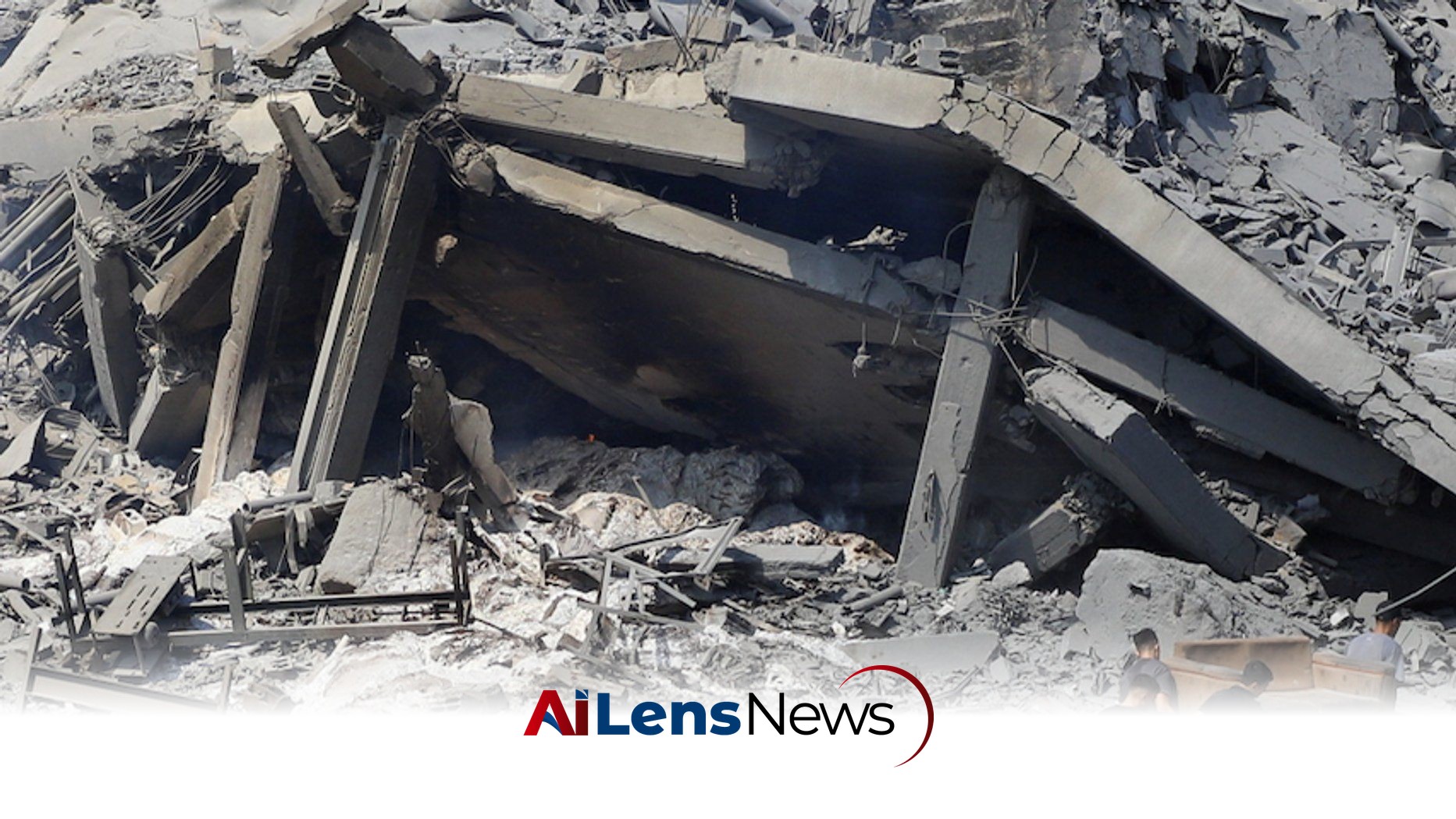


In a recent statement, former President Trump emphasized the need for Hamas to disarm as part of a broader agreement, which includes a gradual withdrawal of Israeli forces from Gaza. A Hamas representative indicated that the implementation of these terms would depend on Israel fulfilling its commitments.
Doha, Qatar Jul 31, 2026 ALN: In a significant development regarding the ongoing conflict in Gaza, former President Donald Trump has called for the disarmament of Hamas, asserting that this step is crucial for achieving lasting peace in the region. Trump’s remarks come amidst discussions about a potential agreement that would see Israeli forces gradually withdraw from Gaza.
During a recent interview, Trump stated, "For any peace deal to be effective, Hamas must disarm. This is non-negotiable. Israel's gradual exit from Gaza must be contingent upon this disarmament. We cannot have a situation where armed factions continue to threaten Israel's security while expecting them to pull back their military presence." Trump's position reflects a long-standing belief among many in Israel and its allies that disarming militant groups is essential for any successful peace process.
The call for disarmament is not a new concept in the context of the Israeli-Palestinian conflict. Over the years, various peace initiatives have emphasized the need for armed groups, particularly Hamas, which controls the Gaza Strip, to relinquish their weapons. Hamas, recognized as a terrorist organization by Israel, the United States, and the European Union, has been involved in numerous violent confrontations with Israel, including rocket attacks and tunnel warfare. The group’s military capabilities pose a significant challenge to Israel’s national security, and the disarmament of Hamas is seen as a prerequisite for any lasting peace agreement.
A representative from Hamas, speaking to Al Jazeera, confirmed that any implementation of the proposed agreement would be conditional on Israel adhering to its part of the deal. "We are open to negotiations, but it is essential that Israel also commits to its obligations. Trust must be established for any progress to be made," the representative stated. This highlights the mutual distrust that characterizes the Israeli-Palestinian relationship, where both sides have historically accused each other of failing to uphold their commitments. Hamas's insistence on reciprocal obligations points to a broader theme in the conflict, where peace efforts are often stalled by a lack of confidence in the other party's intentions.
The situation in Gaza has been tense, with ongoing military operations and humanitarian concerns rising. The region has been a focal point of conflict for decades, with significant escalations occurring at various points, particularly during the last major conflict in May 2021. During that conflict, over 250 people were killed, including many civilians, and thousands were displaced. The humanitarian situation in Gaza has been dire, with shortages of essential supplies, medical care, and infrastructure challenges exacerbated by the blockade imposed by Israel and Egypt. The international community has been closely monitoring the developments, urging both parties to engage in constructive dialogue to reach a peaceful resolution.
As discussions continue, the focus remains on finding a balanced approach that addresses the security concerns of Israel while also considering the humanitarian needs of the Palestinian people in Gaza. International bodies, including the United Nations and various non-governmental organizations, have called for a ceasefire and a resumption of humanitarian aid to the region. The complexities of the conflict necessitate a multifaceted approach that not only seeks to address immediate security threats but also lays the groundwork for long-term peace and stability.
The call for disarmament by Trump highlights the complexities of the Israeli-Palestinian conflict and the challenges that lie ahead in achieving a sustainable peace agreement. The historical context of the conflict is essential to understanding the current dynamics. The Israeli-Palestinian conflict has its roots in competing nationalisms, territorial disputes, and historical grievances. The establishment of Israel in 1948 and the subsequent displacement of Palestinian Arabs, known as the Nakba, has left deep scars and unresolved issues that continue to fuel tensions.
Moreover, the geopolitical landscape surrounding the conflict further complicates peace efforts. Regional powers, including Iran, have been known to support Hamas, providing financial and military assistance, which complicates the disarmament issue. The role of the United States as a mediator has also evolved, with varying degrees of engagement from different administrations. Trump's administration took a strong pro-Israel stance, which included recognizing Jerusalem as Israel's capital and facilitating normalization agreements between Israel and several Arab nations, known as the Abraham Accords. However, critics argue that these moves sidelined the Palestinian issue and did little to advance peace.
As the international community watches closely, the implications of Trump's call for disarmament extend beyond the immediate context of Gaza. The success or failure of any peace agreement will likely influence regional stability, the future of U.S. foreign policy in the Middle East, and the broader dynamics of international relations. The potential for renewed violence remains a concern, particularly if either side perceives the other as failing to meet its commitments. In this charged atmosphere, the path to peace remains fraught with obstacles, requiring significant political will, trust-building measures, and a commitment to addressing the root causes of the conflict.
In conclusion, the ongoing dialogue about disarmament and Israeli withdrawal underscores the intricate web of issues that define the Israeli-Palestinian conflict. While calls for disarmament may resonate with certain factions, achieving a mutually agreeable solution will require comprehensive negotiations that address the security, humanitarian, and political dimensions of the conflict. The challenge remains for both parties to navigate these complex waters and work towards a future where lasting peace is not just a distant hope but a tangible reality.
To learn more about the latest developments in Elections, stay updated with our exclusive reports and analyses on AiLensNews.

