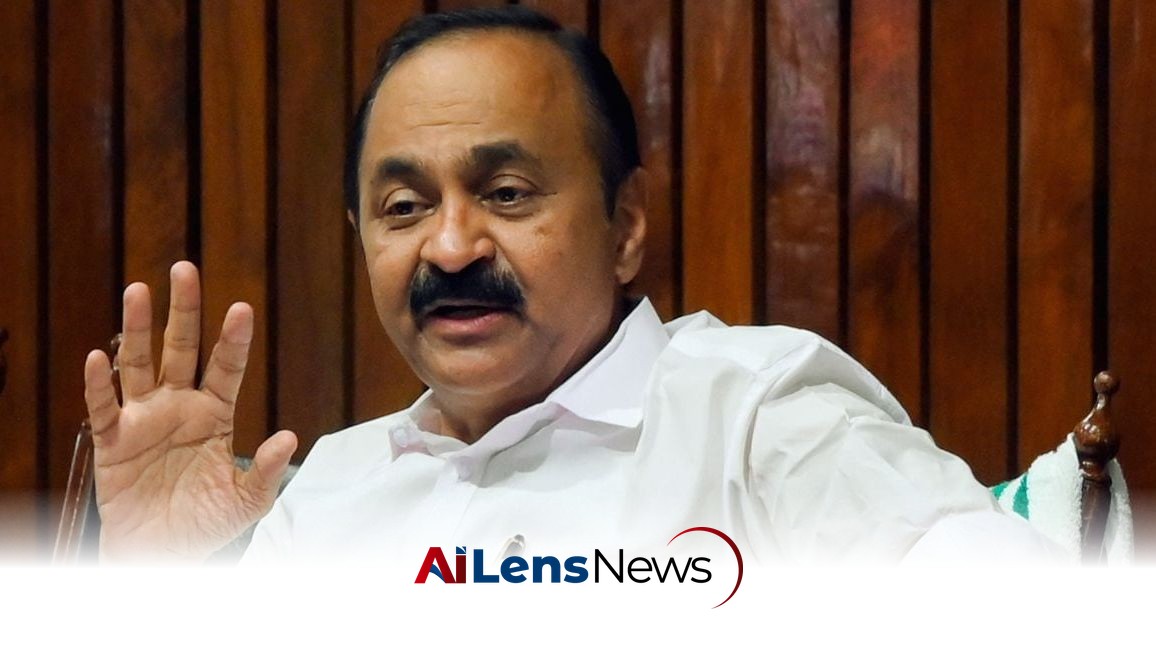


Chief Minister V D Satheesan dismissed claims of irregularities in the appointment of government pleaders, asserting that all selections were based on recommendations.
Doha, Qatar Jul 15, 2026 ALN: Chief Minister V D Satheesan, on Wednesday, addressed the media to respond to allegations regarding unfairness and irregularities in the recent appointments of Government pleaders. These appointments have sparked controversy, particularly among various political factions and student organizations, leading to a broader discussion on the integrity and transparency of the selection process.
During a press briefing following a cabinet meeting, Satheesan stated that he was not aware of any complaints regarding the appointments. This assertion came in the wake of reports indicating dissent within the Indian Lawyers' Congress (ILC) state committee, which has historically played a significant role in legal appointments across the state. The controversy surrounding these appointments was further exacerbated by criticisms from the Kerala Students Union (KSU), a prominent student organization affiliated with the Indian National Congress.
KSU state president Aloshious Xavier was particularly vocal in his criticism of the government’s selection process. He accused the government of favoring individuals with links to the Students' Federation of India (SFI), the student wing of the ruling Communist Party of India (Marxist), which he argued was an affront to KSU workers who have dedicated their efforts to the party. In a Facebook post, he expressed his frustration, stating that those who had persevered as KSU activists and contributed significantly to the party's cause were being overlooked, while individuals associated with oppression were being rewarded with government positions.
In response to these allegations, Chief Minister Satheesan remained dismissive of the criticisms raised by the KSU. When questioned about the objections from the KSU unit at the Law College in Thiruvananthapuram, he asserted, "KSU unit of a Law College doesn't decide pleaders for the state government." This statement reflects the government's stance that the selection process is more complex and involves broader considerations than those articulated by student organizations.
To bolster his defense, Satheesan cited a report from the Indian Lawyers Congress, asserting that two of the newly appointed pleaders, whose political affiliations were under scrutiny, had actually been recommended by the ILC itself. He emphasized that the appointments were not solely based on these recommendations but were also the result of a thorough examination of the candidates' backgrounds. "It wasn't just the ILC recommendations; we studied their background in detail and made the appointments," Satheesan remarked, aiming to clarify the rationale behind the selections and dispel notions of favoritism.
Moreover, Satheesan addressed concerns regarding the increase in the number of pleaders, noting that during the tenure of the Left Democratic Front (LDF), as many as 16 Special government pleaders and government pleaders had been appointed. He pointed out that last year, under the leadership of former Law Minister P Rajeev, there was a further increase in the number of pleaders. The Advocate General and the Director General of Prosecution had proposed the addition of 23 more pleaders, citing the substantial backlog of around 37,000 petitions pending in the legal system. However, considering the government’s financial constraints, the number was ultimately reduced to 12. Satheesan questioned the validity of the accusations leveled by the former Law Minister, suggesting that such allegations were unfounded given the context of the decisions made.
The controversy surrounding the appointment of Government pleaders is not isolated. The government has faced scrutiny in the past, particularly regarding the appointment of K B Pradeep as a Special government pleader. Pradeep was previously the counsel for the owner of Smart Creations, who is implicated in the Sabarimala gold scam case. The backlash from this appointment led to Pradeep resigning from his position, highlighting a potential lack of consensus within the government regarding key legal appointments. This incident has raised questions about the decision-making processes within the administration and the extent to which political affiliations may influence such appointments.
In the context of Kerala's complex political landscape, the current controversy reflects ongoing tensions between various political factions, each vying for influence and representation in government appointments. The KSU's discontent may indicate a rift between the youth wing of the Congress party and the current government, potentially impacting future political dynamics and electoral outcomes. Historically, student organizations have played a pivotal role in shaping political discourse, and their grievances often resonate with broader societal concerns.
Furthermore, the issues raised regarding transparency and fairness in the appointment process resonate with ongoing discussions about governance in India, where allegations of nepotism and favoritism are not uncommon in various sectors, including legal appointments. The public's perception of the integrity of government processes can significantly influence trust in political institutions and the rule of law. Transparency in governance is a critical issue that can affect the legitimacy of the ruling party and its ability to implement policies effectively.
In conclusion, while Chief Minister Satheesan has attempted to dispel the allegations surrounding the appointments of Government pleaders, the ongoing discourse reflects deeper issues within Kerala's political framework. The responses from various stakeholders, including student organizations and political opponents, underscore the complexities of governance and the critical need for transparency and accountability in public appointments. As the situation evolves, it will be essential to monitor how these dynamics play out, particularly in the context of upcoming elections and the broader implications for the governance of the state. The outcome of this controversy may not only impact the current administration's credibility but could also reshape the political landscape in Kerala, influencing how parties engage with their constituencies and how they approach governance in the future.
To learn more about the latest developments in Political Controversies, stay updated with our exclusive reports and analyses on AiLensNews.

