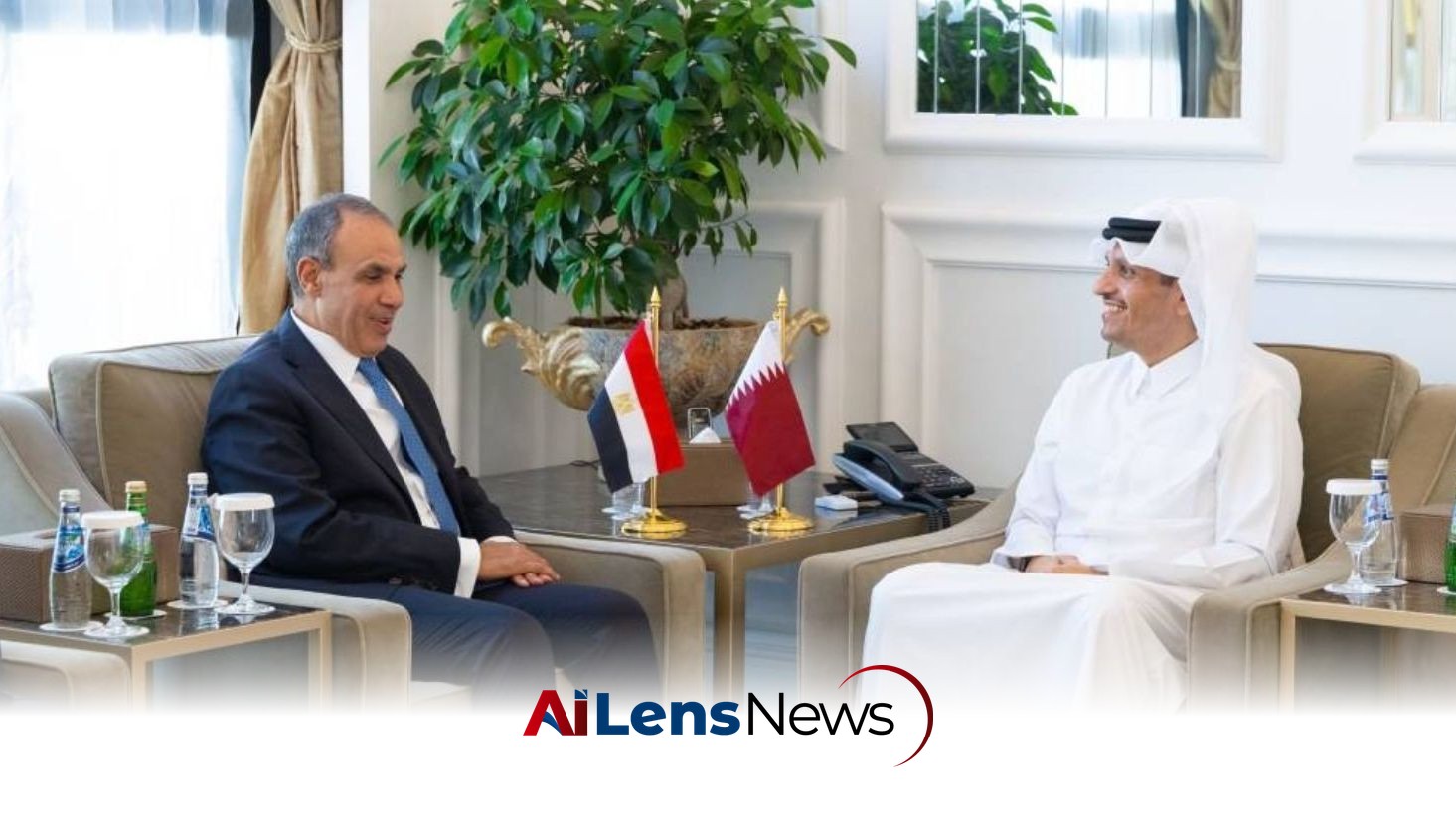


In a significant diplomatic meeting, Qatar's Prime Minister and Egypt's Foreign Minister discussed enhancing bilateral relations and regional de-escalation efforts.
Doha, Qatar Jul 25, 2026 ALN: Qatar’s Prime Minister and Minister of Foreign Affairs HE Sheikh Mohammed bin Abdulrahman bin Jassim Al Thani recently met with Egypt’s Minister of Foreign Affairs, International Cooperation, and Egyptians Abroad Dr. Badr Abdelatty, who is visiting Doha. This meeting marks a significant step in the ongoing dialogue between the two nations, reflecting their mutual interest in fostering a stable and cooperative regional environment.
The discussions during the meeting were centered around two primary themes: the enhancement of bilateral relations and the examination of current regional developments. Given the complex geopolitical landscape in the Middle East, these topics are particularly relevant, as they underscore the necessity for countries in the region to collaborate on issues of mutual concern. The Middle East has long been a region marked by volatility, where historical grievances, sectarian divides, and external interventions have contributed to ongoing conflicts. In this context, the dialogue between Qatar and Egypt represents a crucial effort to build bridges and foster understanding.
Historically, Qatar and Egypt have had a multifaceted relationship characterized by both cooperation and tension. Following the Arab Spring in 2011, the dynamics between the two nations shifted considerably. Qatar's support for the Muslim Brotherhood in Egypt led to strained relations, especially after the military coup in 2013 that ousted President Mohamed Morsi. This period was marked by a significant rift, with Qatar's backing of the Brotherhood positioning it at odds with Egypt's military-led government, which viewed the organization as a threat to its stability. However, in recent years, there has been a concerted effort by both nations to mend ties, recognizing the importance of unity in addressing regional challenges. This thawing of relations is indicative of a broader trend in the region, where former adversaries are seeking to reconcile in light of shared security concerns and economic interests.
During the meeting, HE Sheikh Mohammed emphasized the need for all parties involved in regional disputes to engage in dialogue and diplomacy. This call for dialogue is particularly pertinent in light of ongoing tensions between Iran and other nations in the region, including the United States. The Memorandum of Understanding between the USA and Iran, which aims to address various security concerns, including the critical issue of ensuring freedom of navigation in the Strait of Hormuz, was highlighted as a framework that should be adhered to by all parties. The Strait of Hormuz is a vital waterway through which a significant percentage of the world’s oil supply is transported, making its security a paramount concern for global energy markets. Any disruption in this strategic passage can have far-reaching implications, affecting oil prices and, consequently, the global economy.
Qatar’s position, as articulated by its Prime Minister, underscores the nation’s commitment to regional stability and security. The country has often positioned itself as a mediator in various conflicts, leveraging its diplomatic relationships and hosting capabilities to facilitate discussions among conflicting parties. Sheikh Mohammed's reiteration of Qatar’s support for efforts aimed at defusing tensions reflects a broader strategy of promoting peace through dialogue, which has been a cornerstone of Qatar’s foreign policy. This approach has allowed Qatar to carve out a unique role in the region, often acting as a neutral ground for negotiations and dialogue among various factions and states.
The implications of this meeting extend beyond Qatar and Egypt, as the stability of the Middle East is intricately linked to the actions and agreements made among its nations. The ongoing conflicts in Syria, Yemen, and Libya, along with the Israeli-Palestinian issue, continue to pose significant challenges to regional stability. Each of these conflicts has the potential to escalate tensions further, making diplomatic engagements such as the one between Qatar and Egypt crucial. For instance, the Syrian civil war has drawn in various regional and global powers, each pursuing its interests, which complicates the path toward a peaceful resolution. Similarly, the conflict in Yemen has led to a humanitarian crisis, with regional powers backing opposing sides, further entrenching divisions.
Moreover, the geopolitical landscape is influenced by external powers, particularly the United States, Russia, and Iran. The involvement of these nations complicates the dynamics of regional politics, as their interests often conflict with those of local governments. Qatar’s advocacy for dialogue and a comprehensive agreement to achieve lasting peace is not only a reflection of its national interests but also a recognition of the need for a collaborative approach to tackle these multifaceted challenges. The interplay of interests from global powers can either exacerbate tensions or create opportunities for resolution, depending on how local actors respond to these influences.
In addition to the immediate focus on regional security, the meeting also serves as a reminder of the importance of economic collaboration between Qatar and Egypt. Both nations have significant economic ties, with Qatar being one of Egypt's key investors. Strengthening these economic relations can provide a foundation for greater political cooperation, which is essential in addressing shared challenges. Economic interdependence can act as a stabilizing factor, reducing the likelihood of conflict and encouraging collaboration on a range of issues, from trade to energy security. Furthermore, as both countries seek to diversify their economies, particularly in the wake of global economic shifts, collaboration in sectors such as tourism, infrastructure, and renewable energy could yield mutual benefits.
The recent meeting between the Qatari Prime Minister and the Egyptian Foreign Minister could be seen as a precursor to further diplomatic engagements in the region. As tensions continue to simmer, the role of regional powers such as Qatar becomes increasingly vital in fostering an environment conducive to dialogue and peace. The commitment to working together to enhance security and stability is a positive development, signaling a willingness to prioritize diplomacy over conflict. This shift towards dialogue is essential not only for Qatar and Egypt but also for the broader region, as it may inspire other nations to seek similar paths of reconciliation.
In conclusion, the meeting between Qatar’s Prime Minister and Egypt’s Foreign Minister highlights the ongoing efforts to strengthen bilateral relations and address regional challenges through dialogue and cooperation. As both nations navigate the complexities of Middle Eastern geopolitics, their commitment to supporting each other in achieving stability is a critical factor in the broader pursuit of peace in the region. The implications of such diplomatic efforts extend beyond their borders, potentially influencing the dynamics of conflicts and cooperation across the Middle East. As regional actors increasingly recognize the interconnected nature of their challenges, the importance of dialogue and collaboration will likely continue to grow, shaping the future of the region.
To learn more about the latest developments in Elections, stay updated with our exclusive reports and analyses on AiLensNews.

