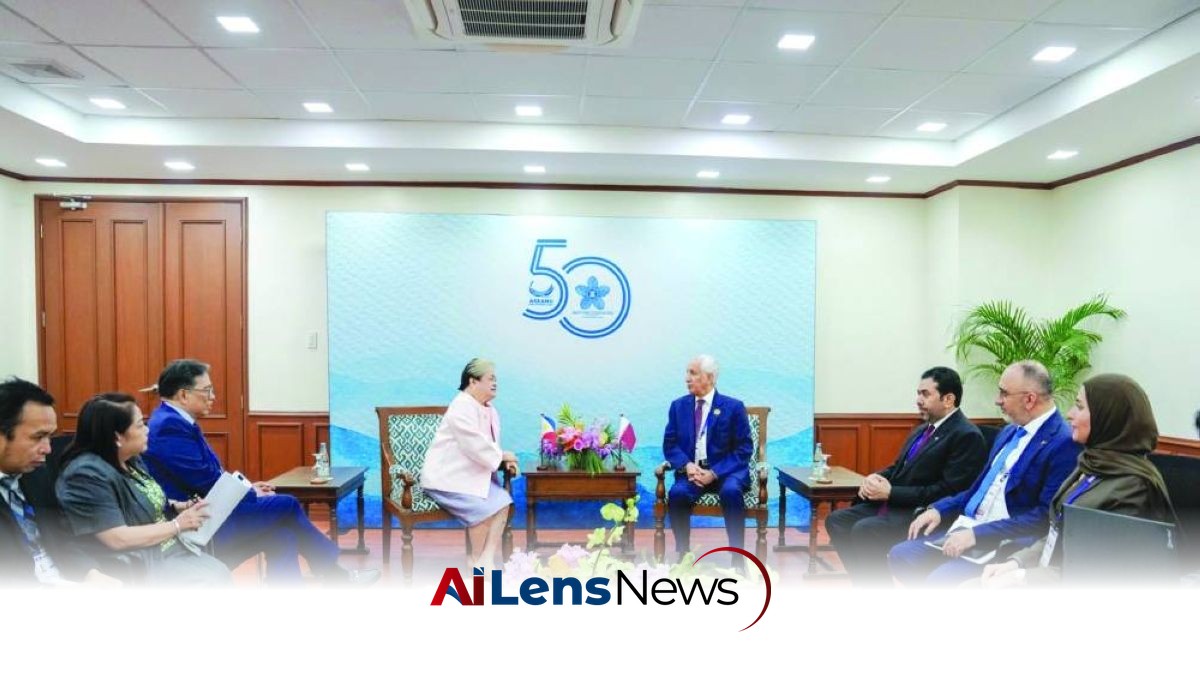


During the 50th anniversary of the Treaty of Amity and Co-operation in Southeast Asia, Qatar's Minister of State for Foreign Affairs, Sultan bin Saad al-Muraikhi, held several bilateral meetings in Manila.
Doha, Qatar Jul 25, 2026 ALN: The State of Qatar has marked a significant diplomatic milestone by participating in the 50th anniversary of the Treaty of Amity and Co-operation in Southeast Asia (TAC), a pivotal agreement that has shaped the political landscape of the region. The event took place in Manila, Philippines, a country that has been an active participant in ASEAN (Association of Southeast Asian Nations) initiatives aimed at fostering peace, stability, and cooperation among member states. Qatar's involvement in this anniversary highlights its commitment to strengthening ties with Southeast Asian nations and underscores the importance of multilateral diplomacy in addressing regional and global challenges.
HE the Minister of State for Foreign Affairs Sultan bin Saad al-Muraikhi represented the State of Qatar at this commemorative event. His presence signifies Qatar's strategic interest in Southeast Asia, a region that has seen significant economic growth and increasing geopolitical importance in recent years. The TAC, which was established in 1976, aims to promote peace, stability, and mutual respect among nations in Southeast Asia, and it serves as a framework for cooperation across various sectors, including trade, security, and cultural exchange.
During the event, HE al-Muraikhi engaged in a series of bilateral meetings with key foreign ministers and officials from several countries. These discussions are crucial for enhancing Qatar's foreign relations and expanding its influence in the region. Among those he met were notable figures such as the Deputy Minister of Foreign Affairs of the Kingdom of Saudi Arabia, Engineer Waleed bin Abdulkarim Al-Khereiji, and the Second Minister of Foreign Affairs for Brunei Darussalam, Erywan Pehin Yusof. These meetings reflect Qatar's efforts to strengthen its ties with Gulf Cooperation Council (GCC) partners and Southeast Asian nations alike.
In addition to Saudi Arabia and Brunei, HE al-Muraikhi also met with high-ranking officials from other countries, including the Secretary of Foreign Affairs of the Republic of the Philippines, Maria Theresa P. Lazaro, and the Minister of Foreign Affairs of the Republic of Indonesia, Sugyono. These meetings provided a platform for discussing a variety of topics, from economic cooperation to security issues, thereby reinforcing Qatar's role as a mediator and partner in regional dialogues.
The meetings with the Minister of Foreign Affairs of the Socialist Republic of Vietnam, Le Hoai Trung, and the Minister of Foreign Affairs of the People's Republic of Bangladesh, Dr. Khalilur Rahman, further exemplify Qatar's approach to diversifying its diplomatic engagements. Vietnam and Bangladesh are emerging markets with considerable growth potential, and fostering relations with these nations could lead to mutually beneficial partnerships in trade, investment, and cultural exchanges.
Moreover, discussions with the Minister of Foreign Affairs of the Kingdom of the Netherlands, Tom Berendsen, and the Minister of Foreign Affairs of the Republic of Panama, Javier Martinez-Acha, reflect Qatar's broader strategy of engaging with nations beyond the immediate Southeast Asian region. The Netherlands has been a significant trade partner for Qatar, particularly in sectors such as energy and agriculture, while Panama offers strategic access to Central and South American markets.
Throughout these bilateral meetings, the focus was on enhancing cooperation relations between the State of Qatar and the respective countries. The discussions encompassed various areas of mutual interest, including economic collaboration, cultural exchange, and security cooperation. Qatar's diplomatic efforts are aligned with its National Vision 2030, which aims to diversify the economy and enhance the country's global standing.
The implications of these meetings are significant, as they not only strengthen bilateral relationships but also position Qatar as a key player in regional stability and development. As the geopolitical landscape continues to evolve, Qatar's active participation in such multilateral forums and its commitment to fostering dialogue and cooperation with Southeast Asian nations may yield long-term benefits in terms of trade, investment, and diplomatic influence.
In conclusion, Qatar's participation in the TAC anniversary in Manila and the subsequent bilateral meetings conducted by HE al-Muraikhi are indicative of the country's strategic approach to foreign policy. By engaging with a diverse array of nations, Qatar is not only reinforcing its existing partnerships but also exploring new avenues for collaboration that align with its national interests. As the world becomes increasingly interconnected, such diplomatic initiatives are essential for fostering peace, stability, and prosperity in the region and beyond.
The Treaty of Amity and Co-operation in Southeast Asia is particularly notable for its emphasis on the principles of mutual respect for independence, sovereignty, equality, territorial integrity, and non-interference in the internal affairs of one another. These principles have been foundational in guiding the diplomatic relations among Southeast Asian nations, fostering a sense of regional identity and solidarity. Over the years, the TAC has been instrumental in facilitating dialogue on pressing issues such as transnational crime, terrorism, and environmental challenges, thereby contributing to a more stable and secure region.
As Qatar continues to navigate its foreign policy landscape, its engagement with Southeast Asia is increasingly relevant. The region is home to some of the world's fastest-growing economies, and Qatar's strategic investments in various sectors, including energy, infrastructure, and education, are likely to yield significant dividends. By building strong relationships with ASEAN member states, Qatar is not only enhancing its economic prospects but also positioning itself as a facilitator of dialogue and cooperation in addressing regional and global challenges.
Furthermore, Qatar's participation in the TAC anniversary aligns with its broader diplomatic strategy of engaging with diverse partners across the globe. This approach is reflective of Qatar's ambition to be recognized as a key player on the international stage, leveraging its wealth and resources to foster cooperation and development. The emphasis on multilateral diplomacy underscores the understanding that many of today's challenges, such as climate change, public health crises, and geopolitical tensions, require collective action and collaboration among nations.
In an era marked by uncertainty and rapid change, Qatar's proactive approach to diplomacy serves as a model for other nations seeking to navigate the complexities of international relations. By fostering partnerships based on mutual respect and shared interests, Qatar is contributing to a more interconnected and cooperative global community. The outcomes of the recent meetings held in Manila will likely resonate beyond the immediate context, influencing Qatar's foreign relations for years to come.
In summary, the 50th anniversary of the TAC in Manila provided Qatar with a valuable opportunity to reinforce its diplomatic ties with Southeast Asia and engage with a diverse array of nations. The bilateral meetings conducted by HE al-Muraikhi reflect Qatar's strategic focus on enhancing cooperation, addressing mutual challenges, and exploring new avenues for collaboration. As Qatar continues to assert its presence on the global stage, its commitment to multilateral diplomacy will play a crucial role in shaping the future of its foreign relations and contributing to regional and global stability.
To learn more about the latest developments in Elections, stay updated with our exclusive reports and analyses on AiLensNews.

